Sep 26
Start: The mission: pixel art for every room of Infocom's 1984 Hitchhiker's Guide, 320×200 in 256 colours, like Monkey Island.
Prototype: First test: a GPT Image painting squeezed down to VGA. It survived the trip.
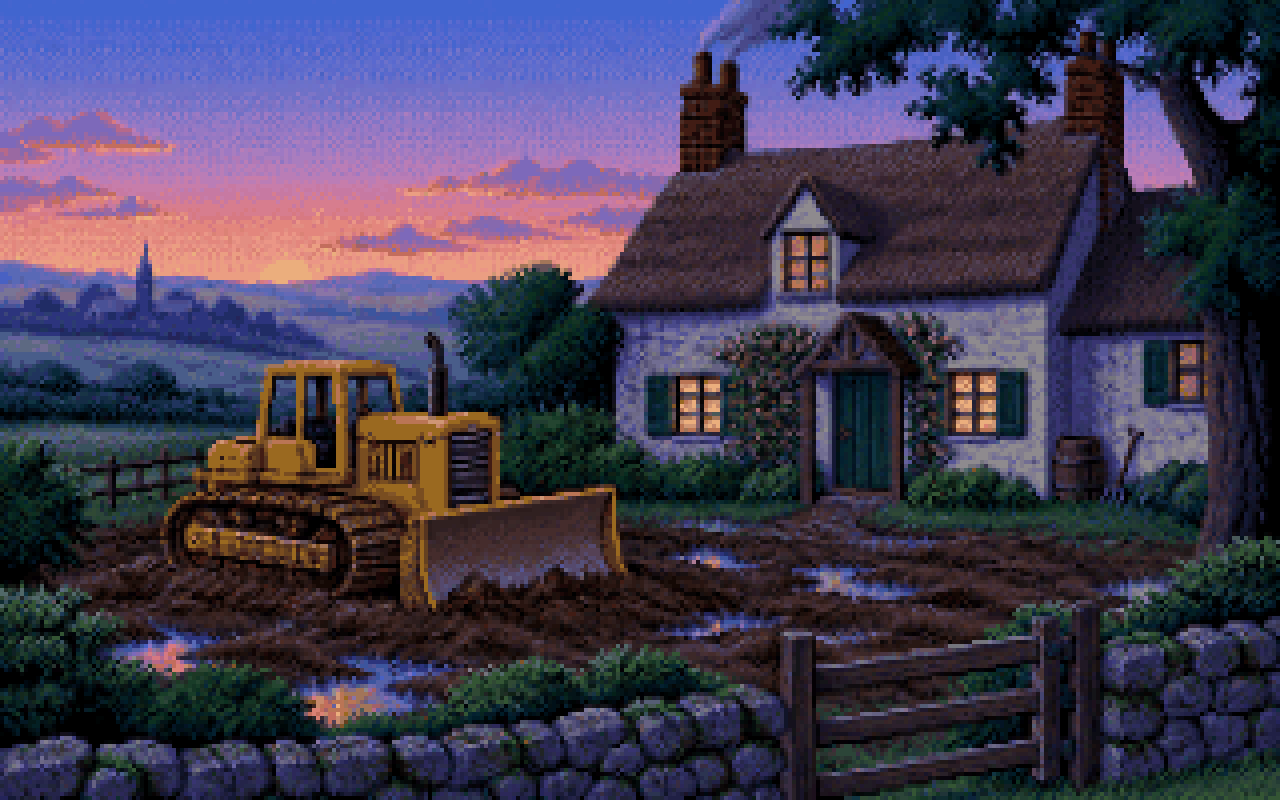
Sep 27
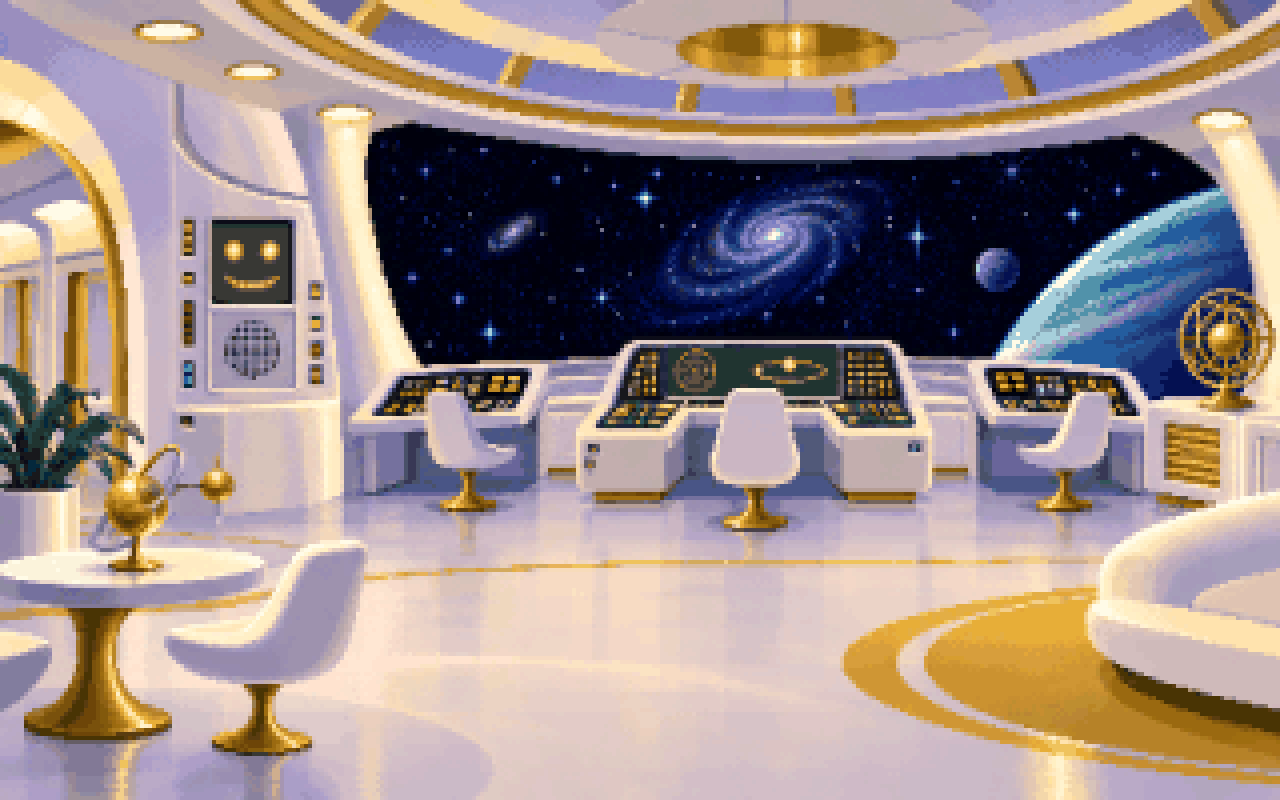
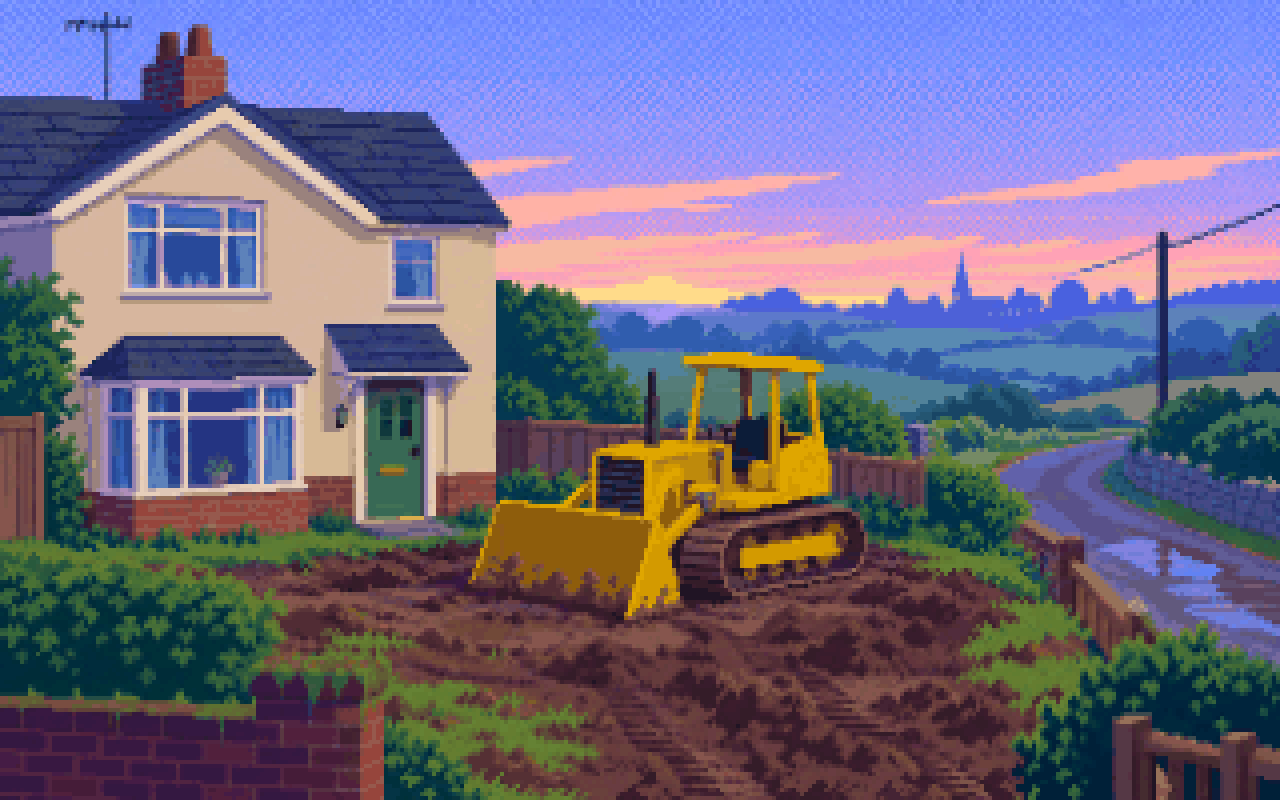
Prototype: Day-one drafts of the Bridge and the house: clean, bright, and nothing like Monkey Island.
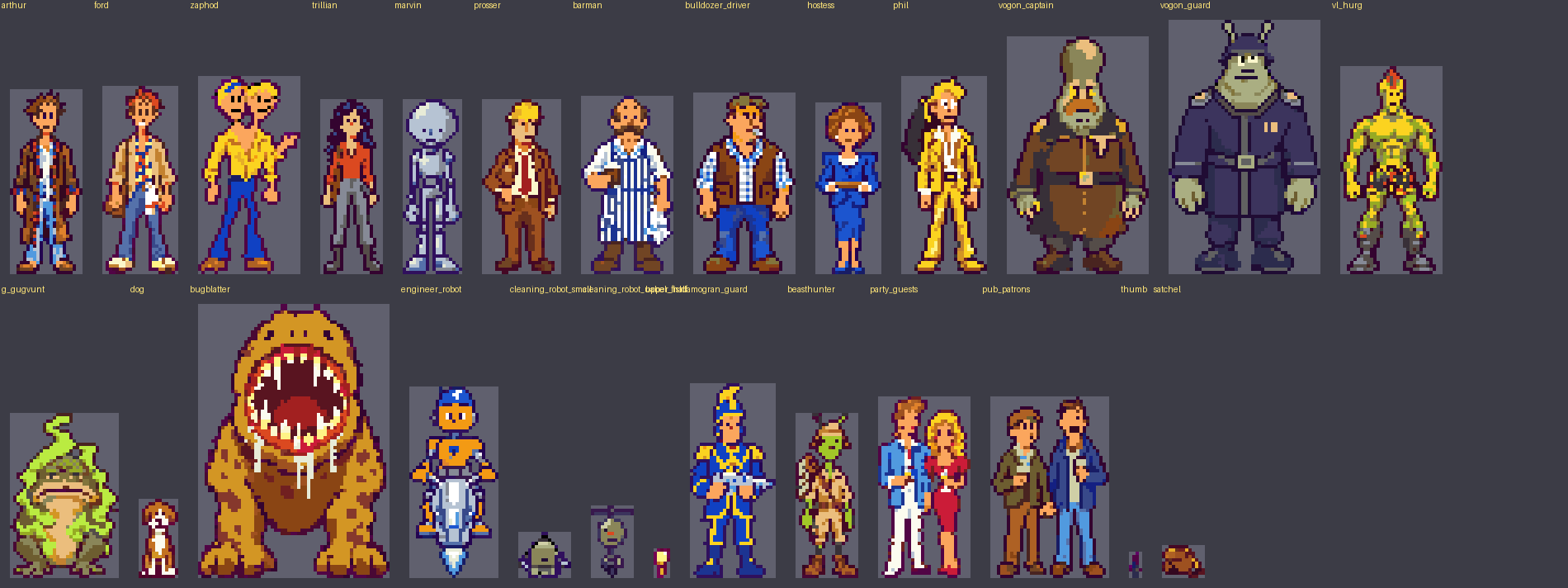
Prototype: The first cast: 26 characters redrawn by the model one block per pixel.
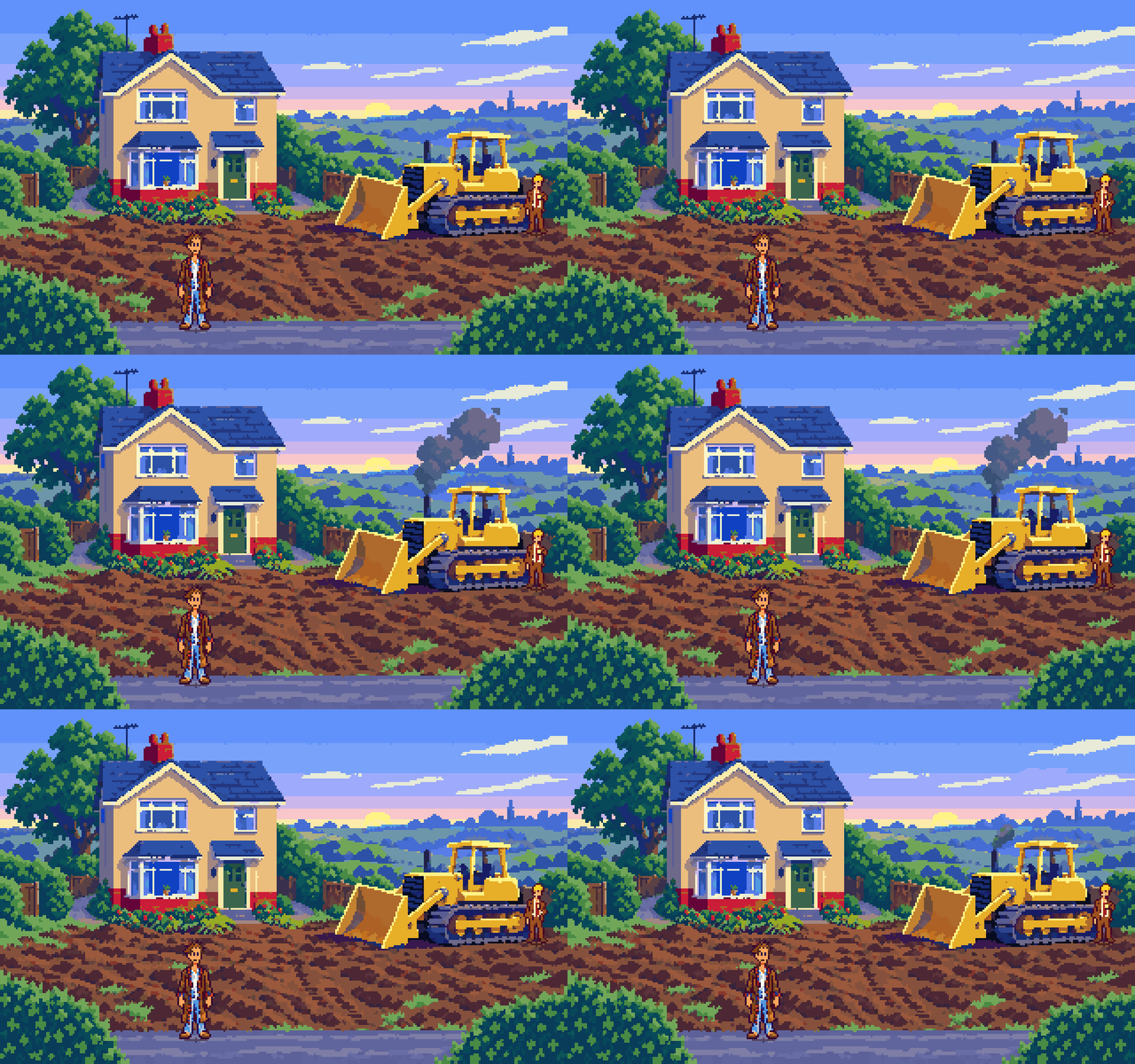
Prototype: Front of House became the pilot room, with all 13 states taken from the game's text.
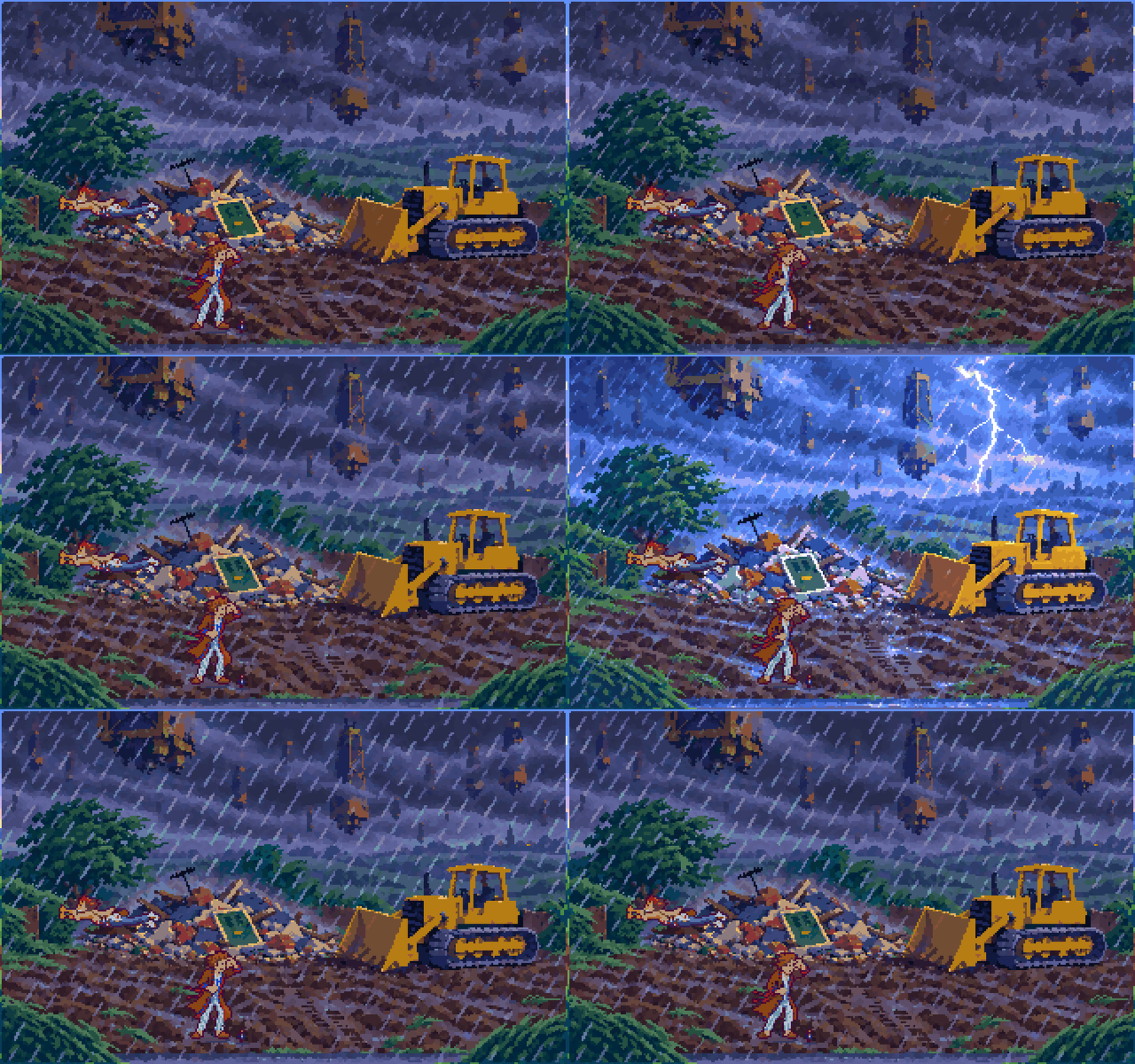
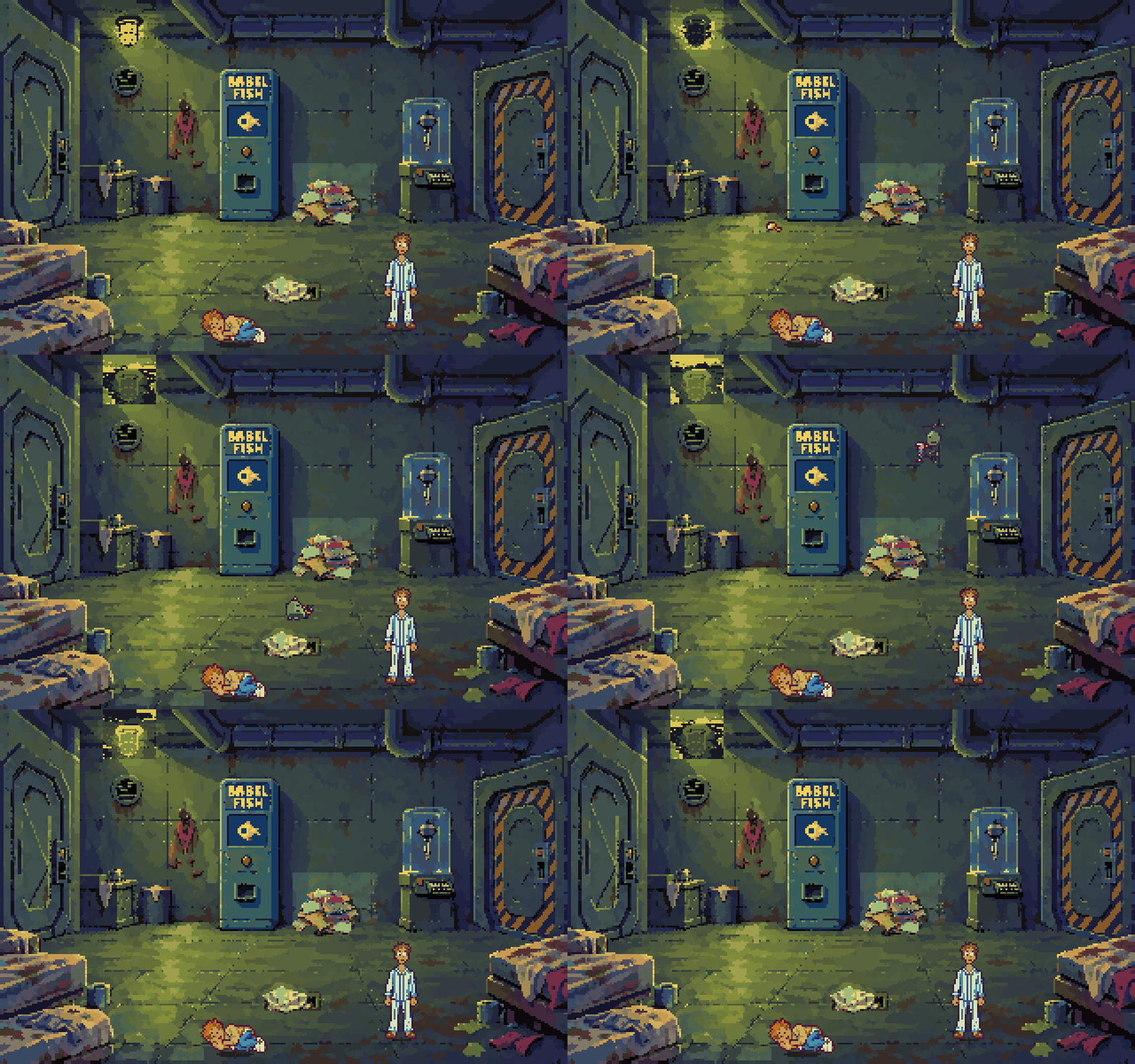
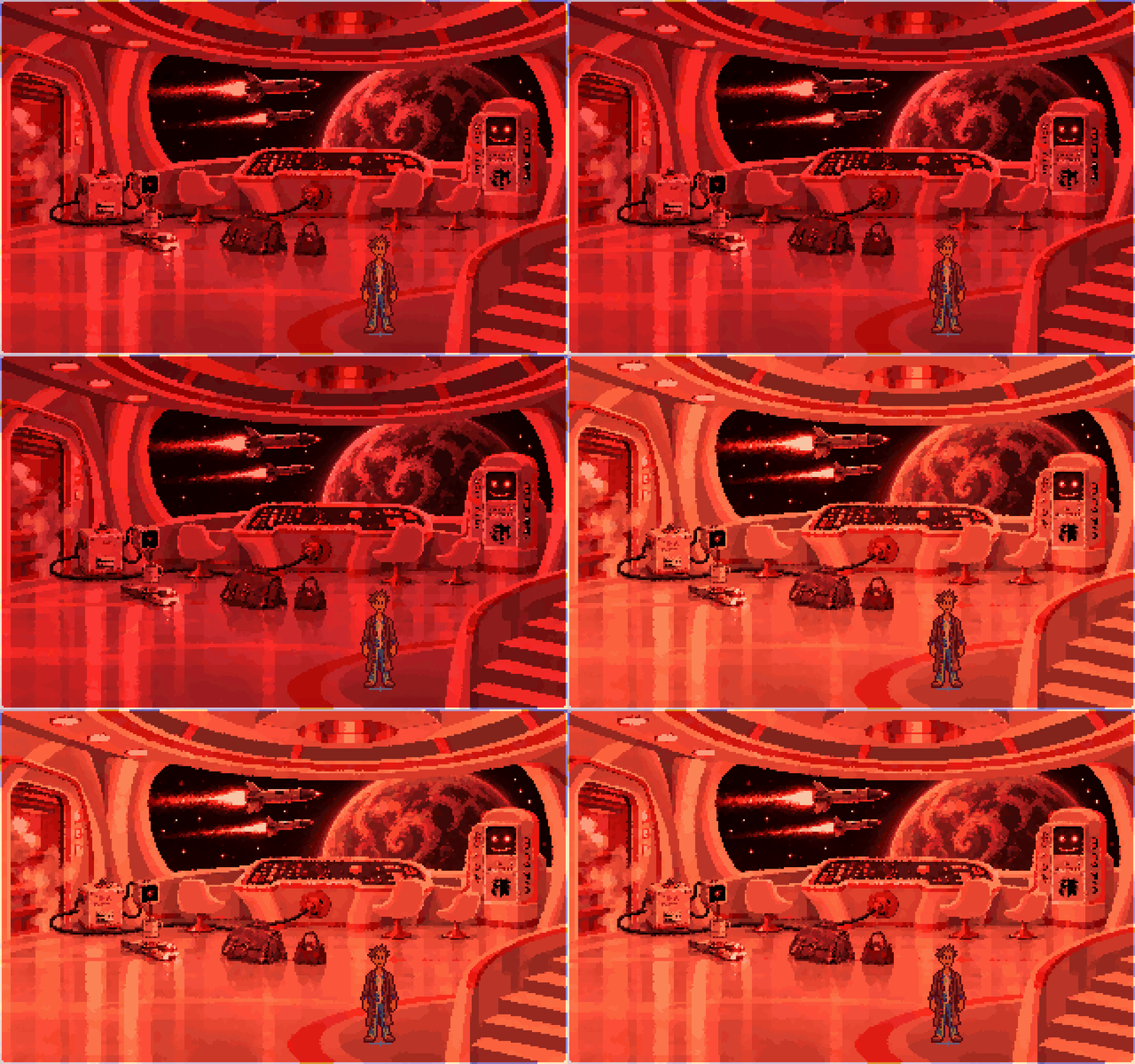
Prototype: The Vogon Hold and the Bridge followed, with a palette-cycled red alert.
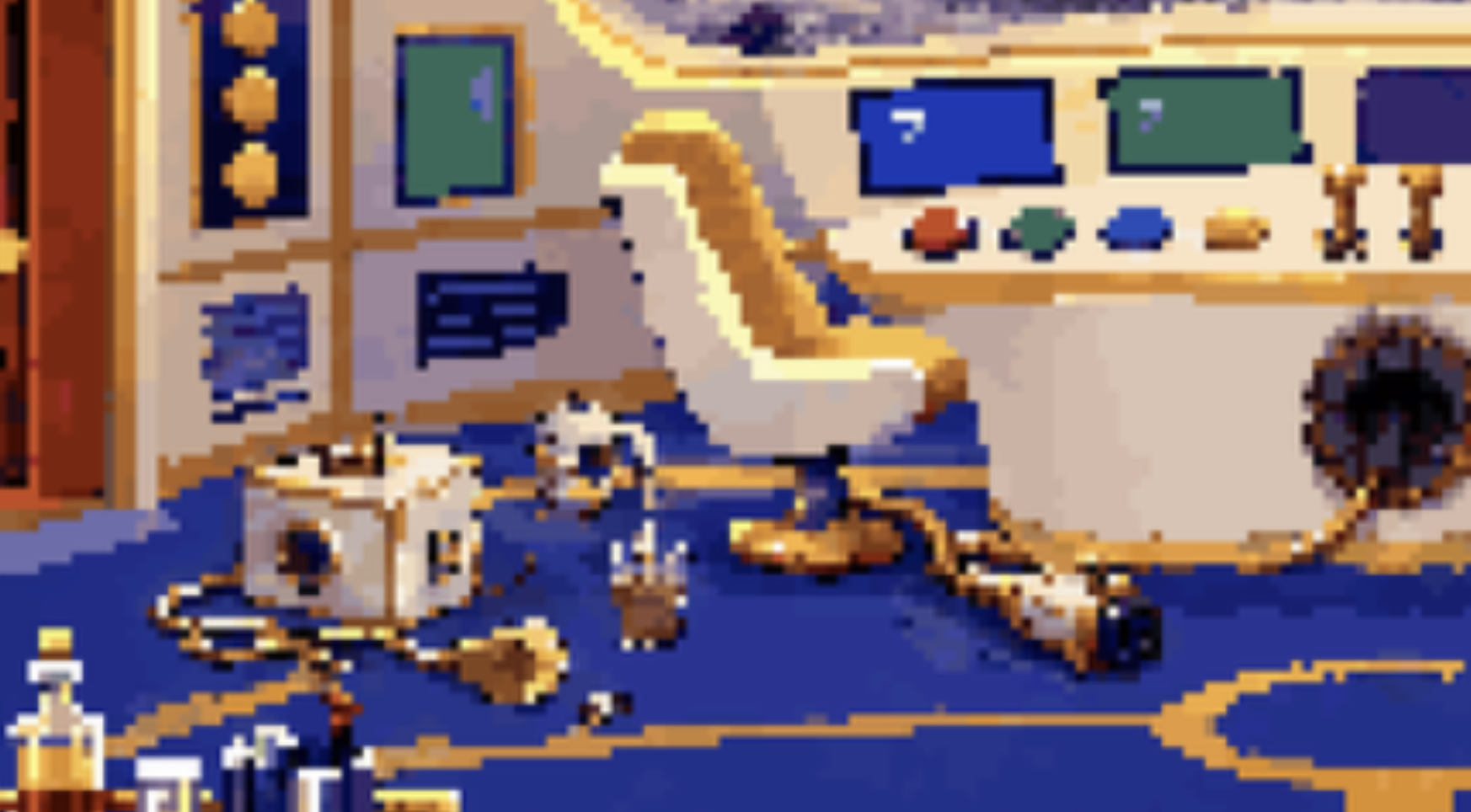
Wrong turn: Verdict: Looks terrible, like scaled-down higher-res stuff
Sep 28
Wrong turn: A pass to straighten jagged lines made blobs instead.
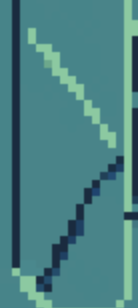
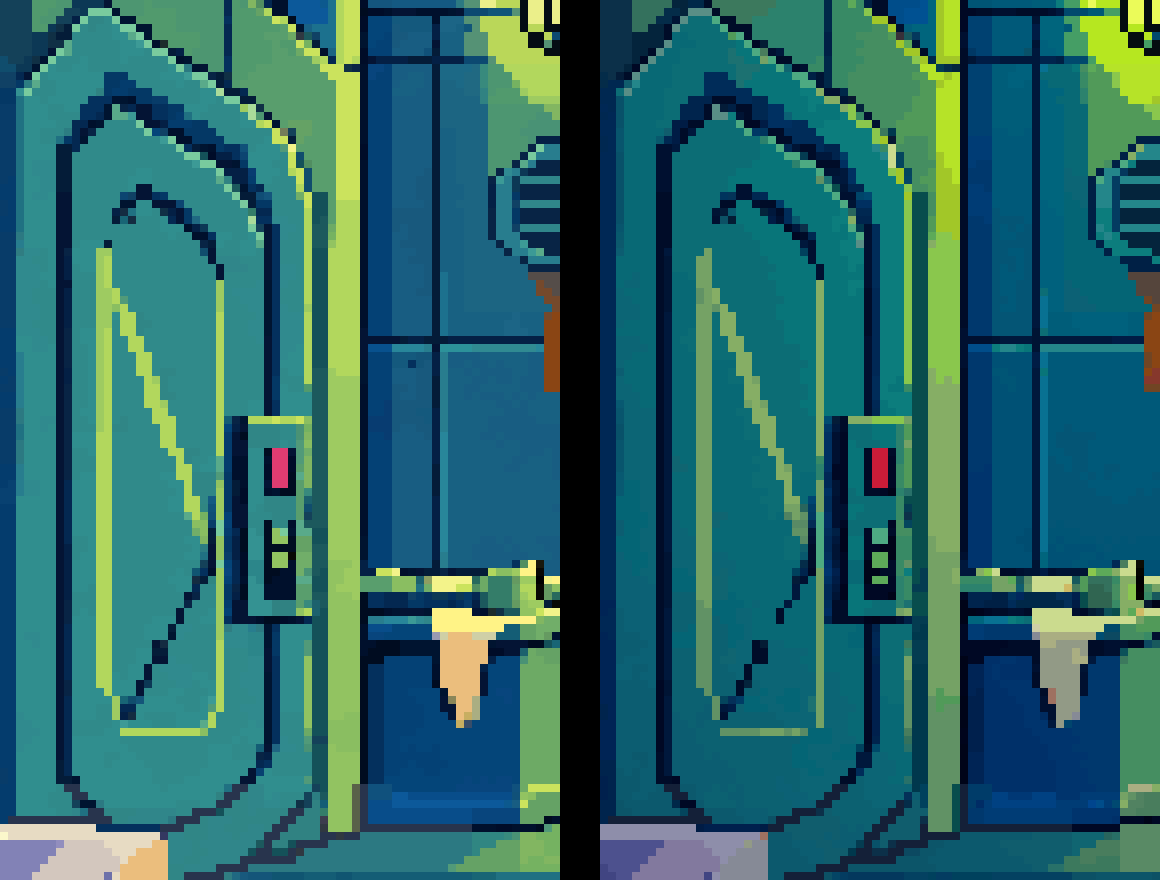
Learning: Monkey Island has almost no flat 3×3 block; these rooms were 30% flat. Every cleanup step had been flattening the art.
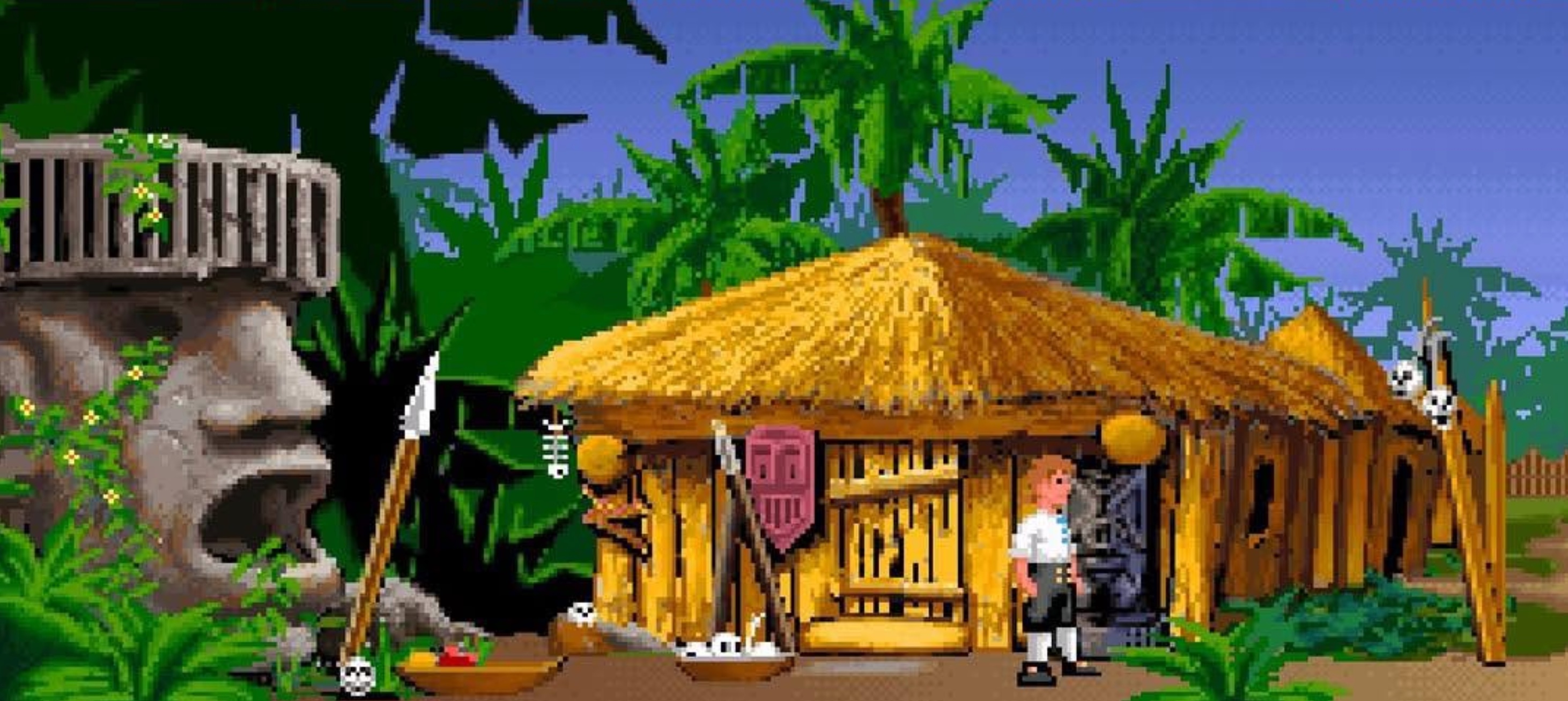
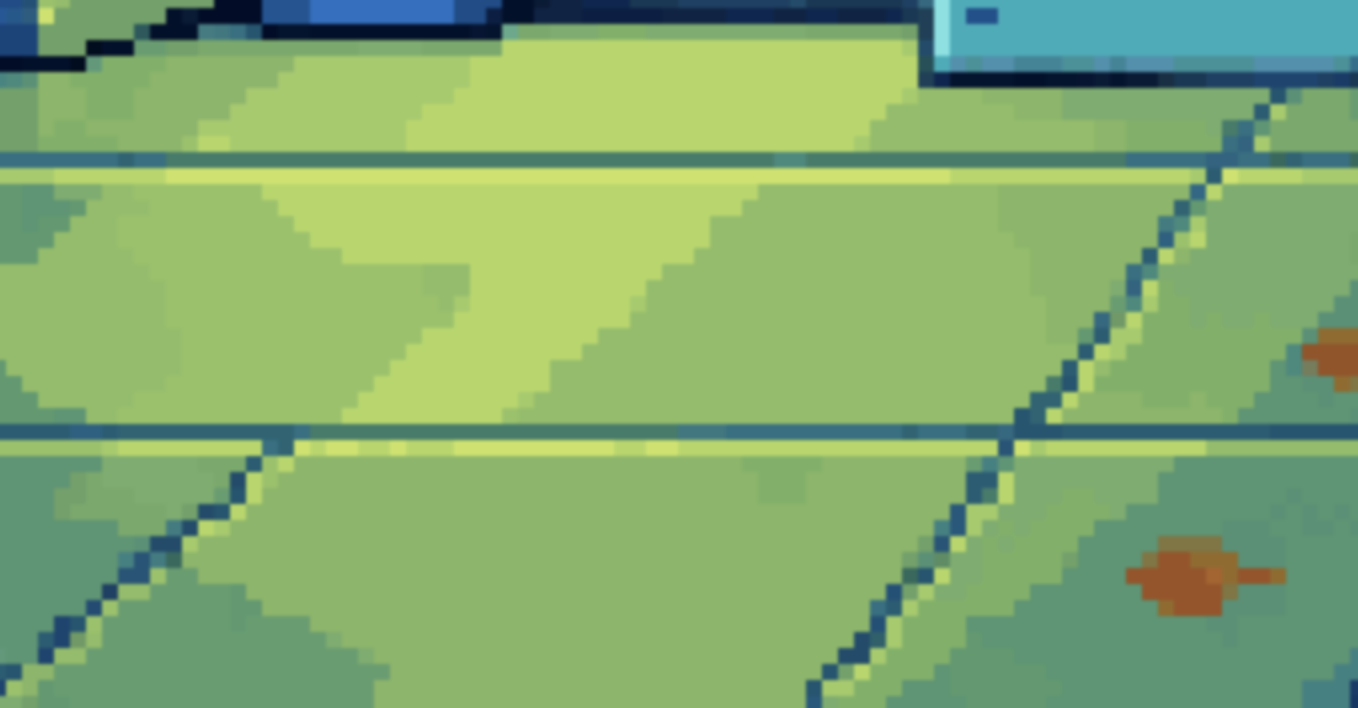
Breakthrough: Stop cleaning: shrink the painting once and dither it.
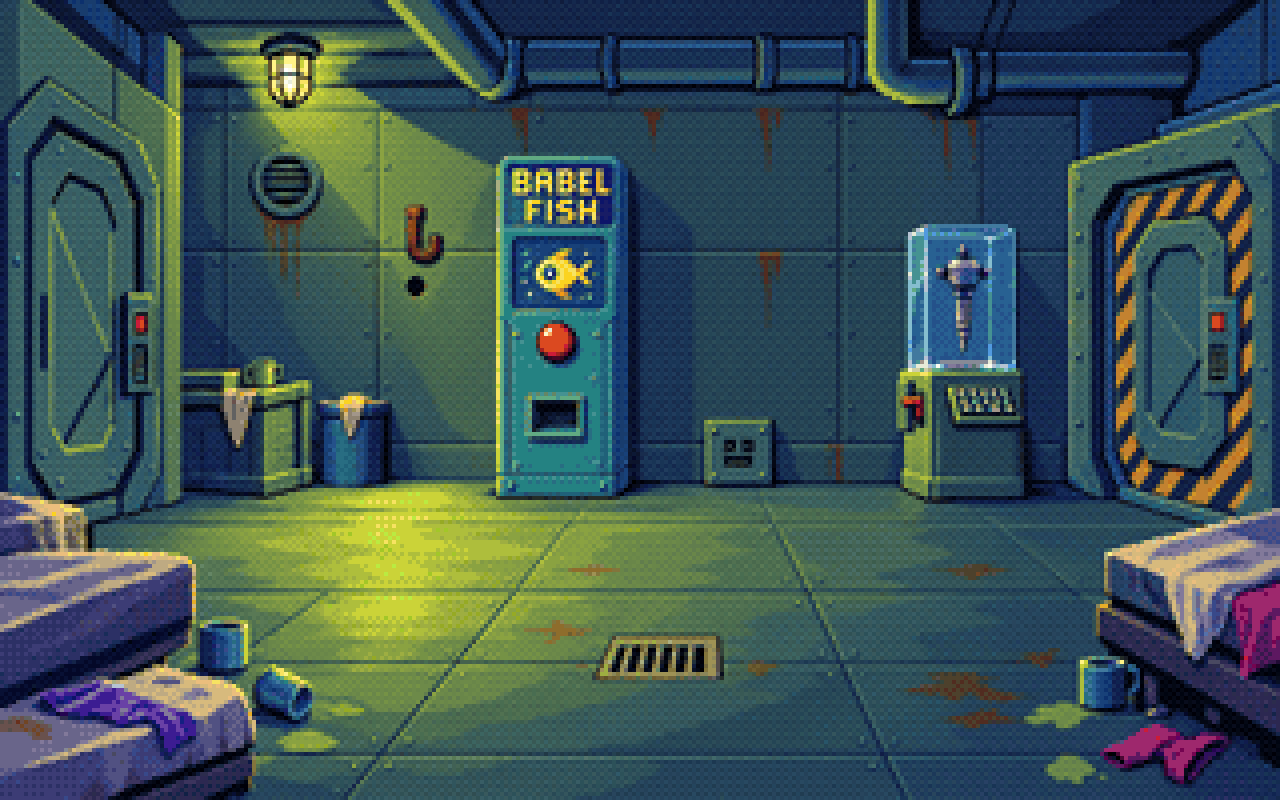
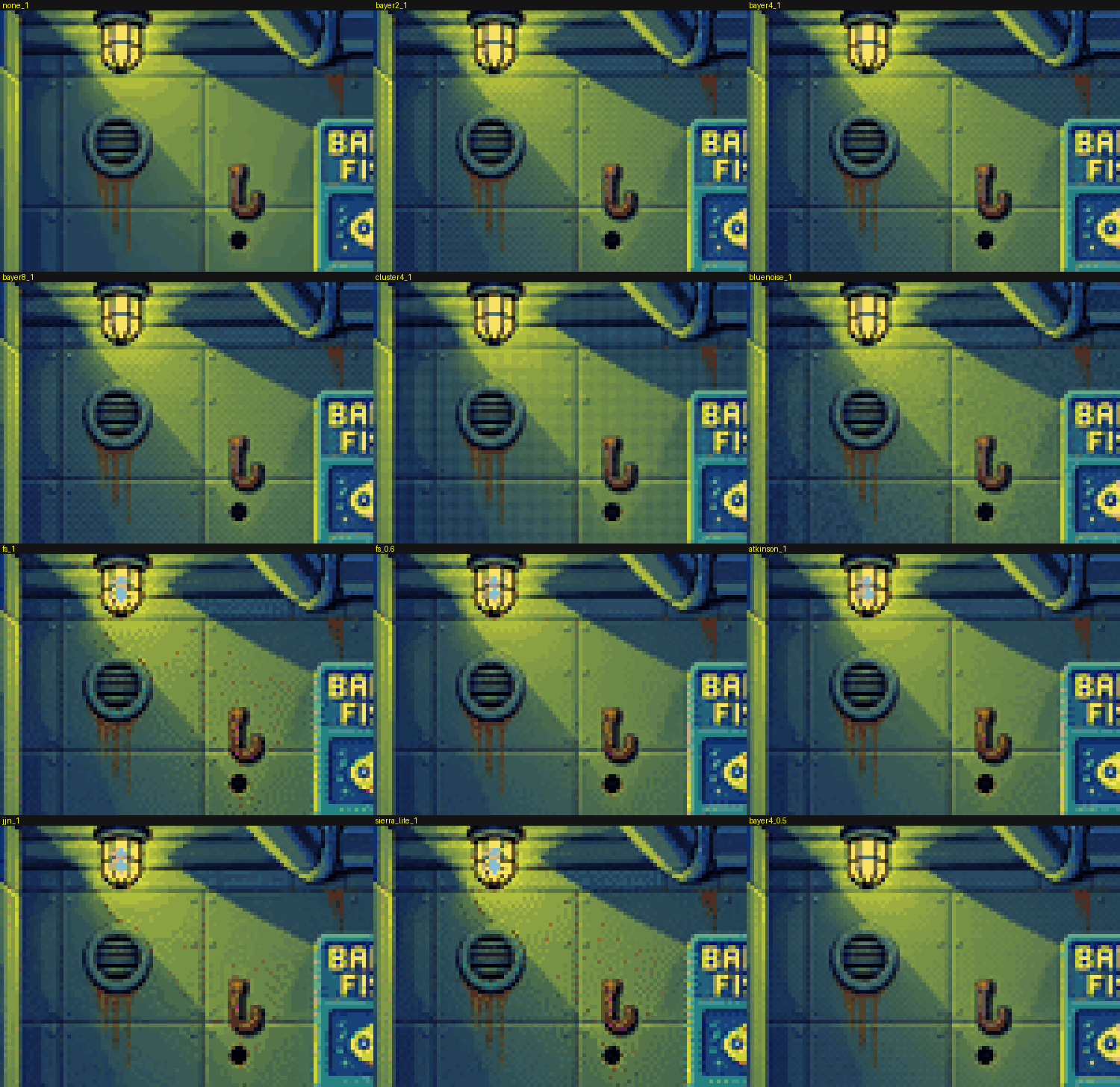
Tool: Twelve dithering methods side by side.
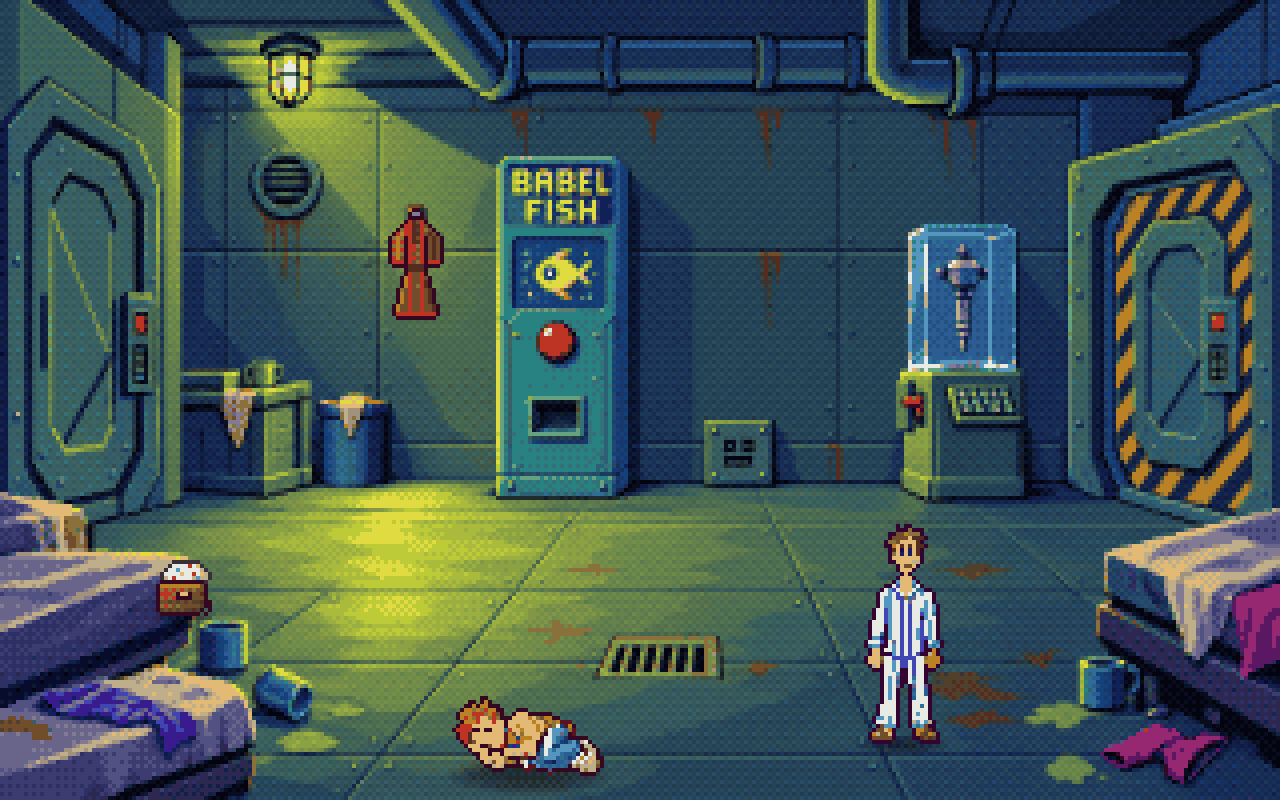
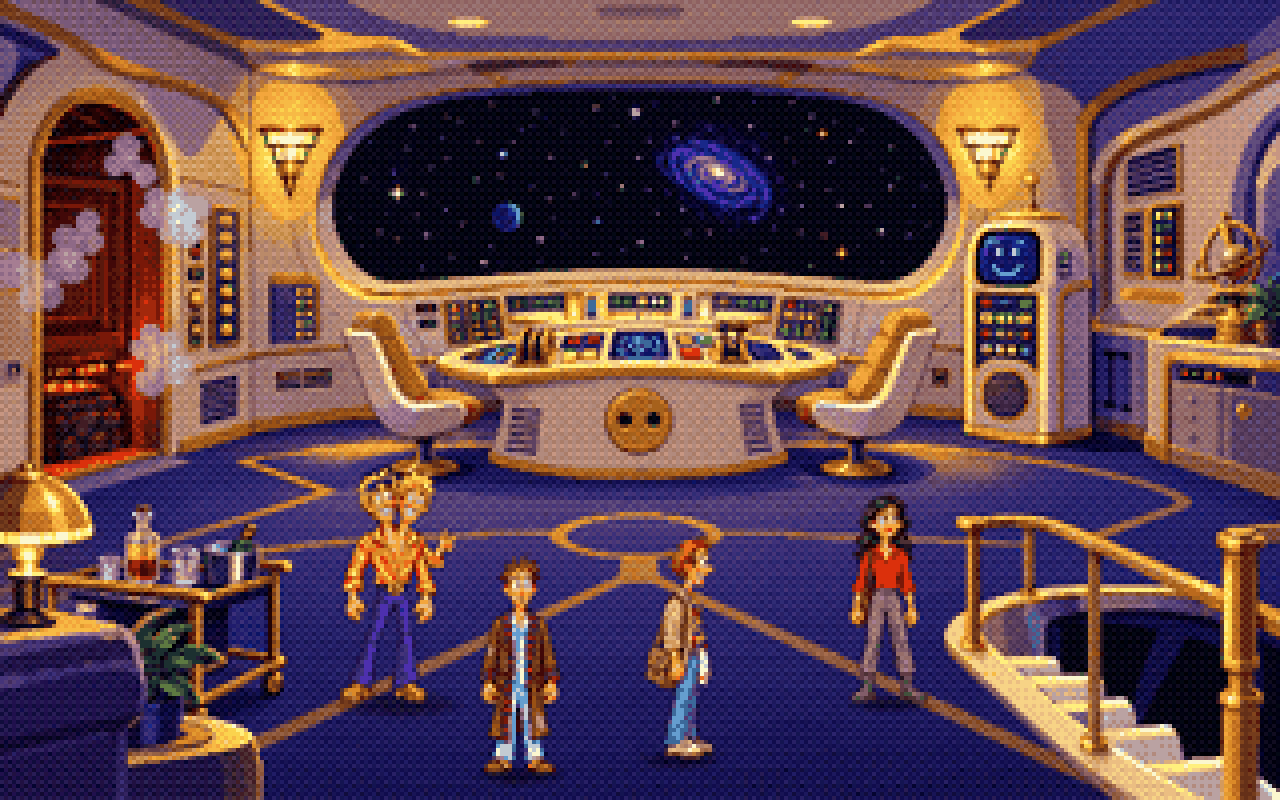
Breakthrough: Compose everything large, sharpen, shrink once, blue-noise dither the whole frame. “This is the way!”
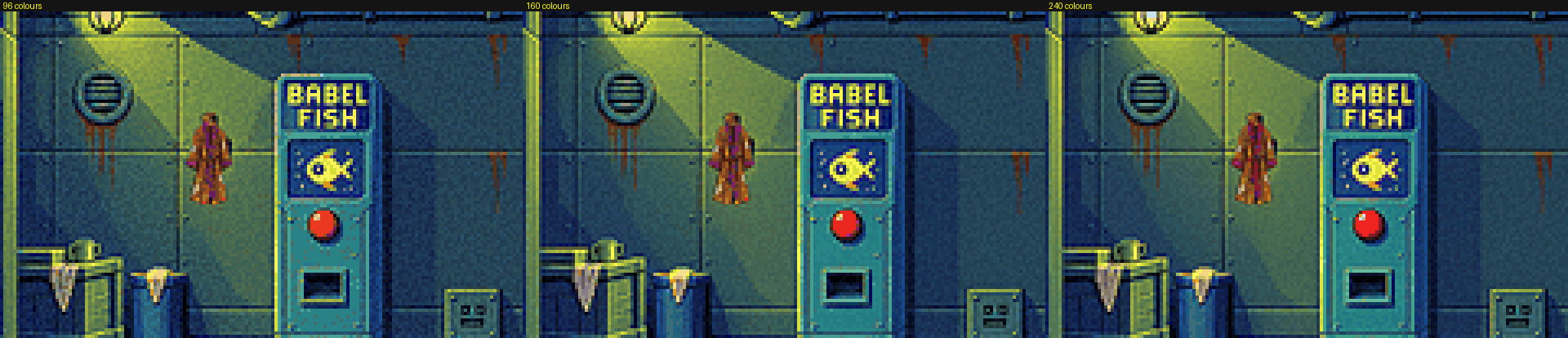
Learning: More colours, finer grain: 96, 160, 240. 240 won.
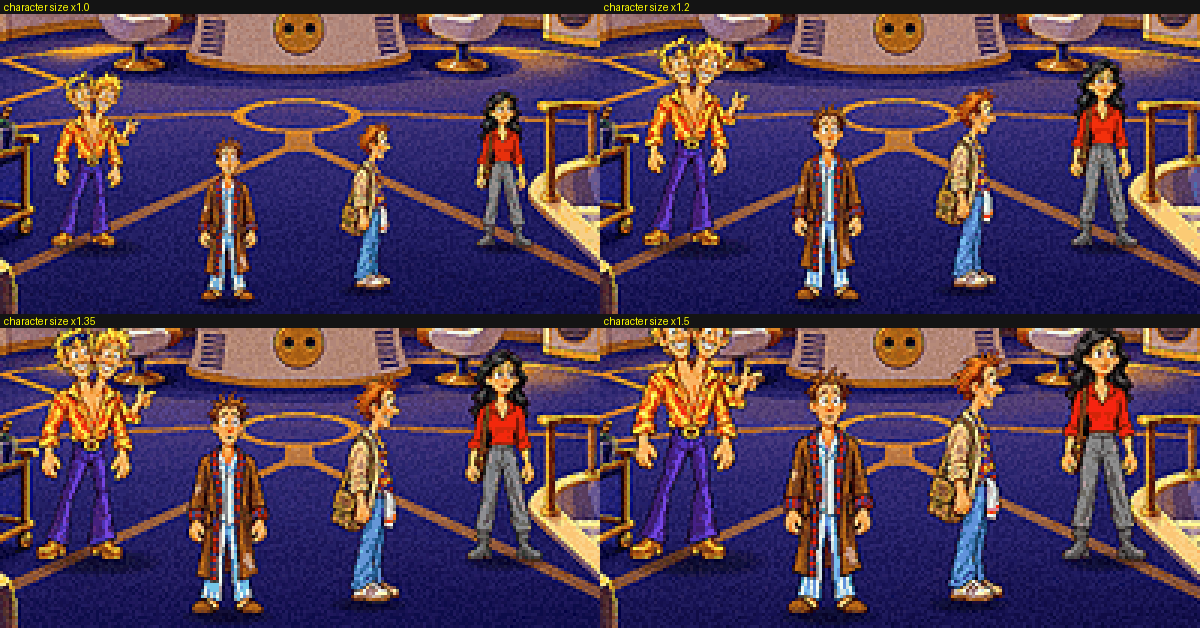
Learning: Characters ×1.35 is where faces survive the dither.
Tool: Foreground masks, so figures can stand behind mattresses and hedges.
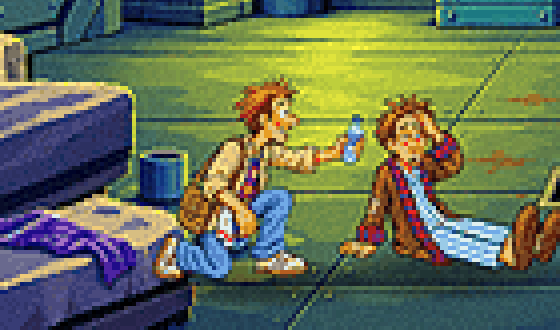
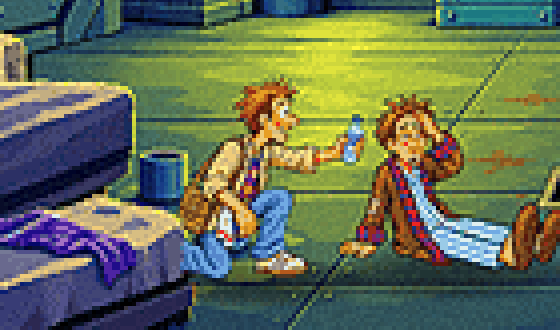
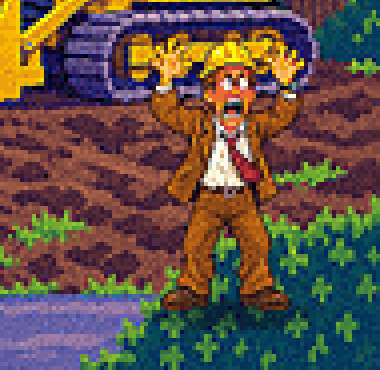
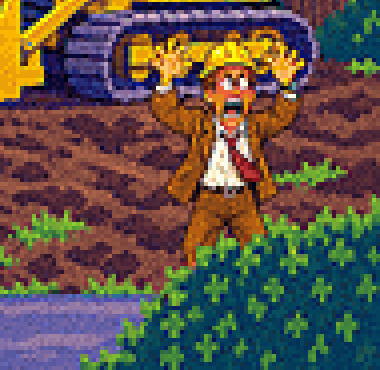
Breakthrough: “Think Monkey Island”: crooked, wacky rooms from a bigger model.
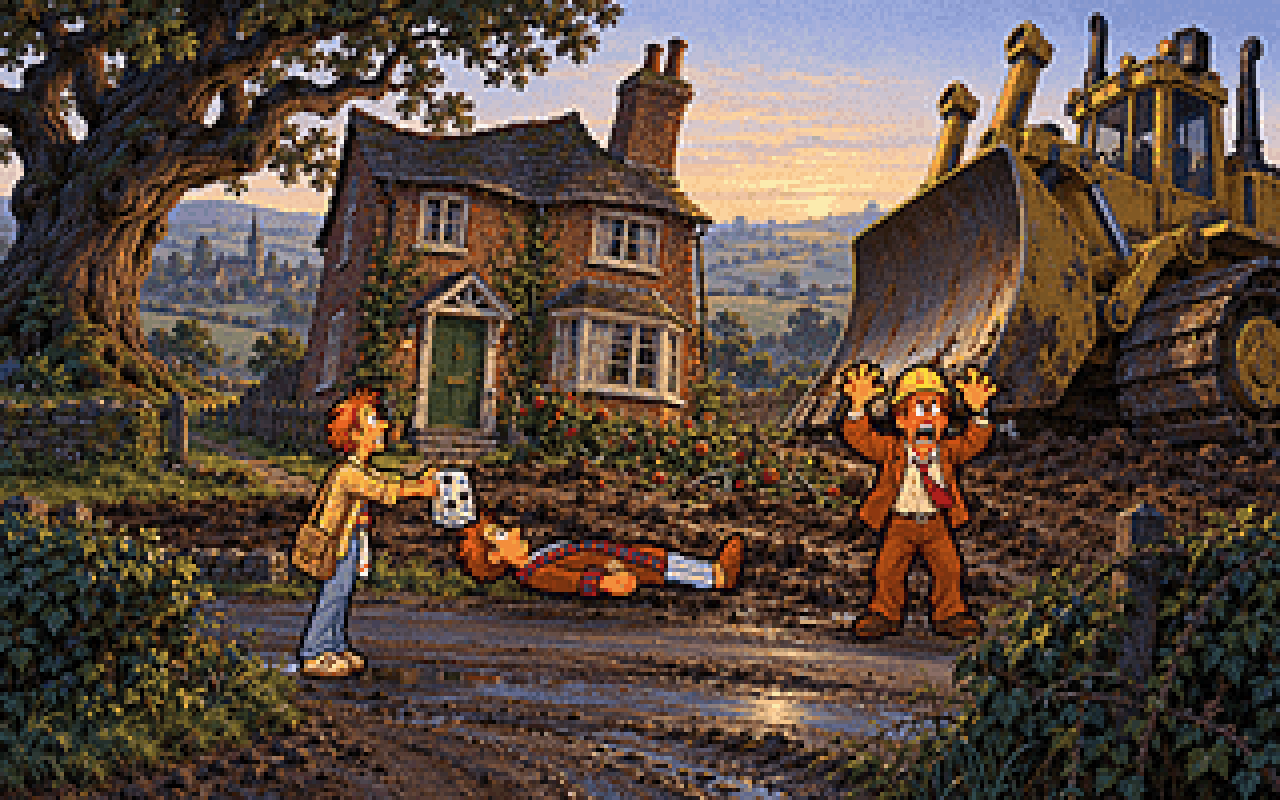
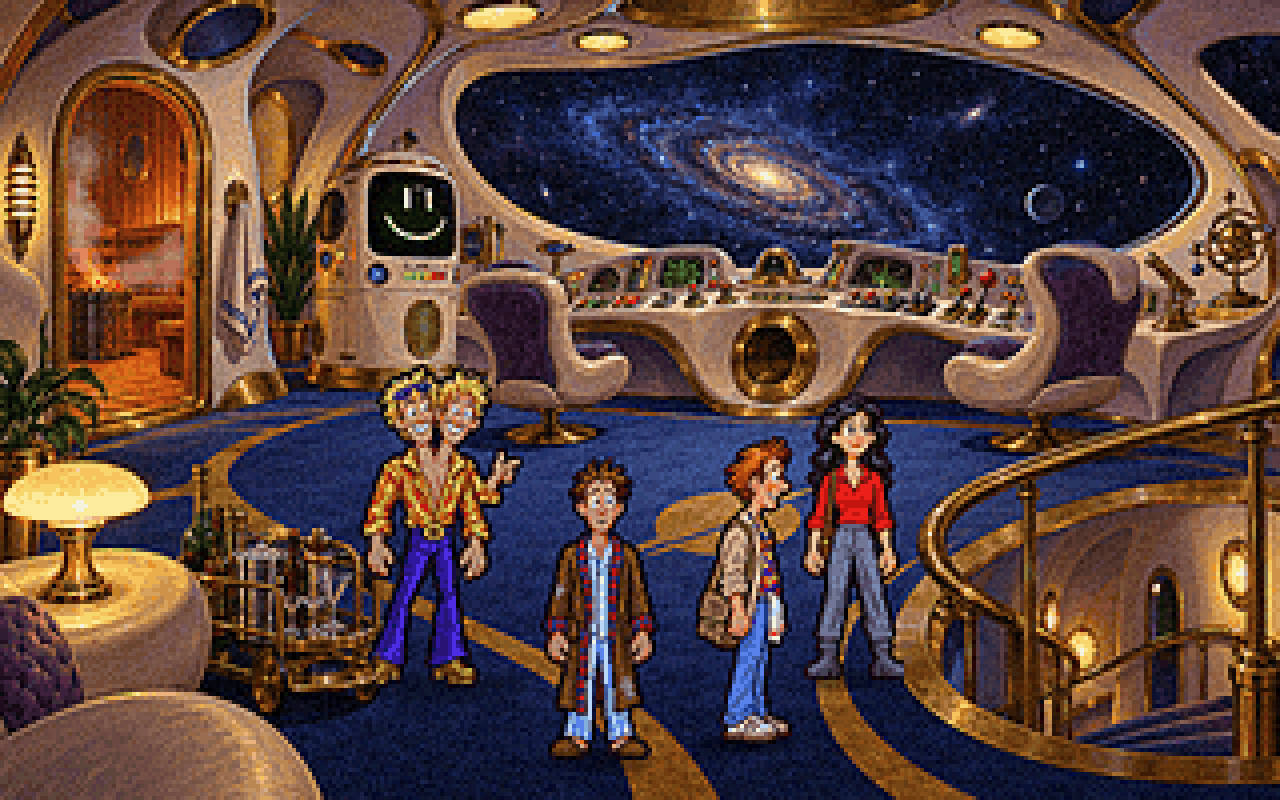
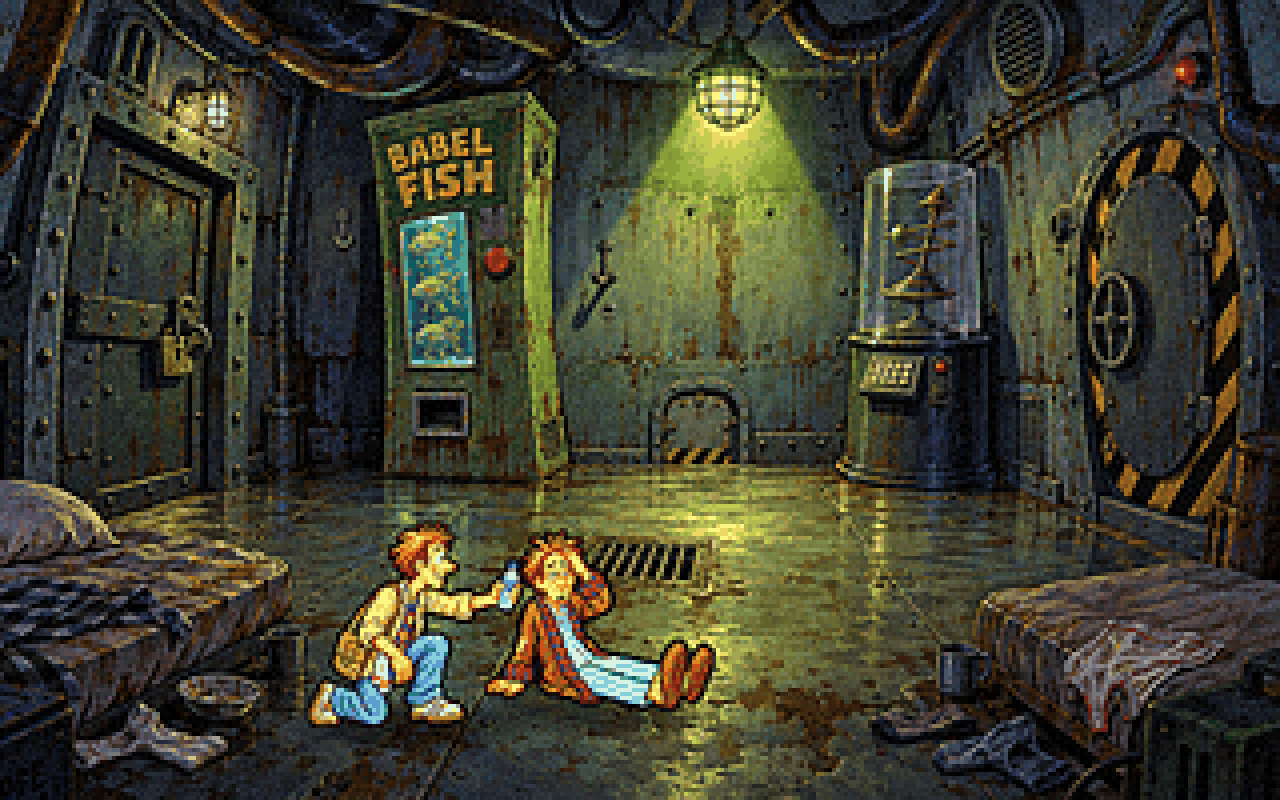
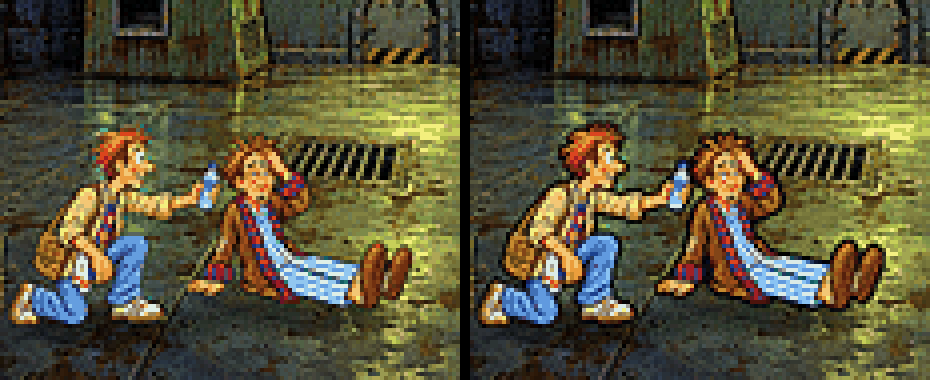
Learning: A hard edge plus a dark outline painted at high resolution gets rid of the cut-out halo.
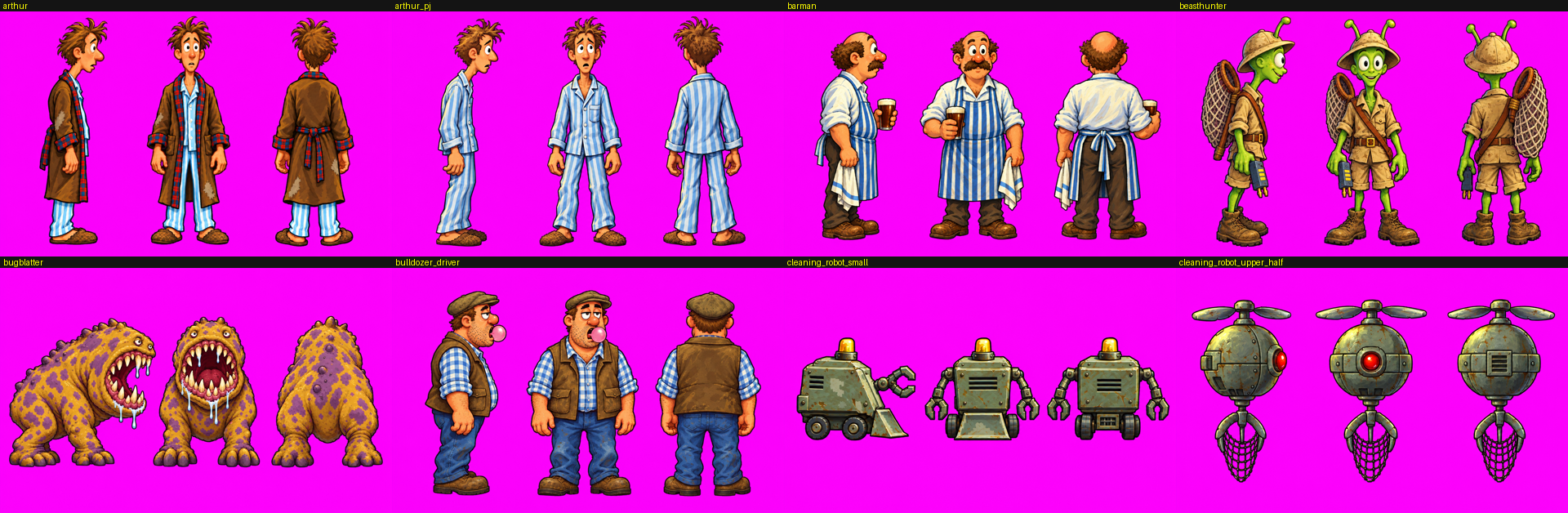
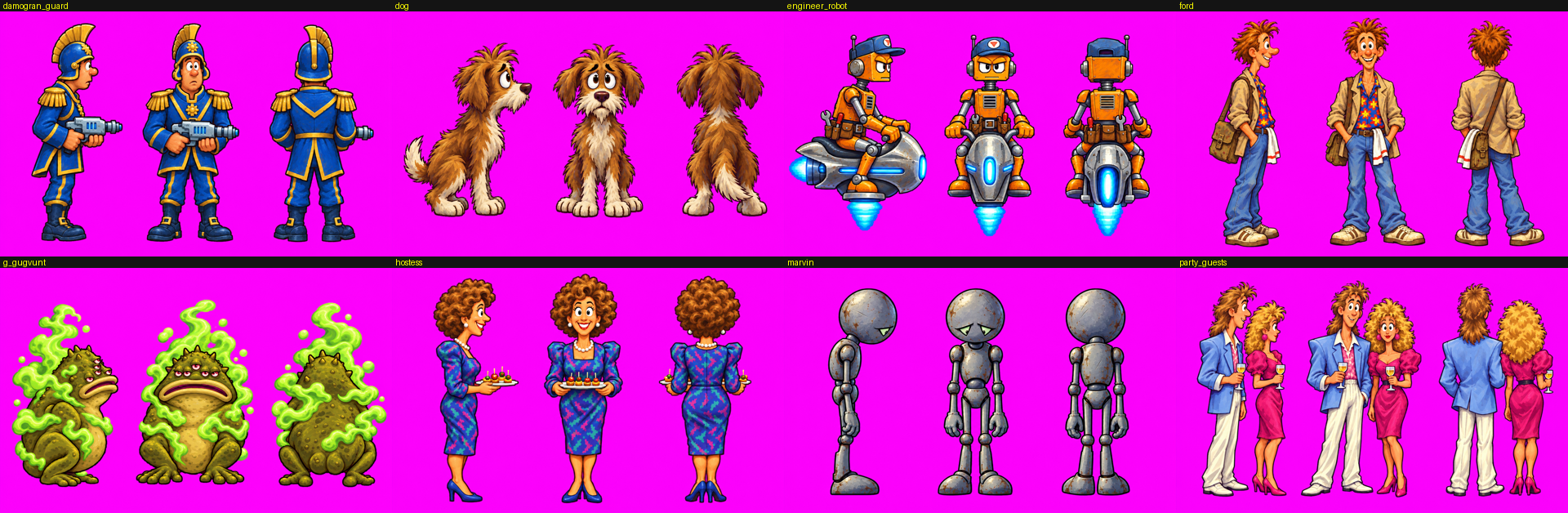
Breakthrough: The whole cast repainted in the same style, on magenta sheets.
Learning: Then nobody was allowed to stand straight anymore.
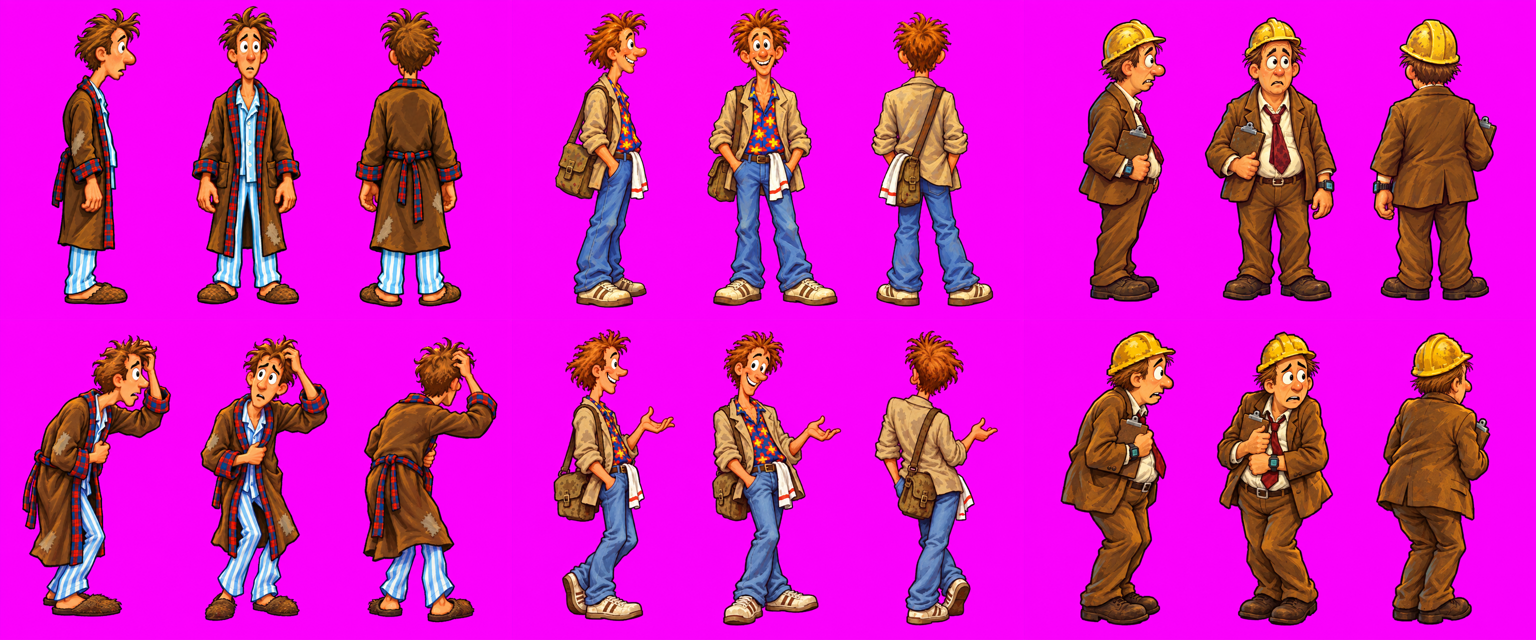
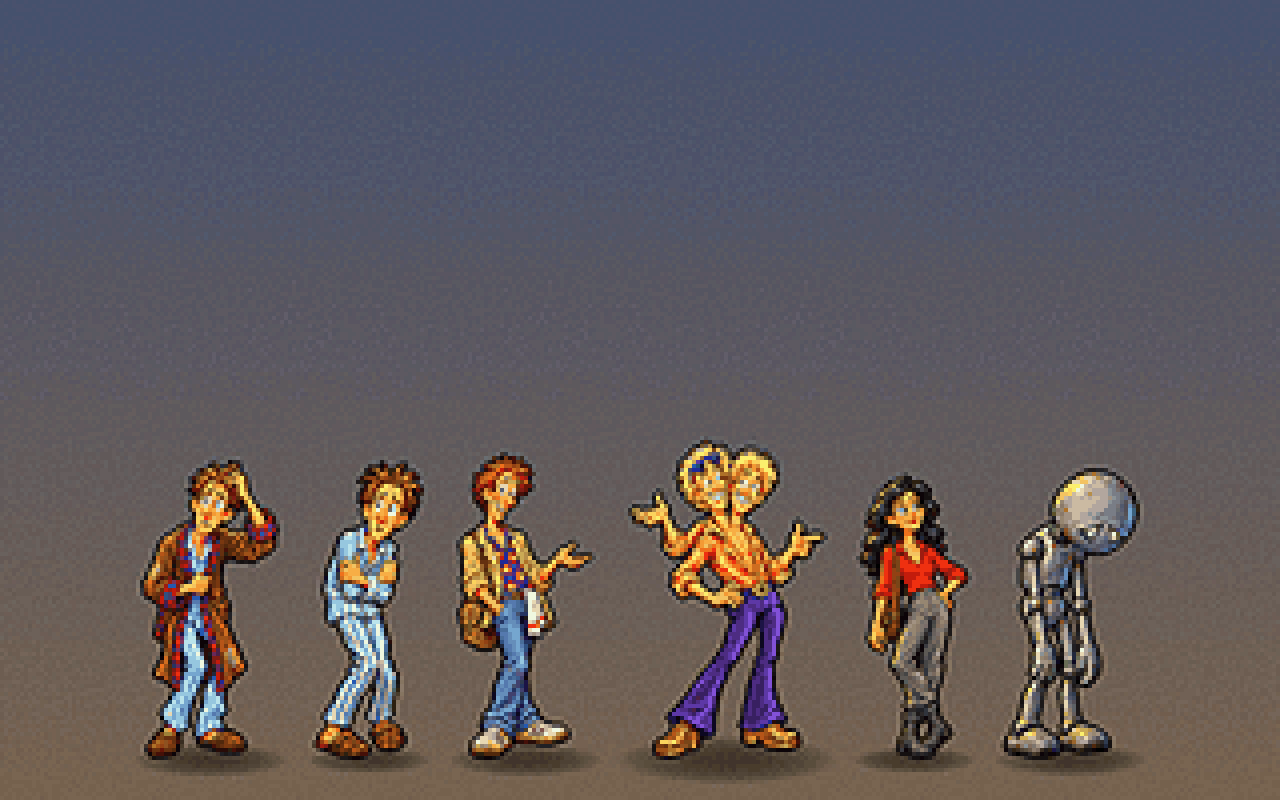
Learning: Arthur and Ford looked like brothers. Now Arthur is tall with dishevelled bed-head in brown; Ford is short, ginger and swept back in green.
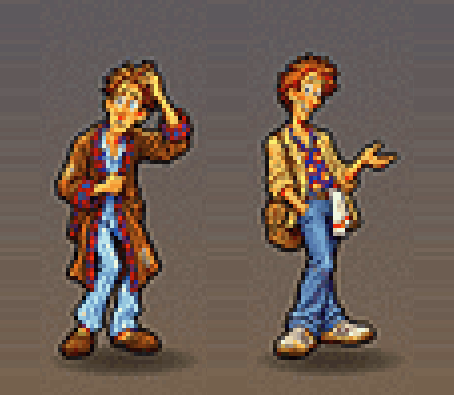
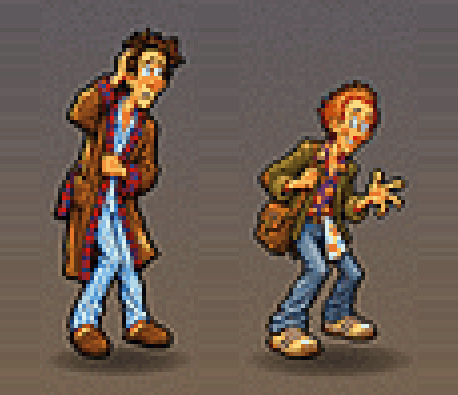
Wrong turn: Arthur was tiny in the porch.
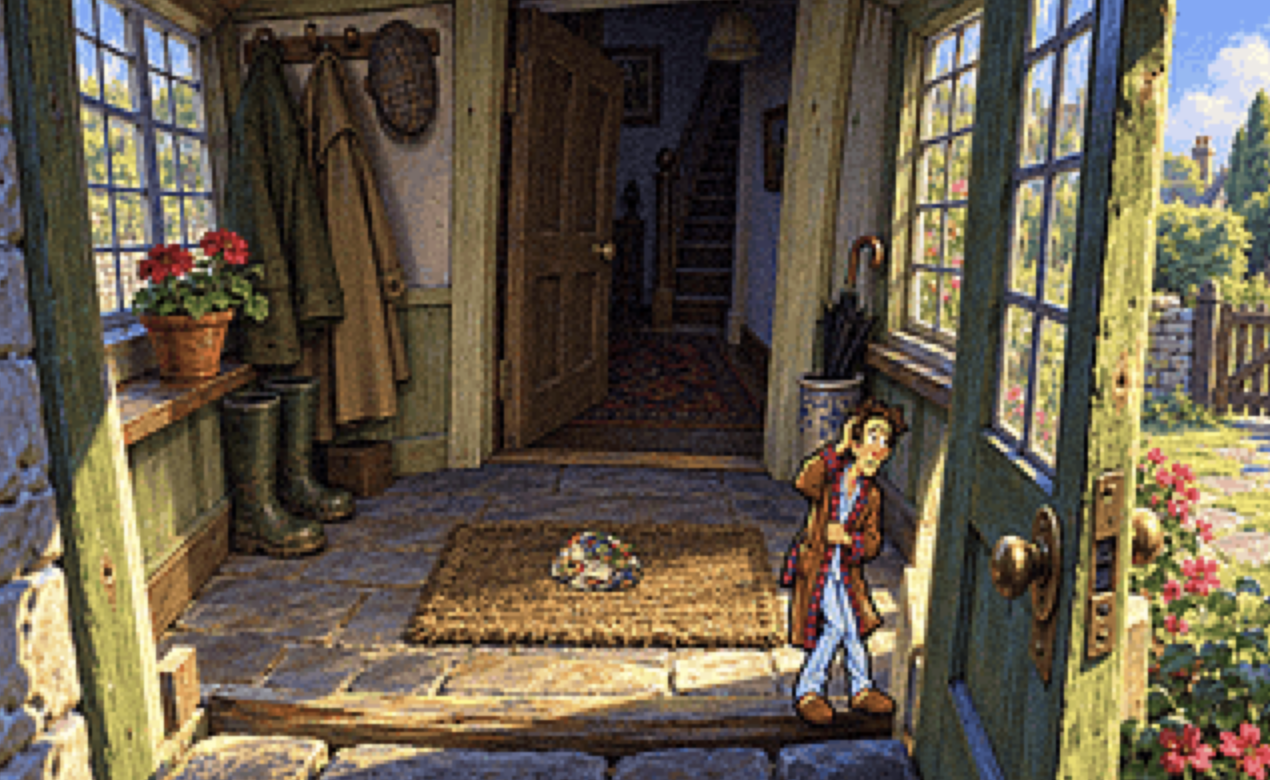
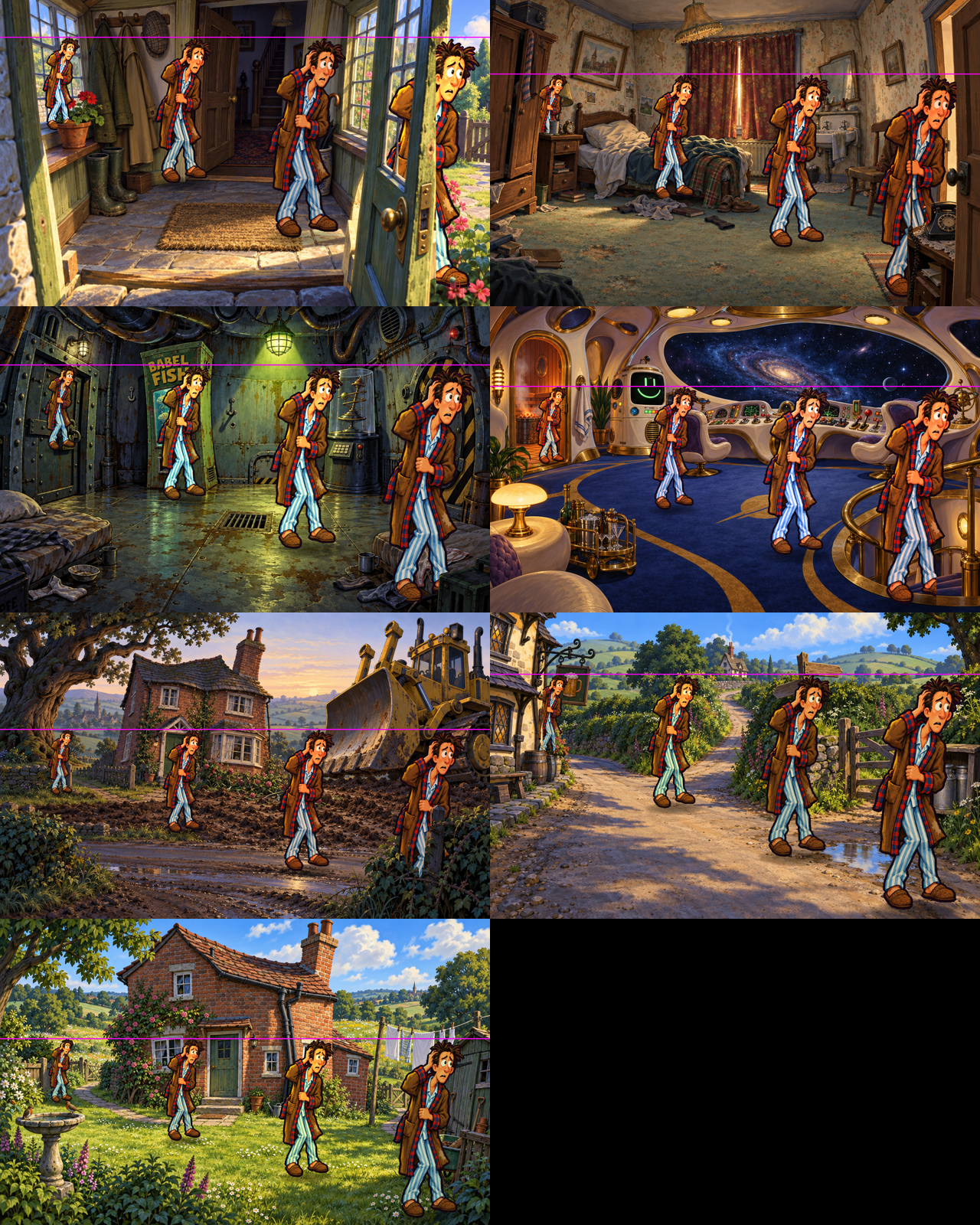
Tool: Every room gets an eye line, and figures scale with depth. A ruler tool checks it.
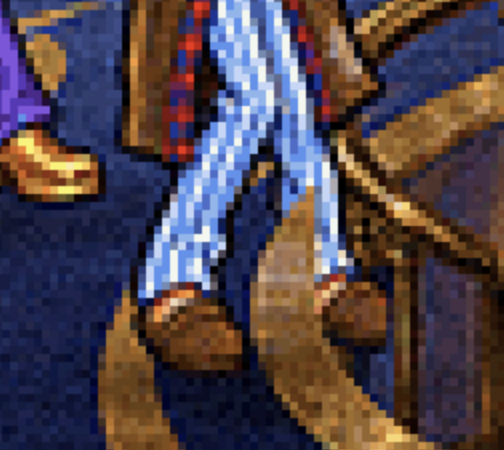
Wrong turn: Automatic occlusion put a railing through Arthur's leg.
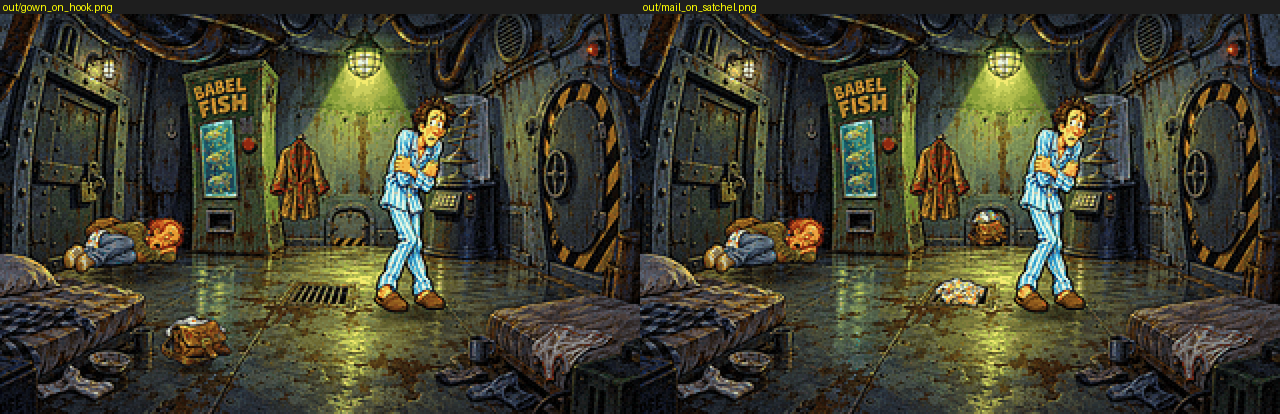
Learning: Nobody walks in a text adventure, so each figure gets a hand-picked spot per story beat.
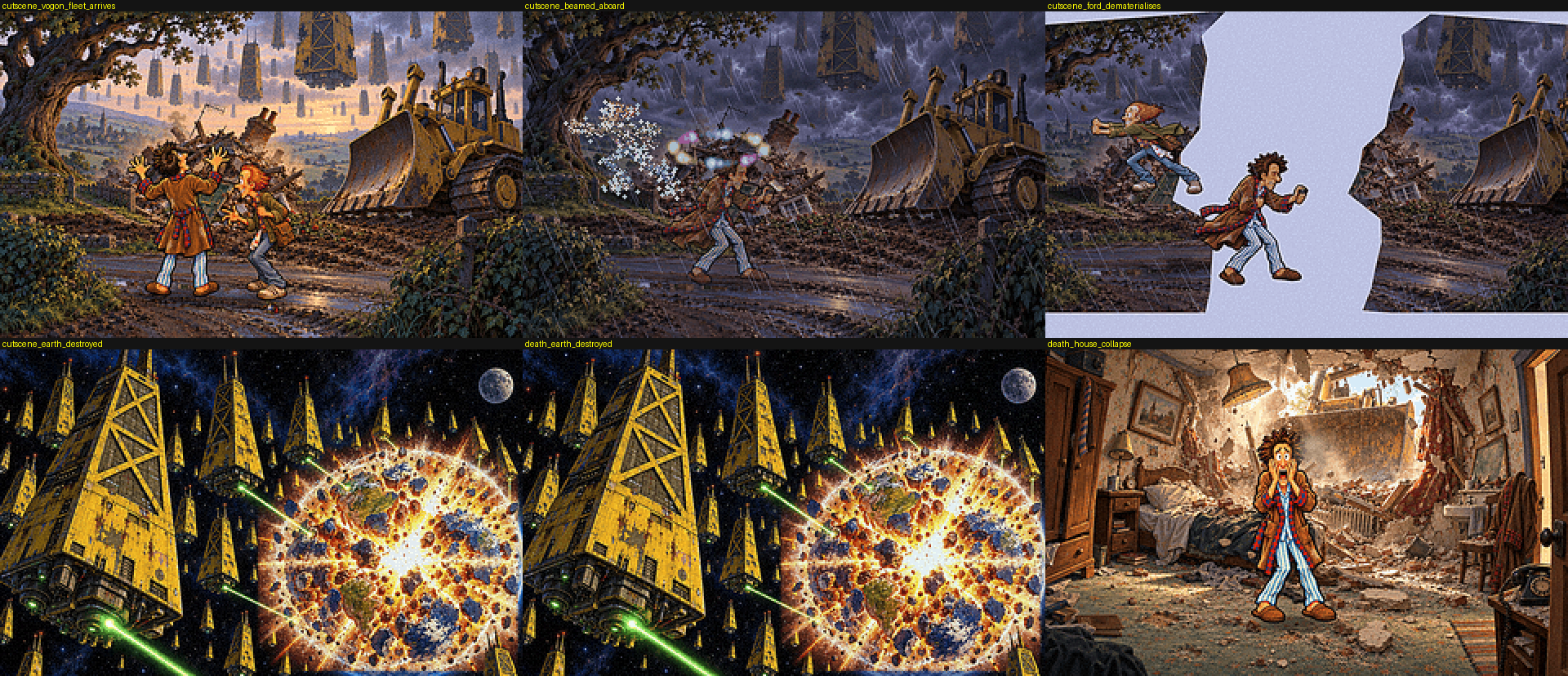
Milestone: Earth done: 8 rooms plus cutscenes, deaths and dark screens.
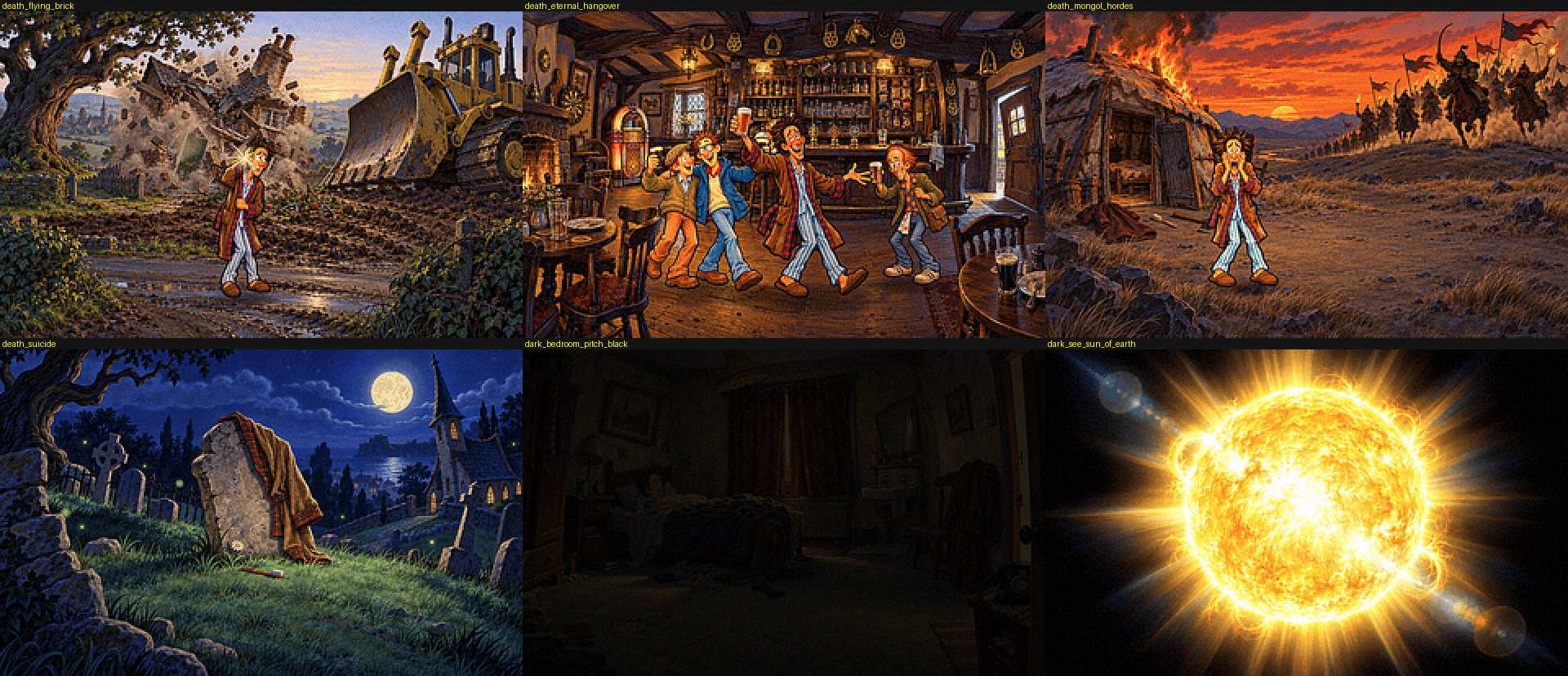
Sep 30
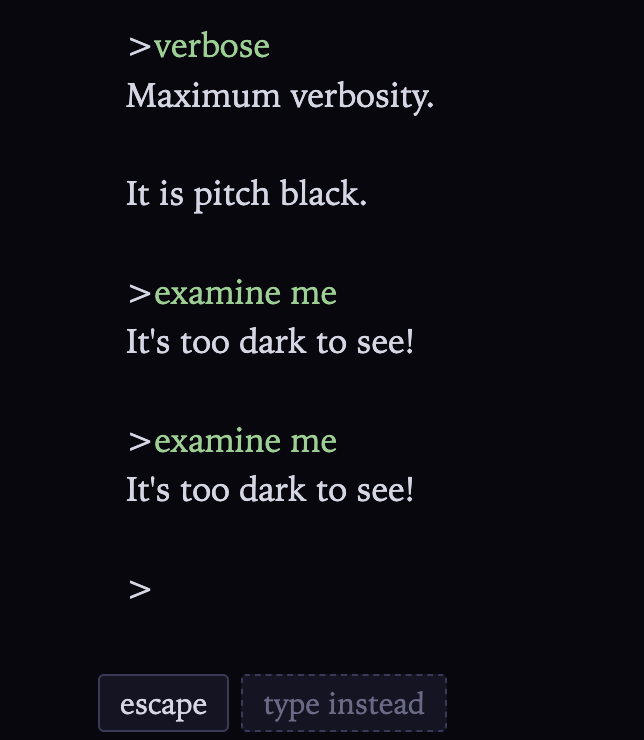
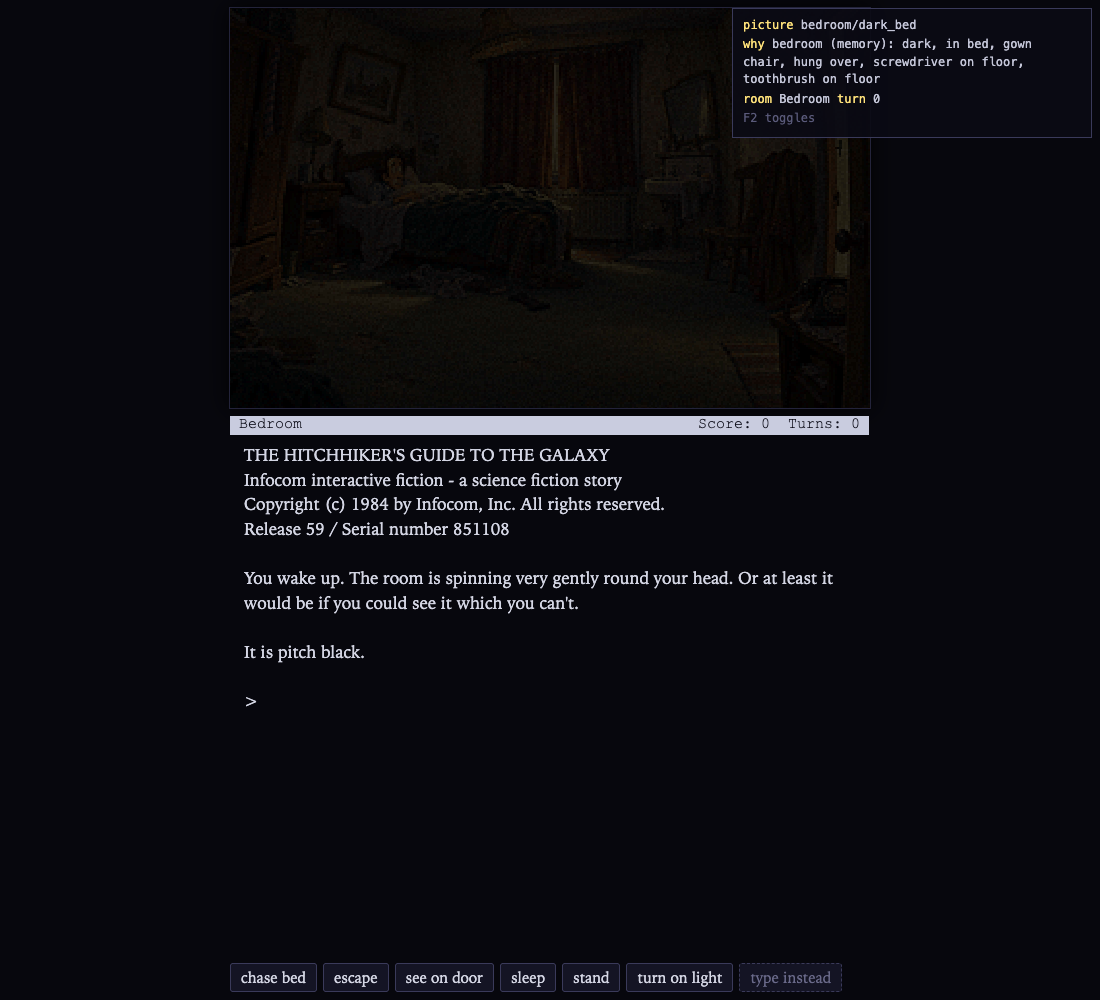
Milestone: It became a game: the real story file in the browser, with a picture per turn.
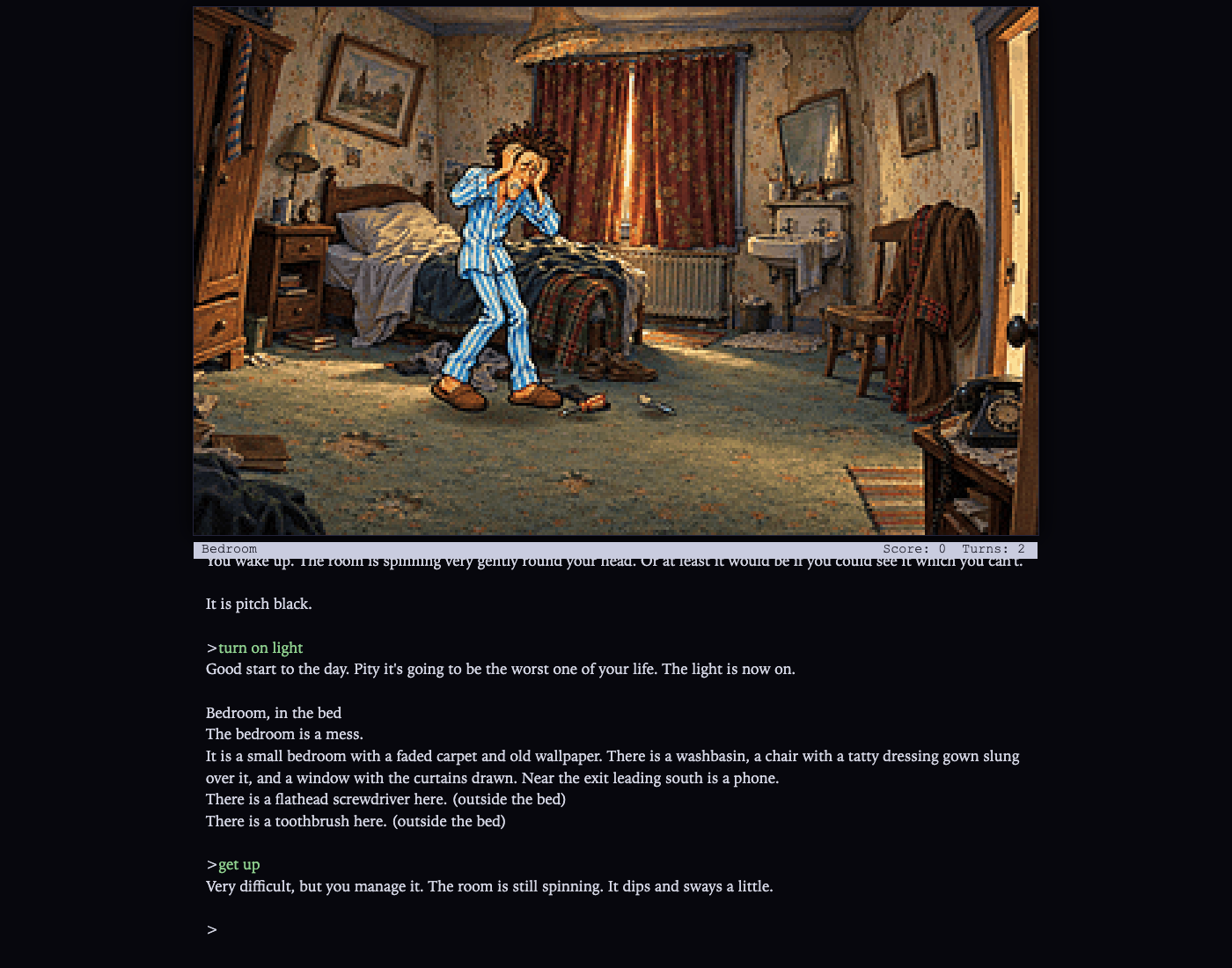
Learning: Pictures follow the game's memory, not a walkthrough: 130 reachable bedroom combinations.
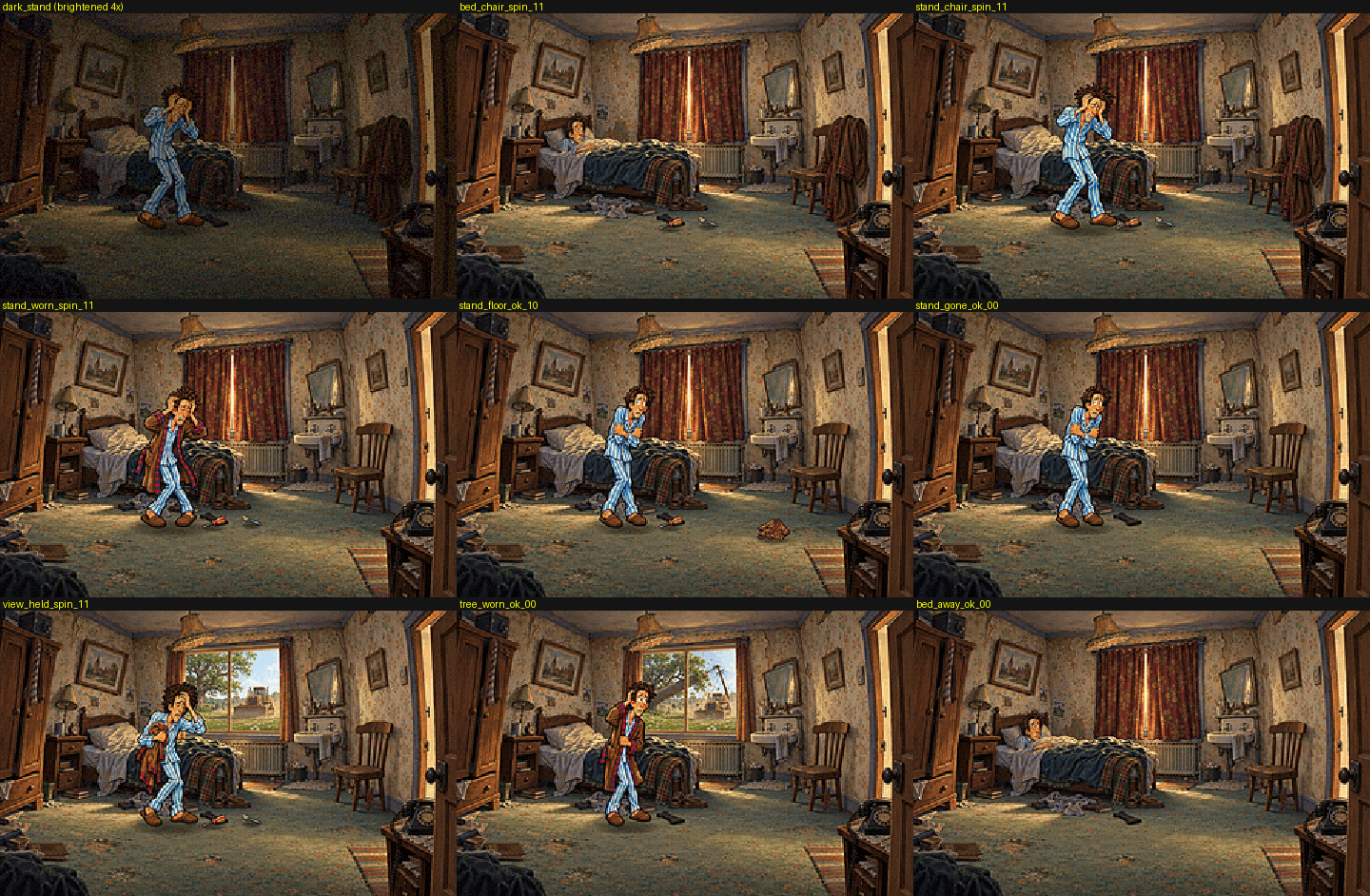
Oct 1
Learning: Gown or pyjamas, read from memory every turn. Worn clothes show; carried things don't.
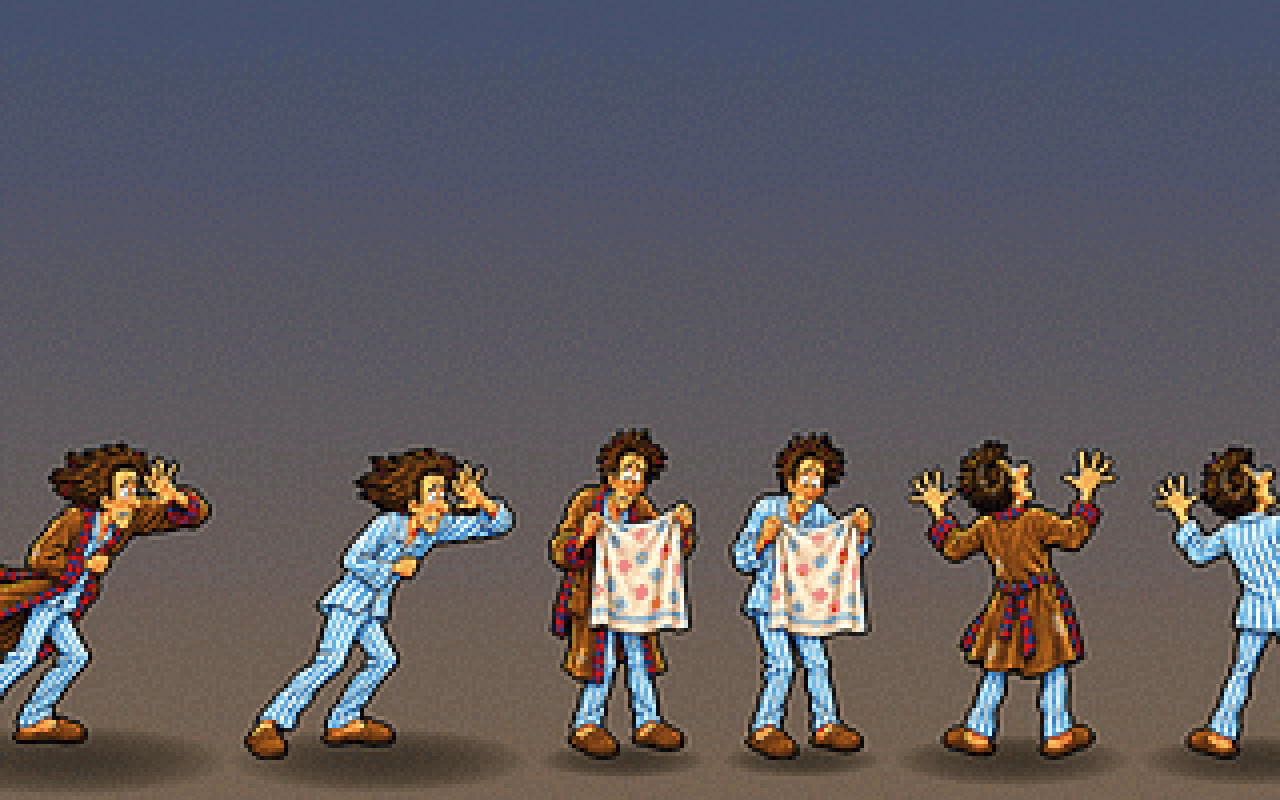
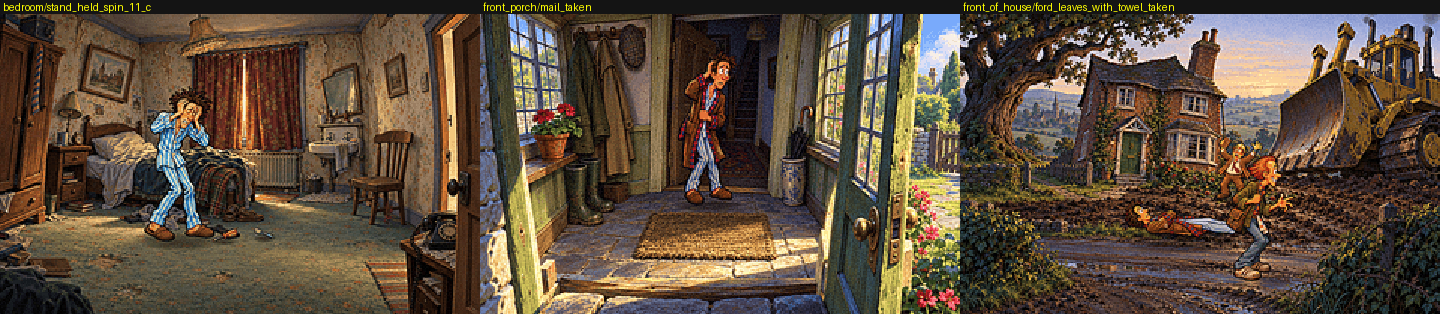
Wrong turn: “Arthur is not lying in the way of the bulldozer!”
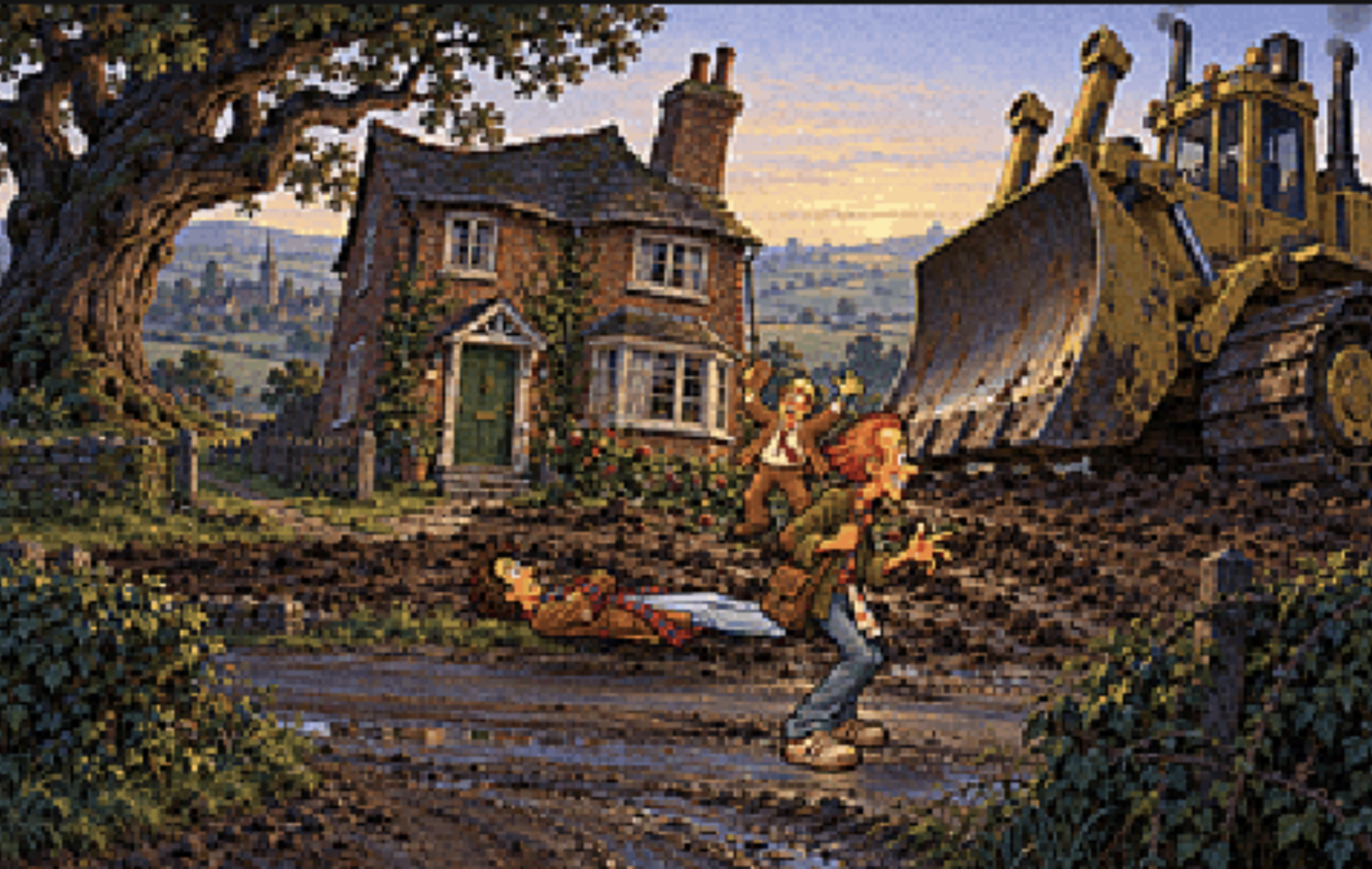
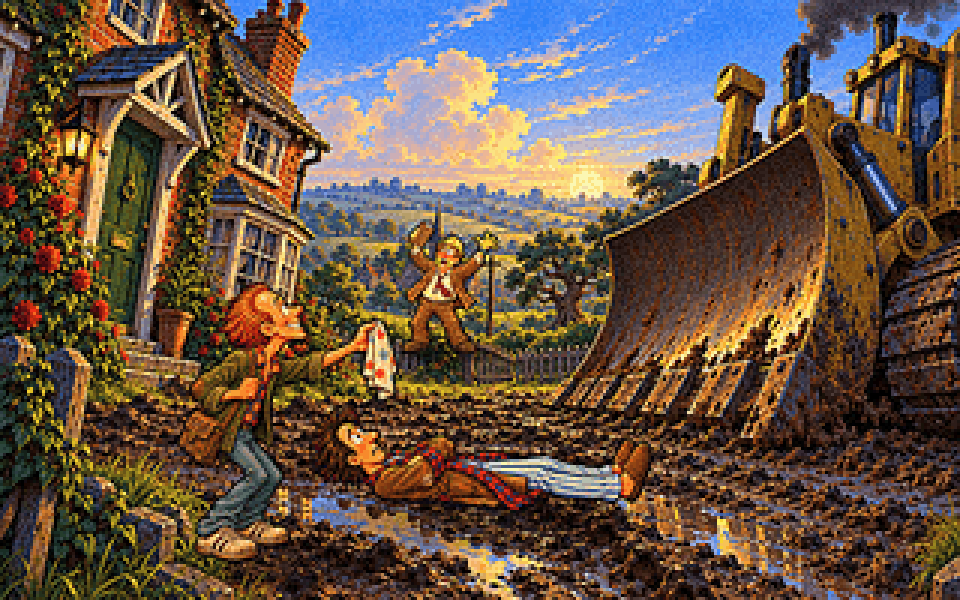
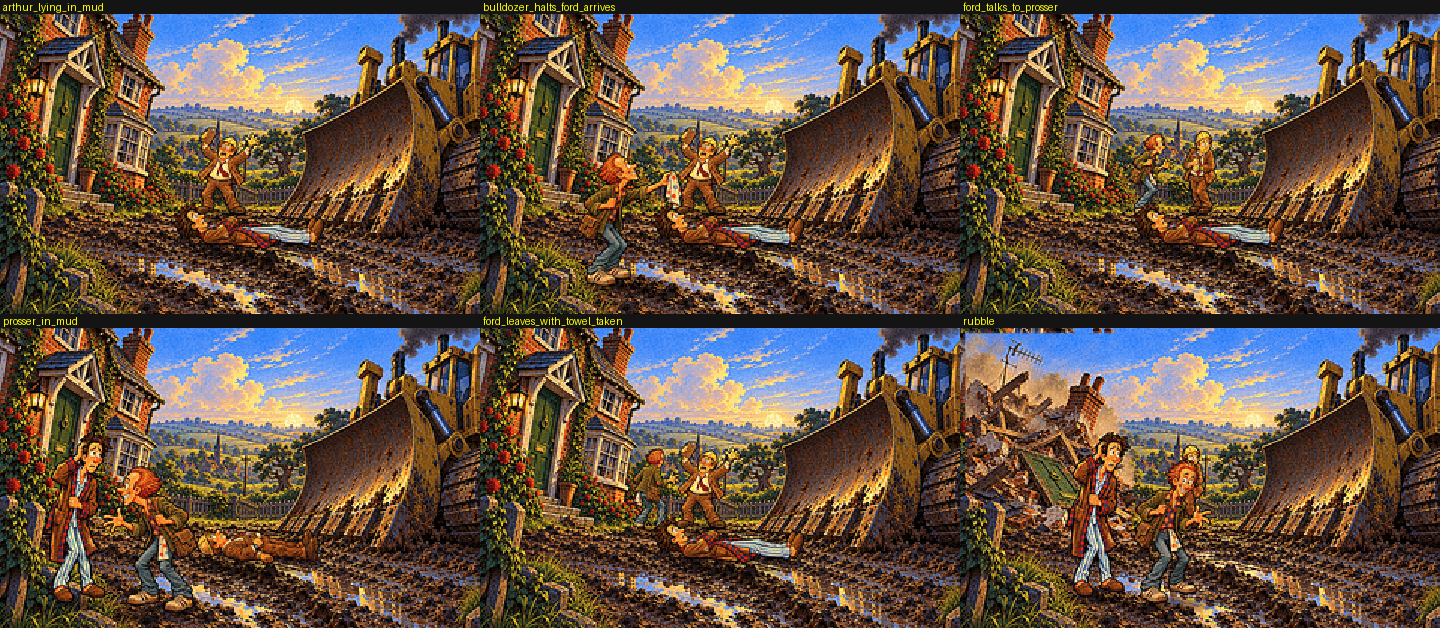
Learning: Restaged around the story: house left, bulldozer right, Arthur in its path, Ford facing Prosser.
Oct 2
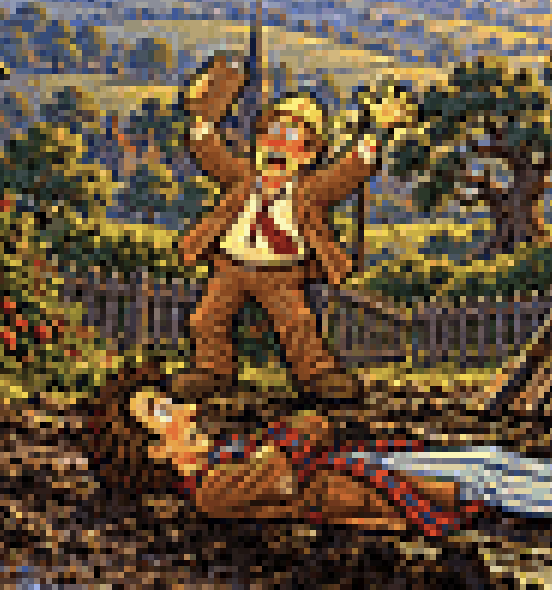
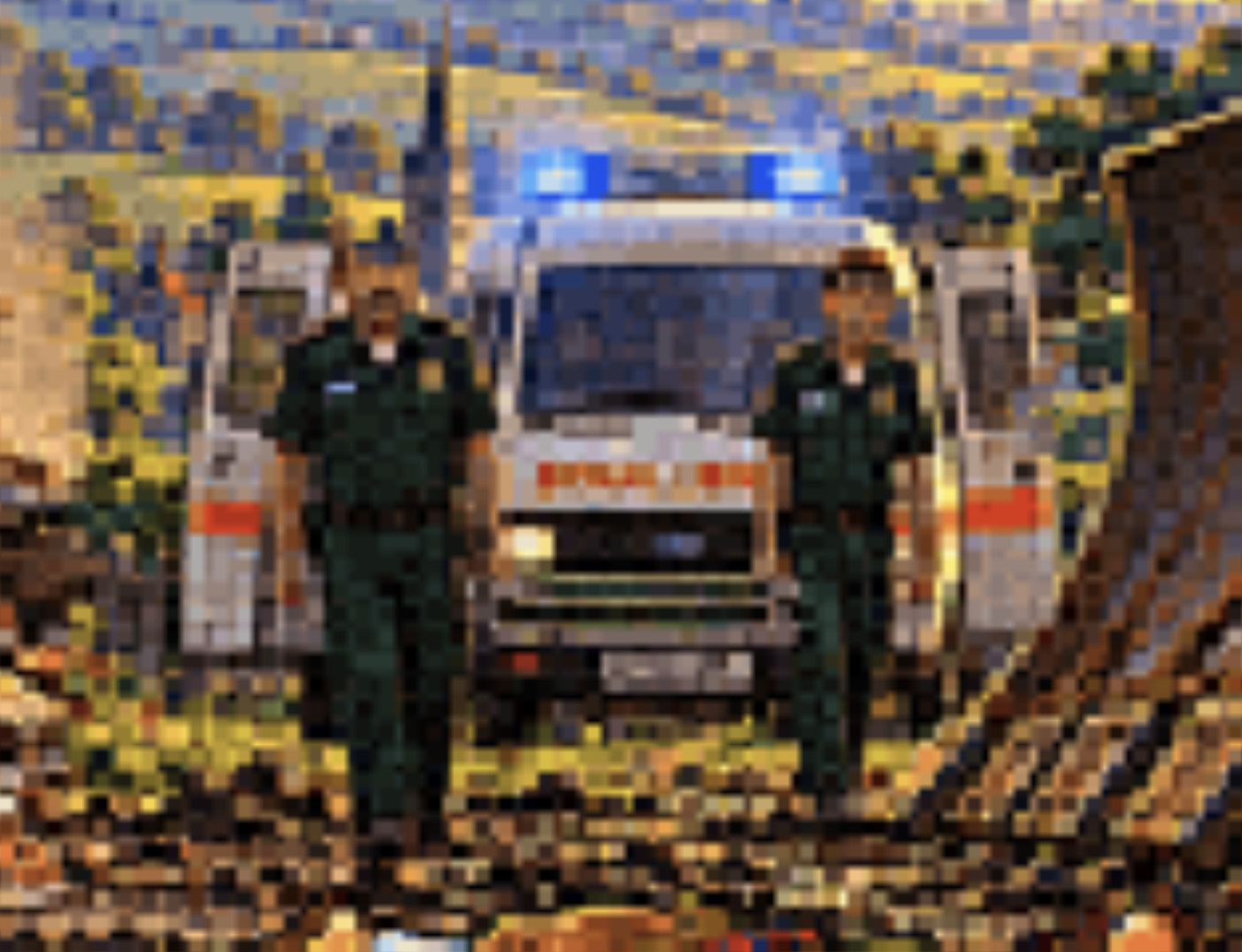
Wrong turn: Prosser standing on Arthur's nose, and a photo-real ambulance.
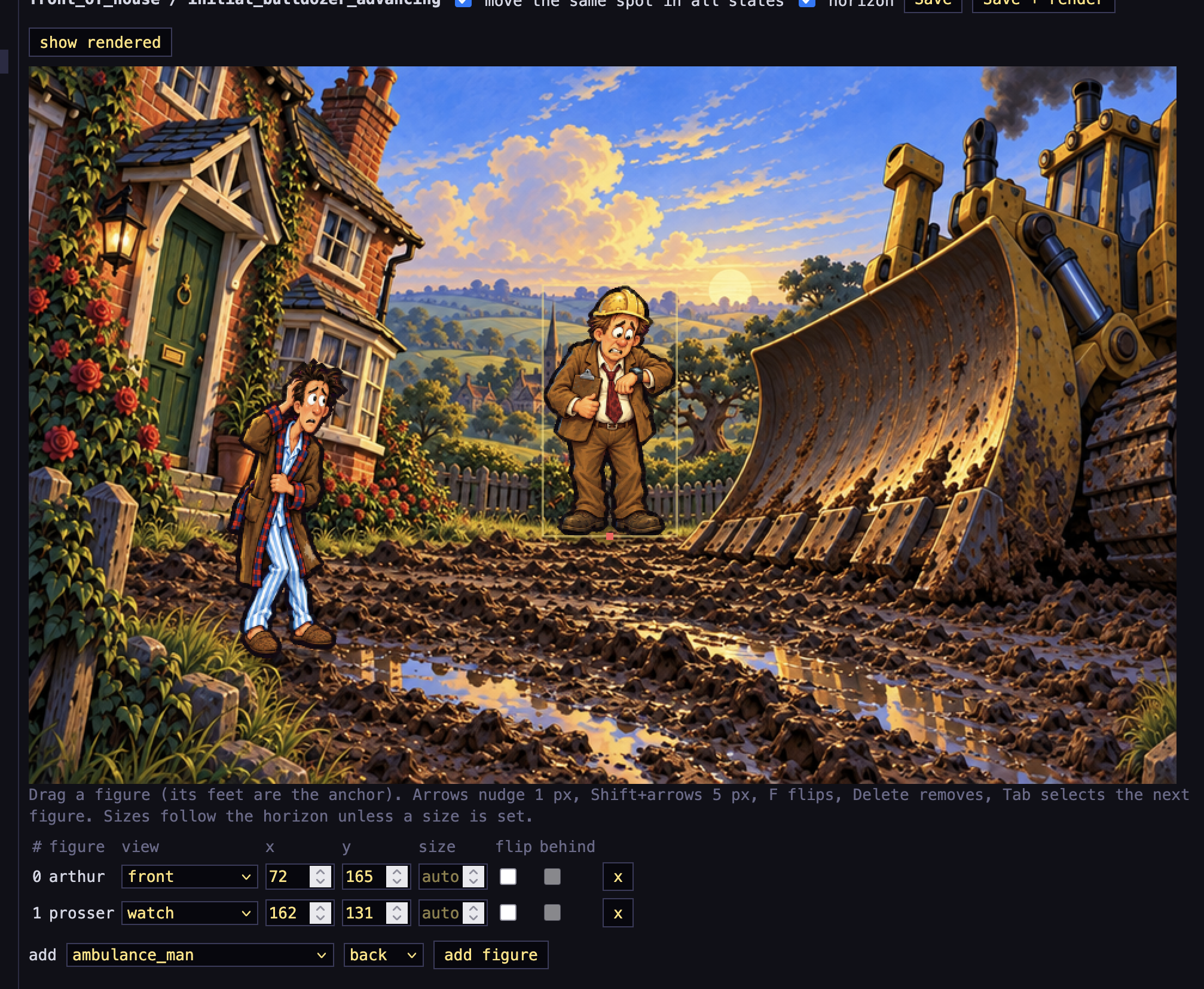
Tool: The staging editor: drag every figure to its spot by hand.
Learning: The ambulance became its own painting instead of sprites pasted into the scene.
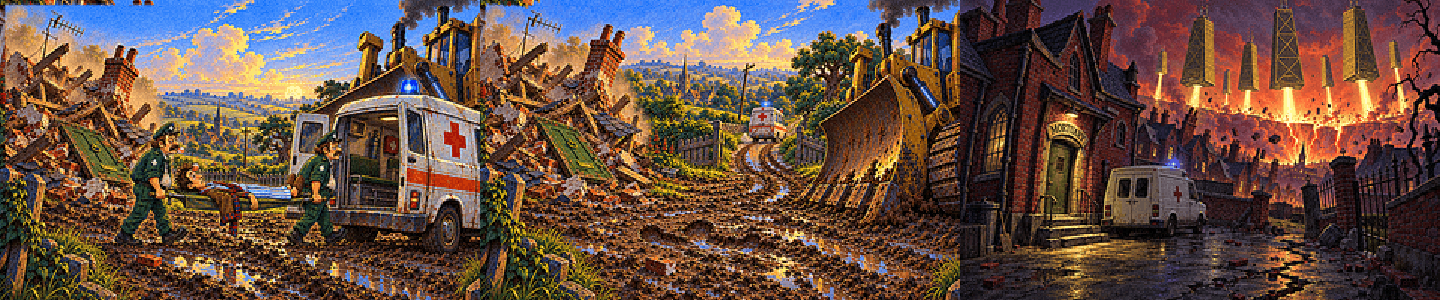
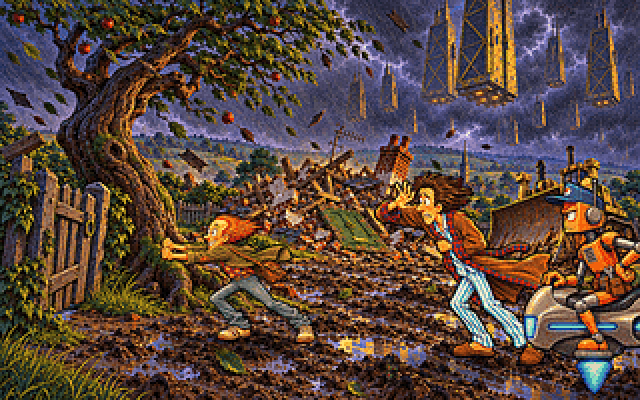
Learning: Ford clung to thin air, then to a tree from nowhere; the storm became a new painting.
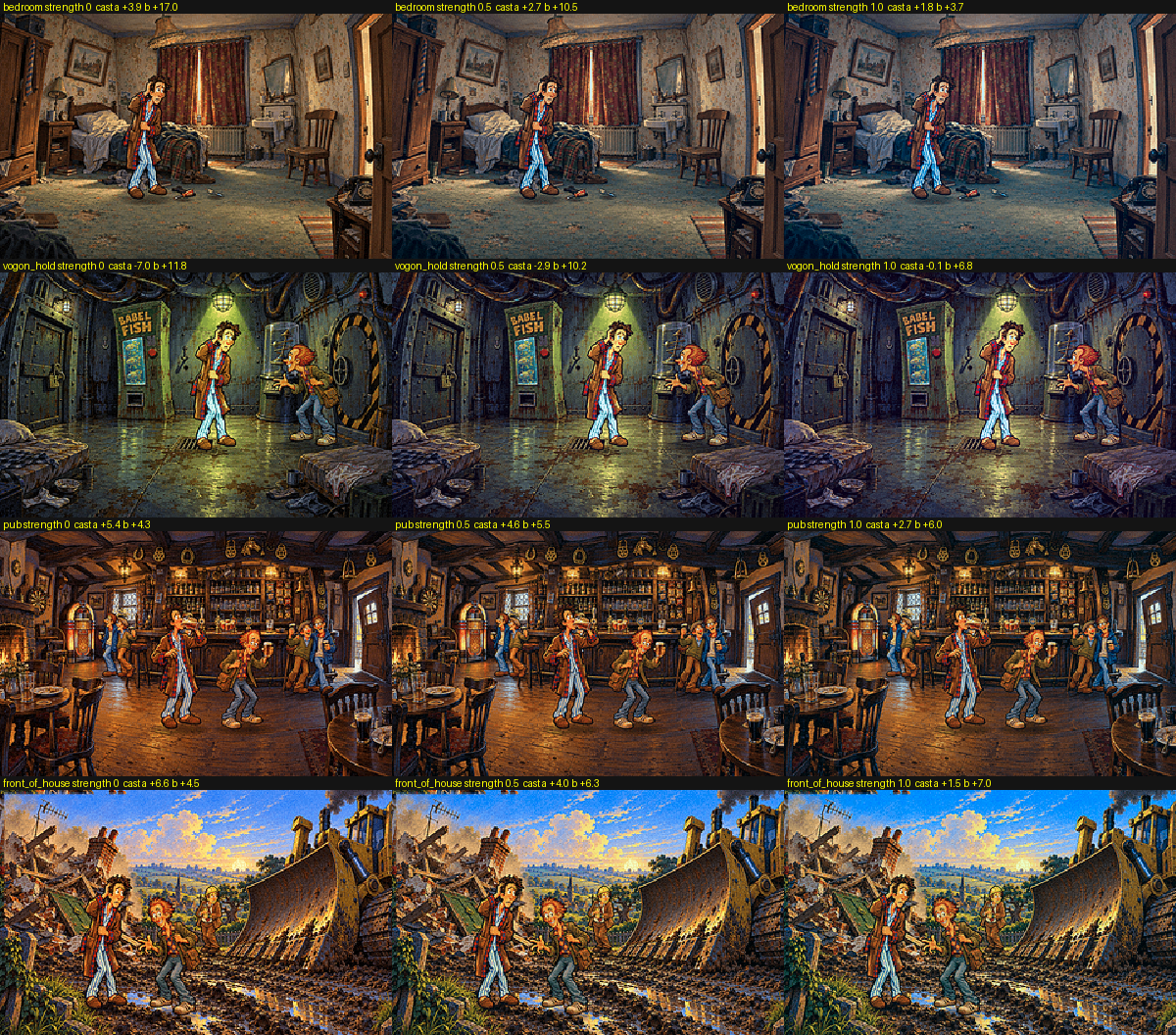
Tool: The yellow tint, measured in Lab against the paintings: the characters were the culprits.
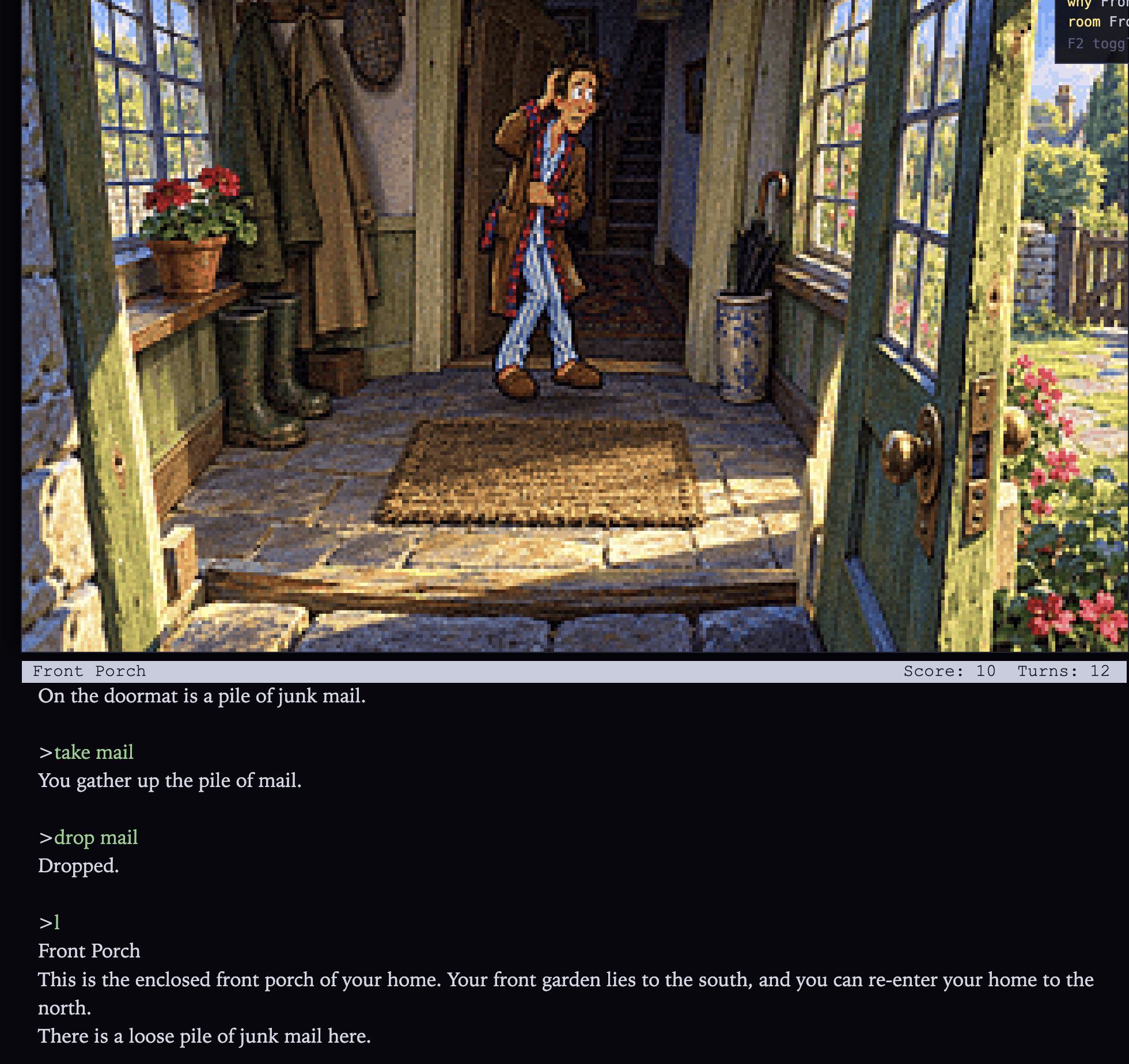
Wrong turn: Arthur dropped the junk mail on the porch, but the picture didn't show it.
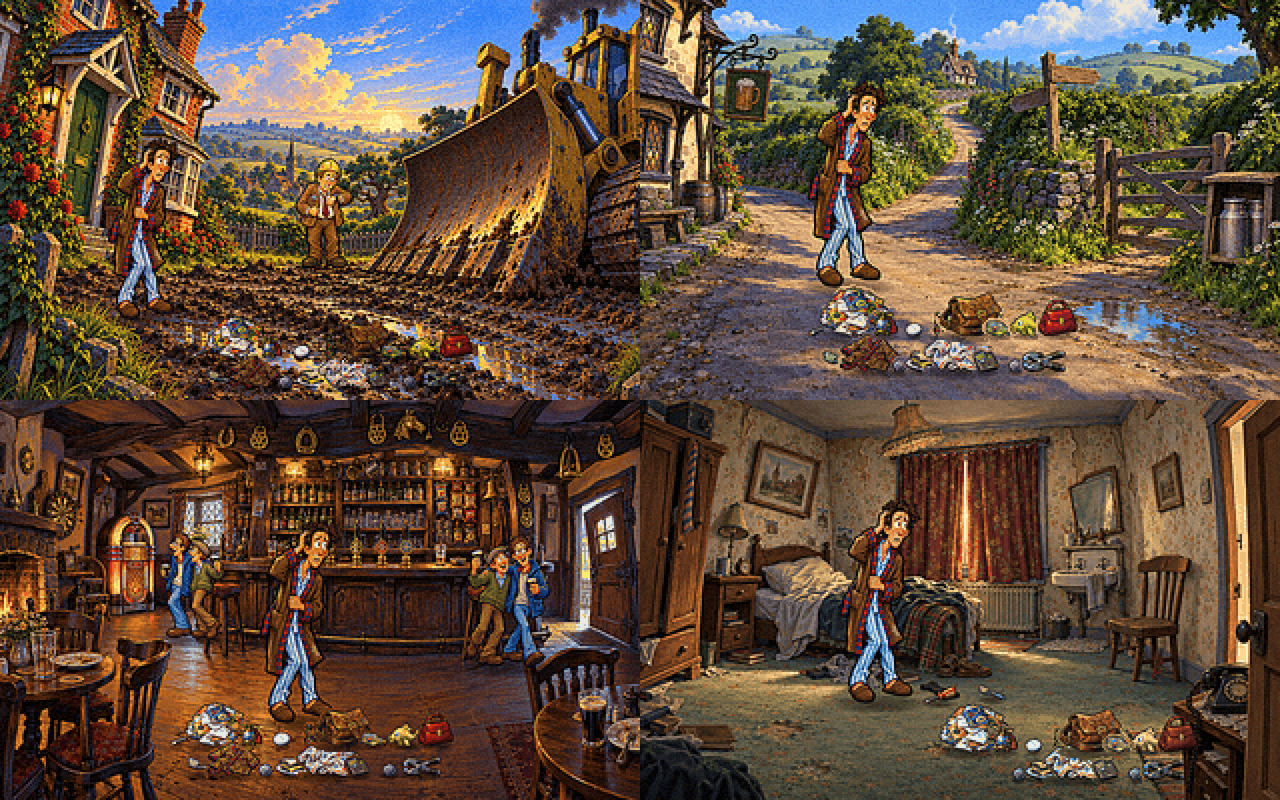
Learning: Now every object lying in a room is drawn where it lies.
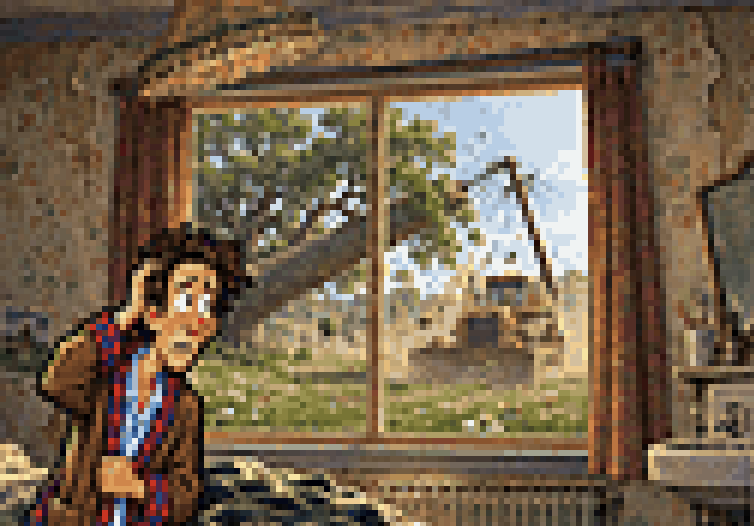
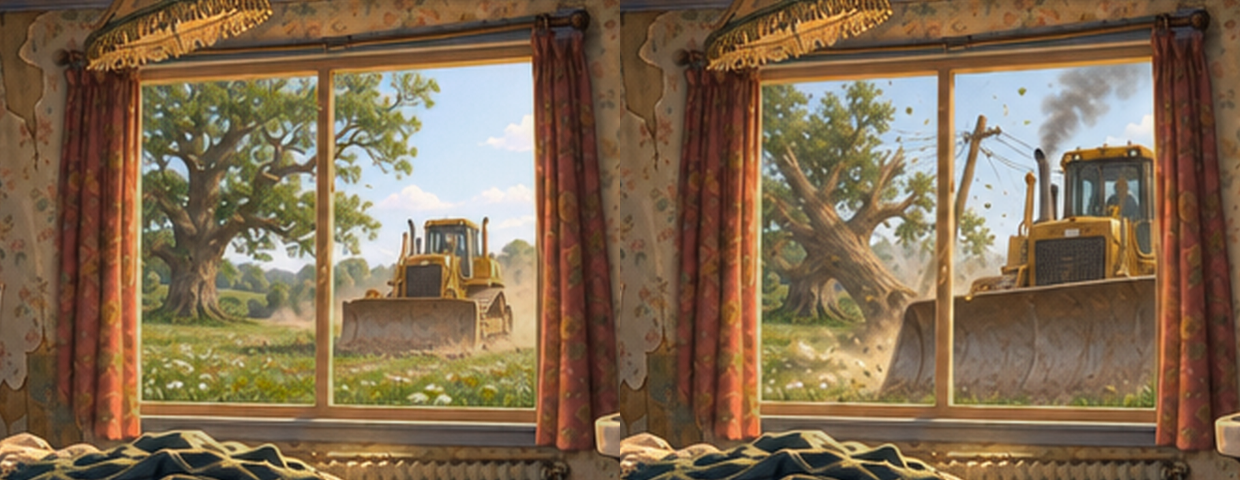
Learning: Each look out of the bedroom window shows the bulldozer a little closer.
Oct 3
Tool: Every reachable state: an exhaustive tree around the story, in a browser with the picture, walkthrough and text for each.
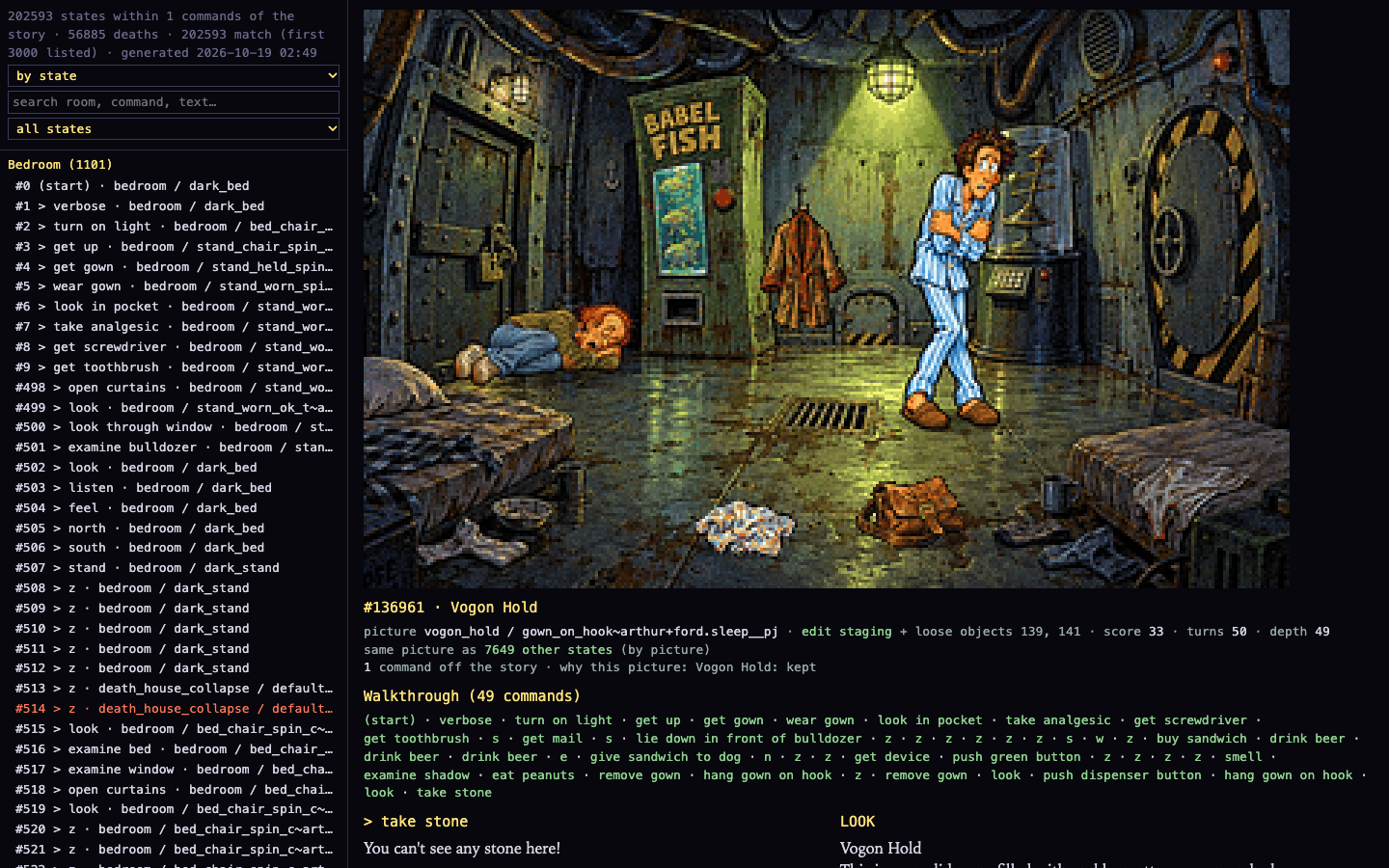
Tool: An audit checks every picture against the game's text: who's there, what's lying around, which room.
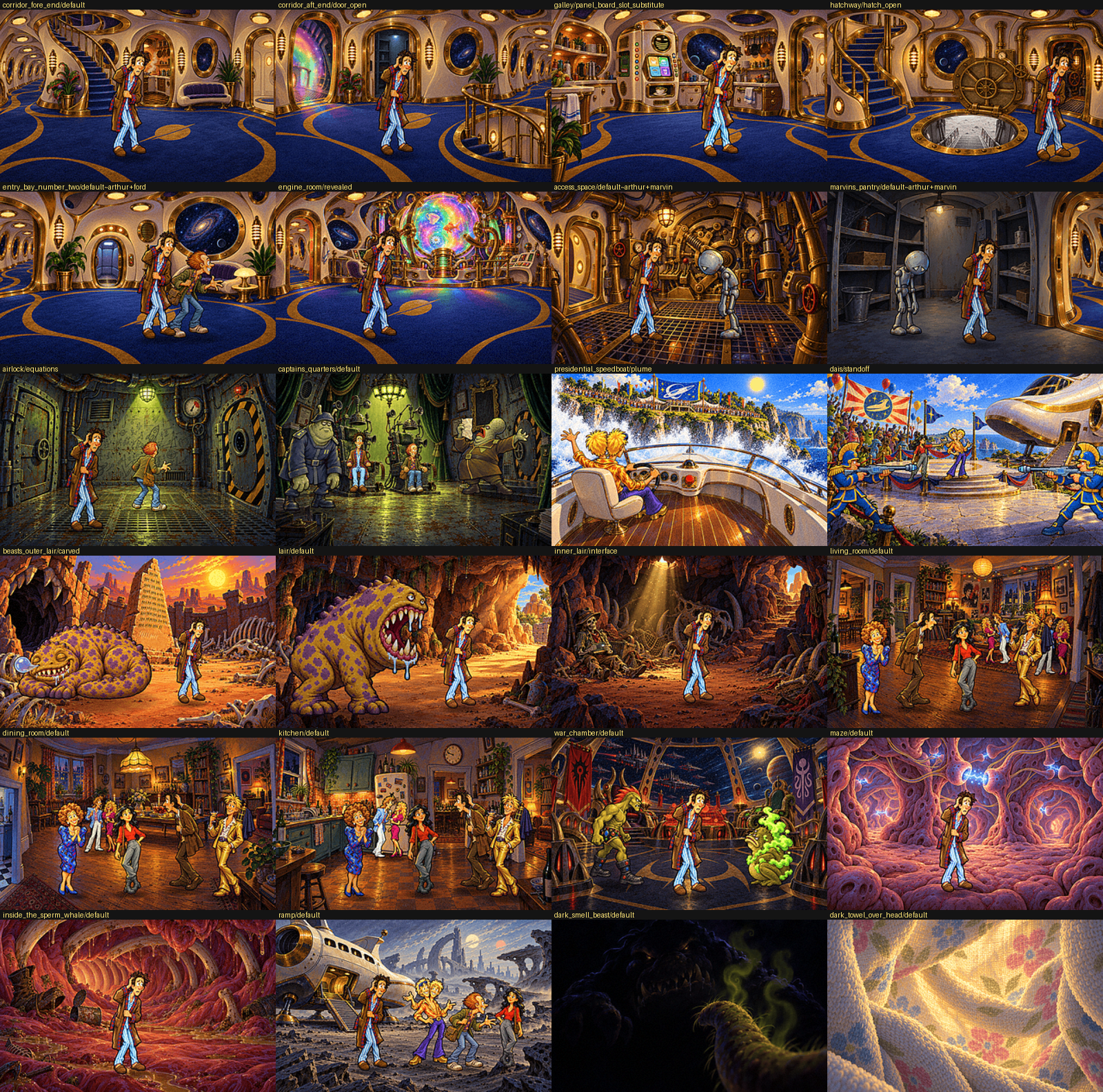
Milestone: Every location painted: 22 more rooms and 11 dark screens.
Oct 5
Tool: Multiple choice: a hidden copy of the game tries every sentence its grammar can make and offers the ones that do something.
Oct 16
Wrong turn: The editor and the state browser disagreed about who was in the picture.
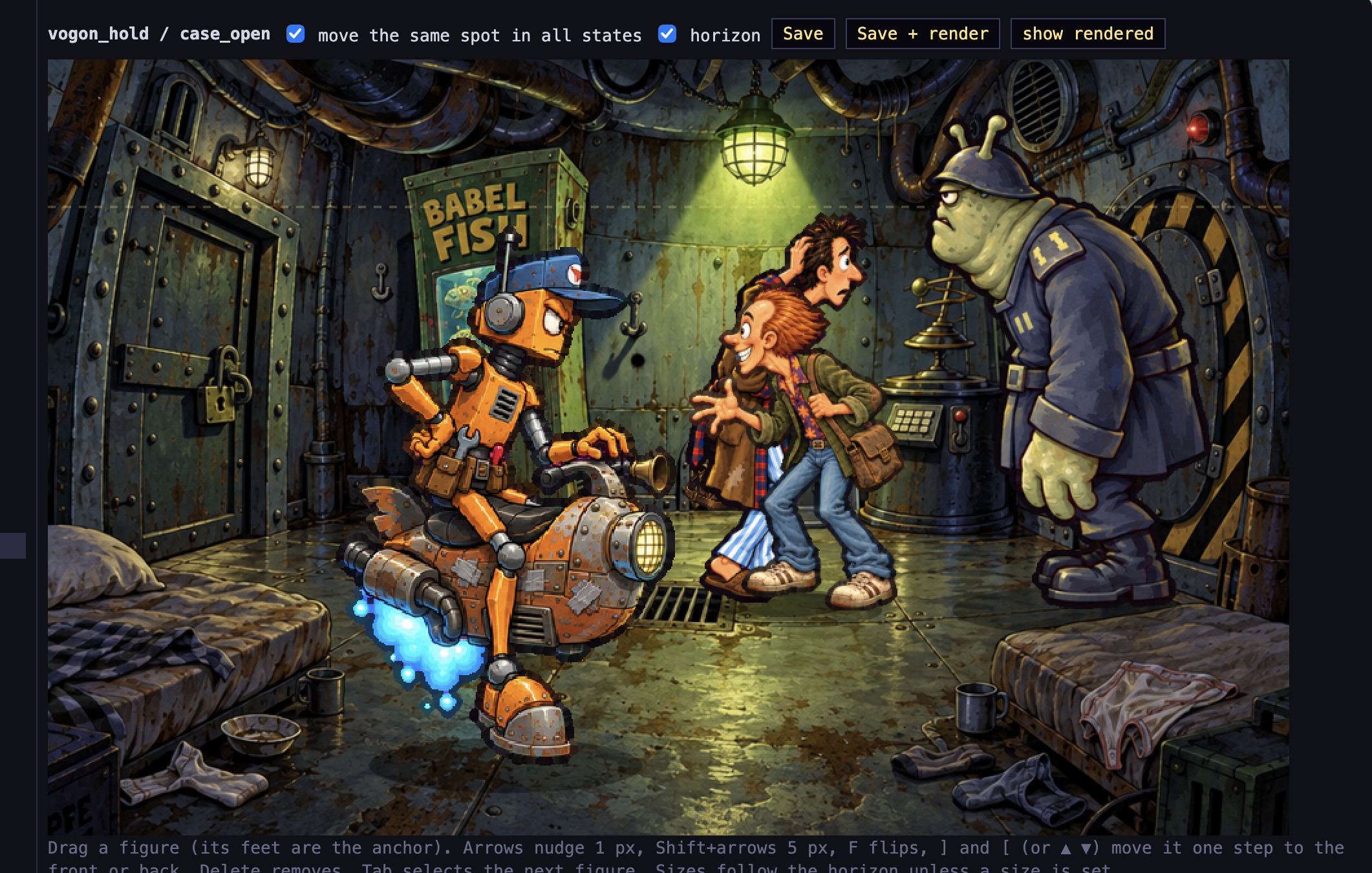
Learning: One source of truth for every picture, shared by the game, the browser and the editor.
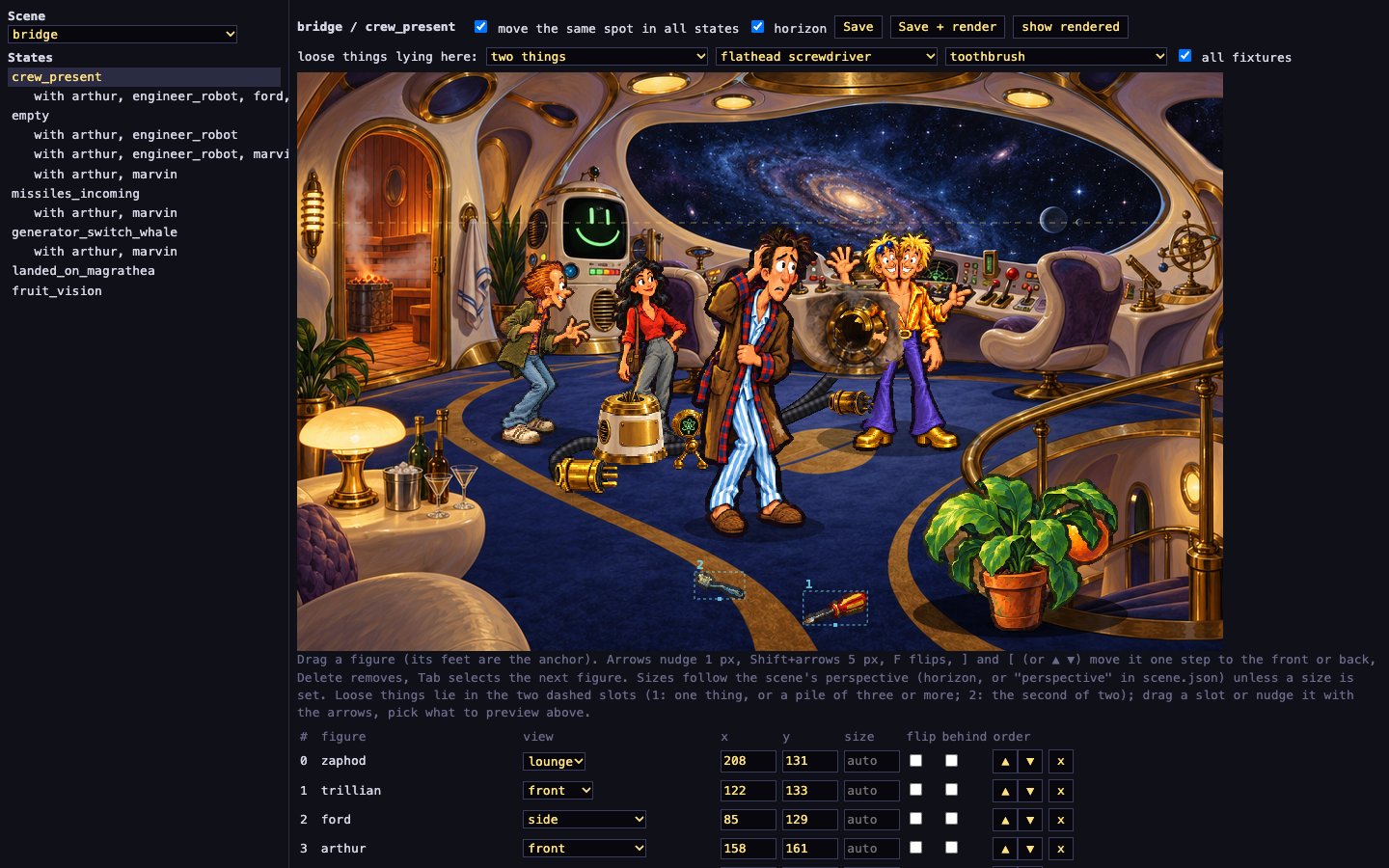
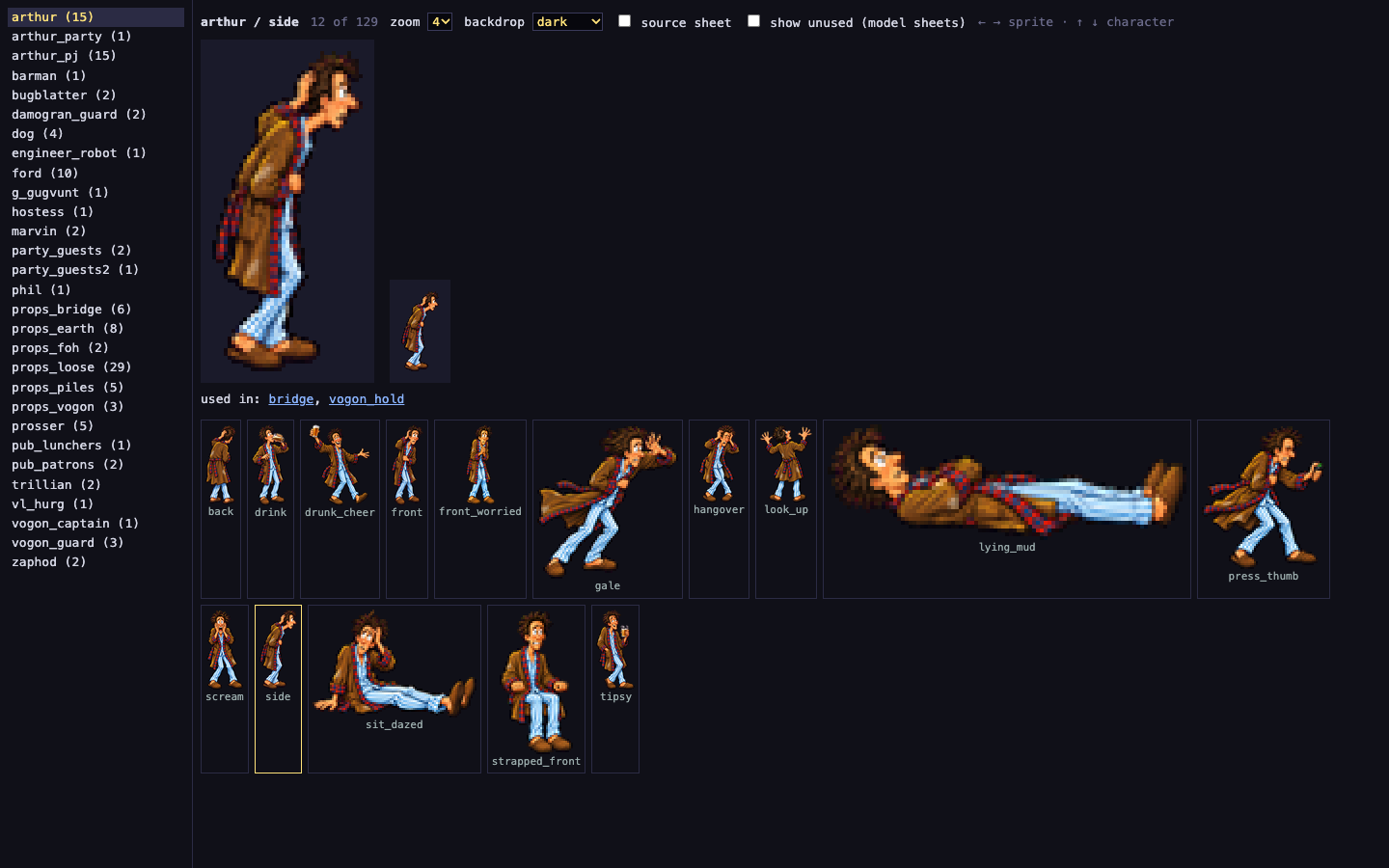
Tool: A sprite browser for all 300 sprites.
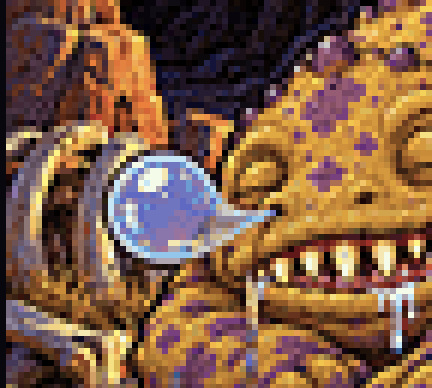
Wrong turn: A drop out of the beast's nose, and guards whose legs stood in front of the rope.
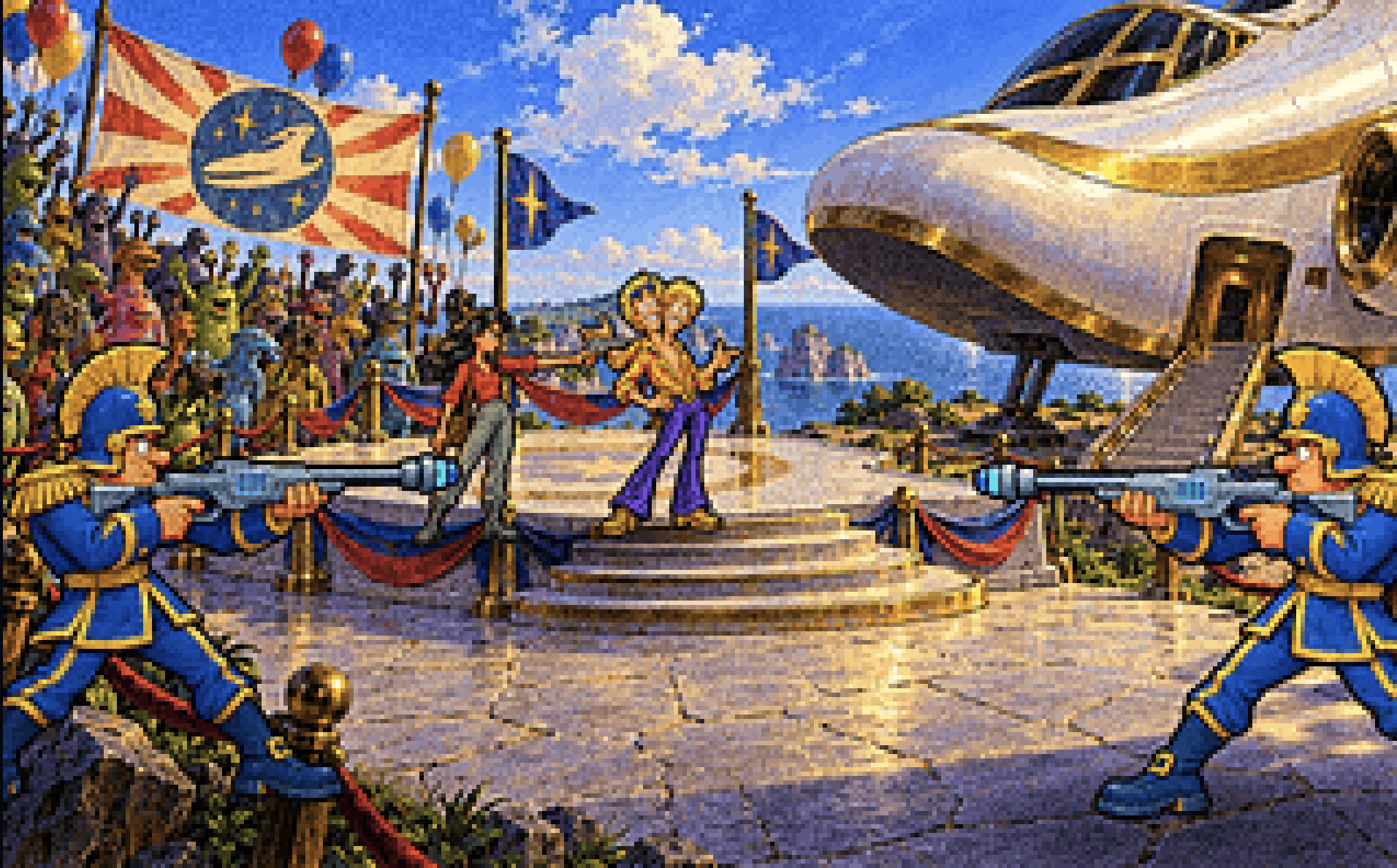
Learning: Guards turned toward Zaphod, and their laid-down rifles matched the ones they carried.
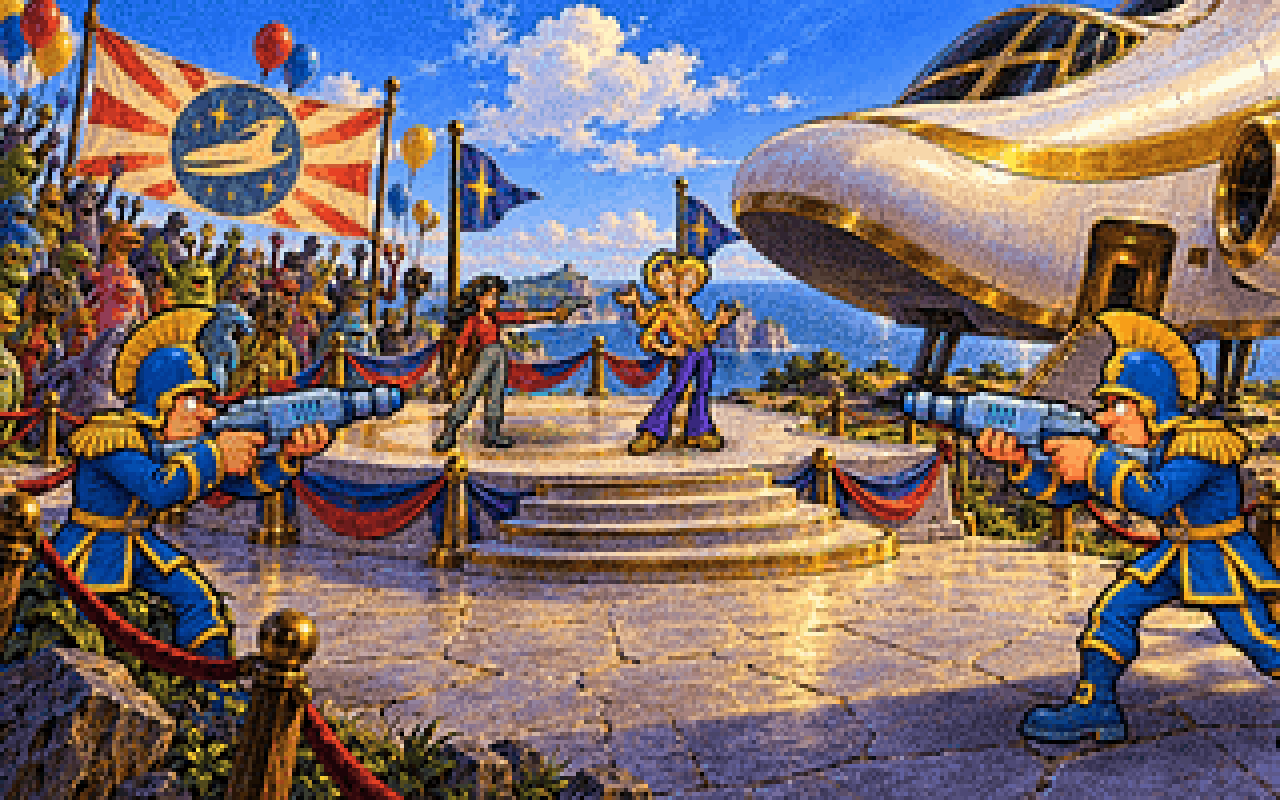
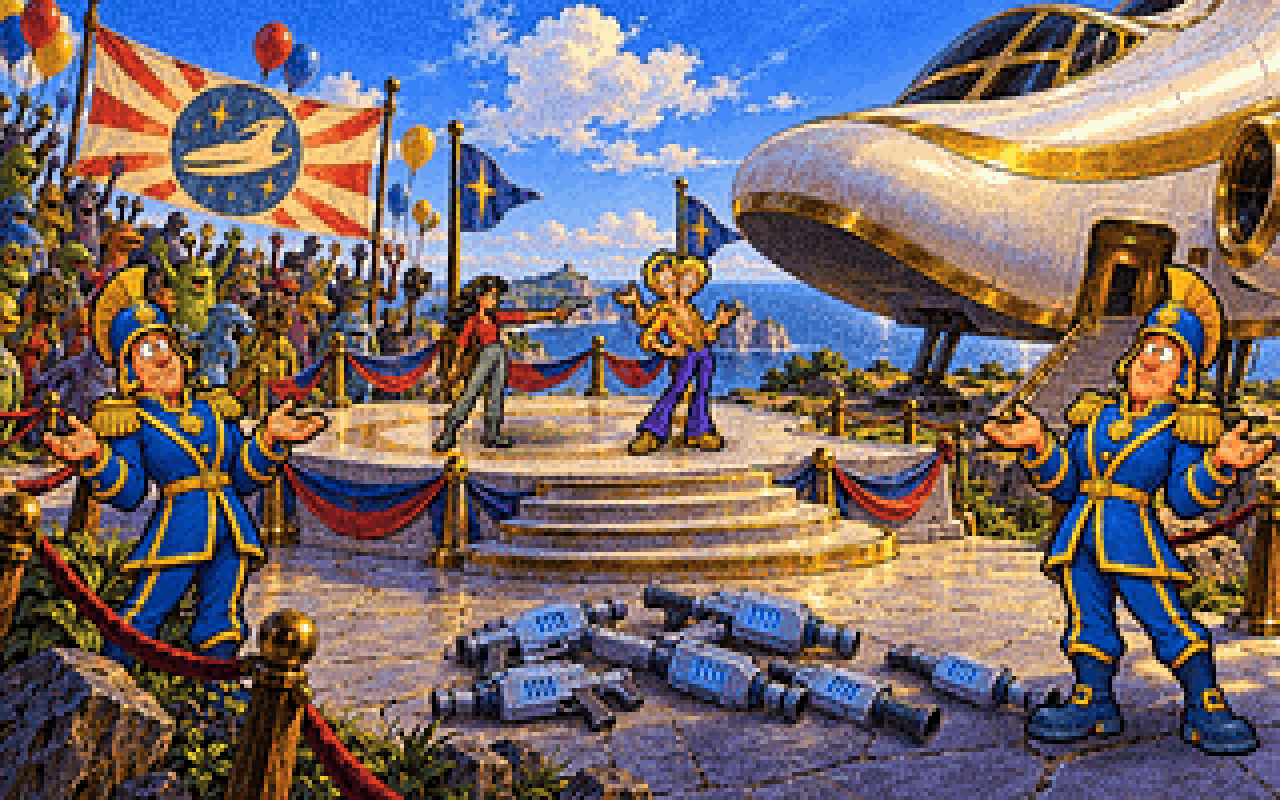
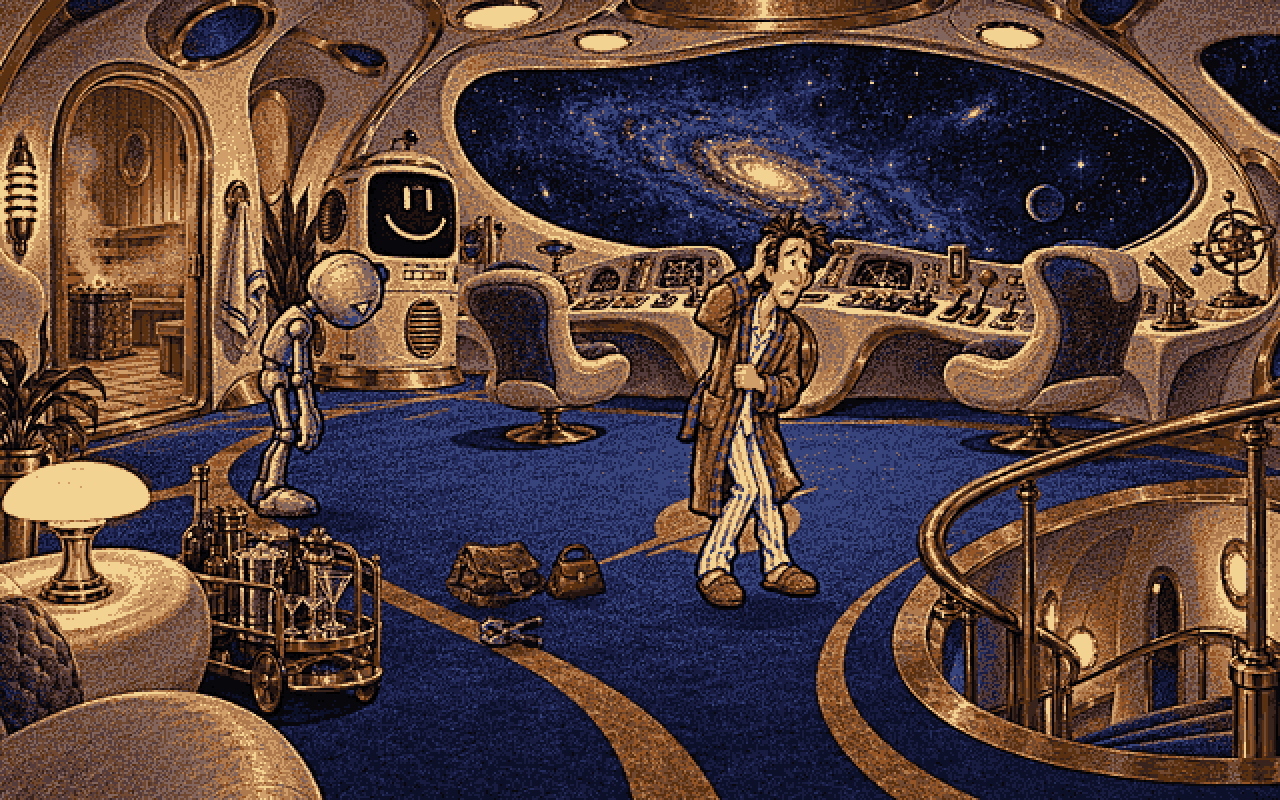
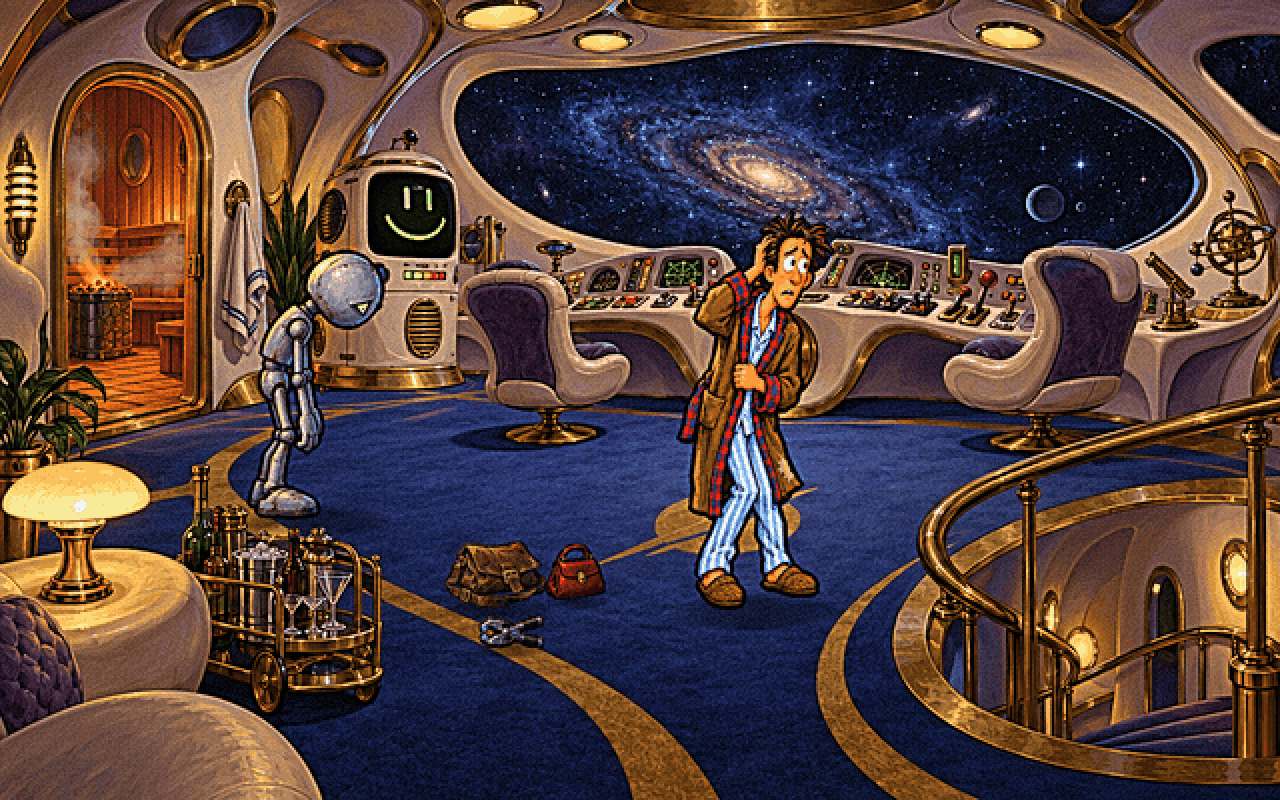
Experiment: A detour into 640×400, in 16 and 256 colours.
Oct 17
Wrong turn: The party: tiny background guests, and arms that bent the wrong way.
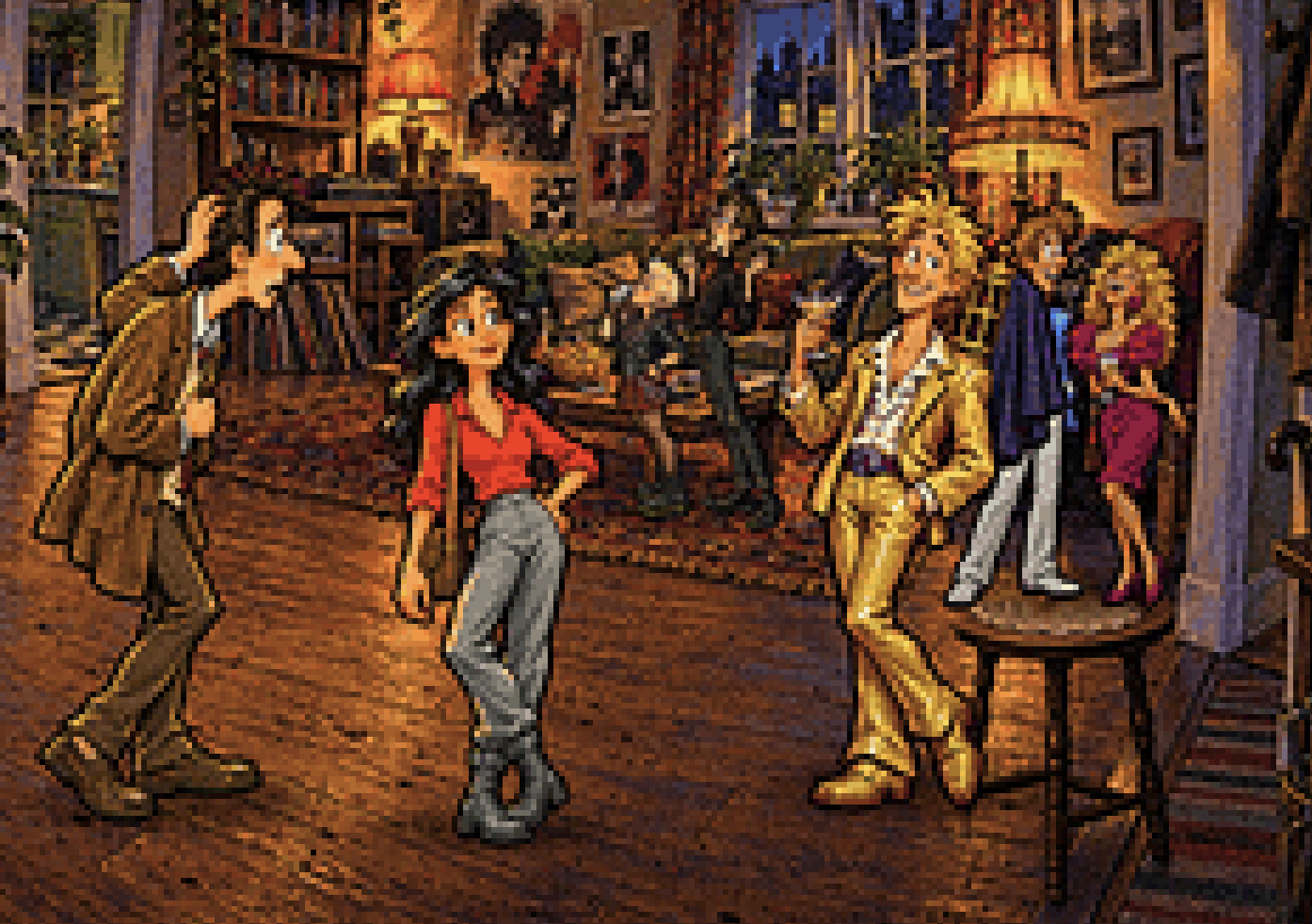

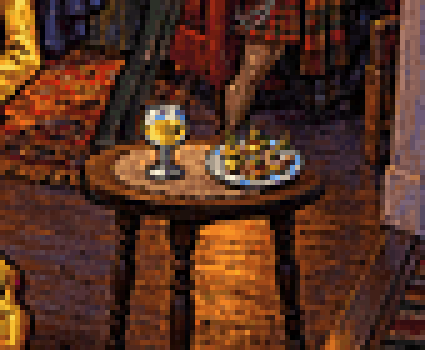
Learning: Fixed perspective, new arms, and a table to put the plate on.
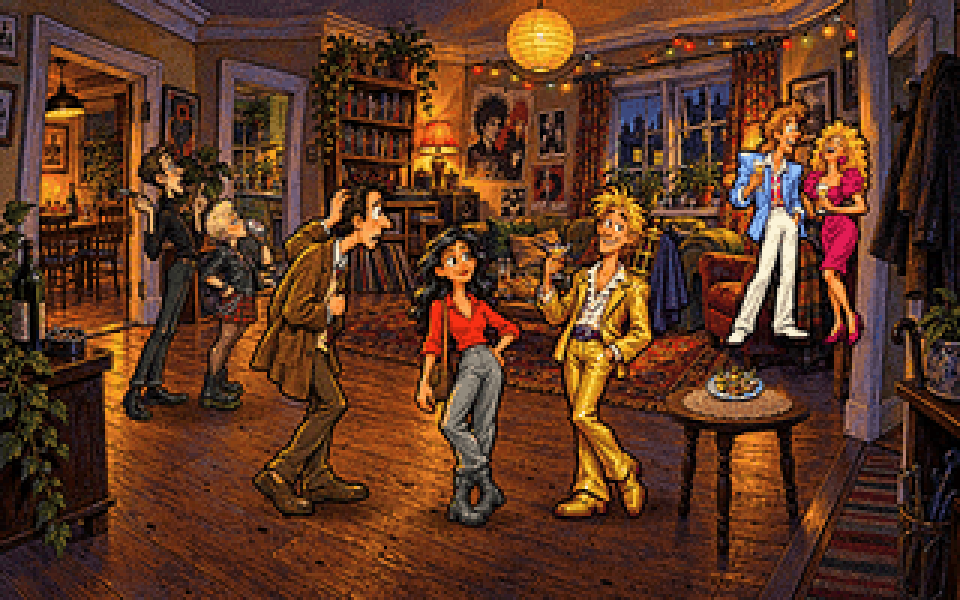
Wrong turn: An “everything” view of every figure and item at once. Removed the same day.
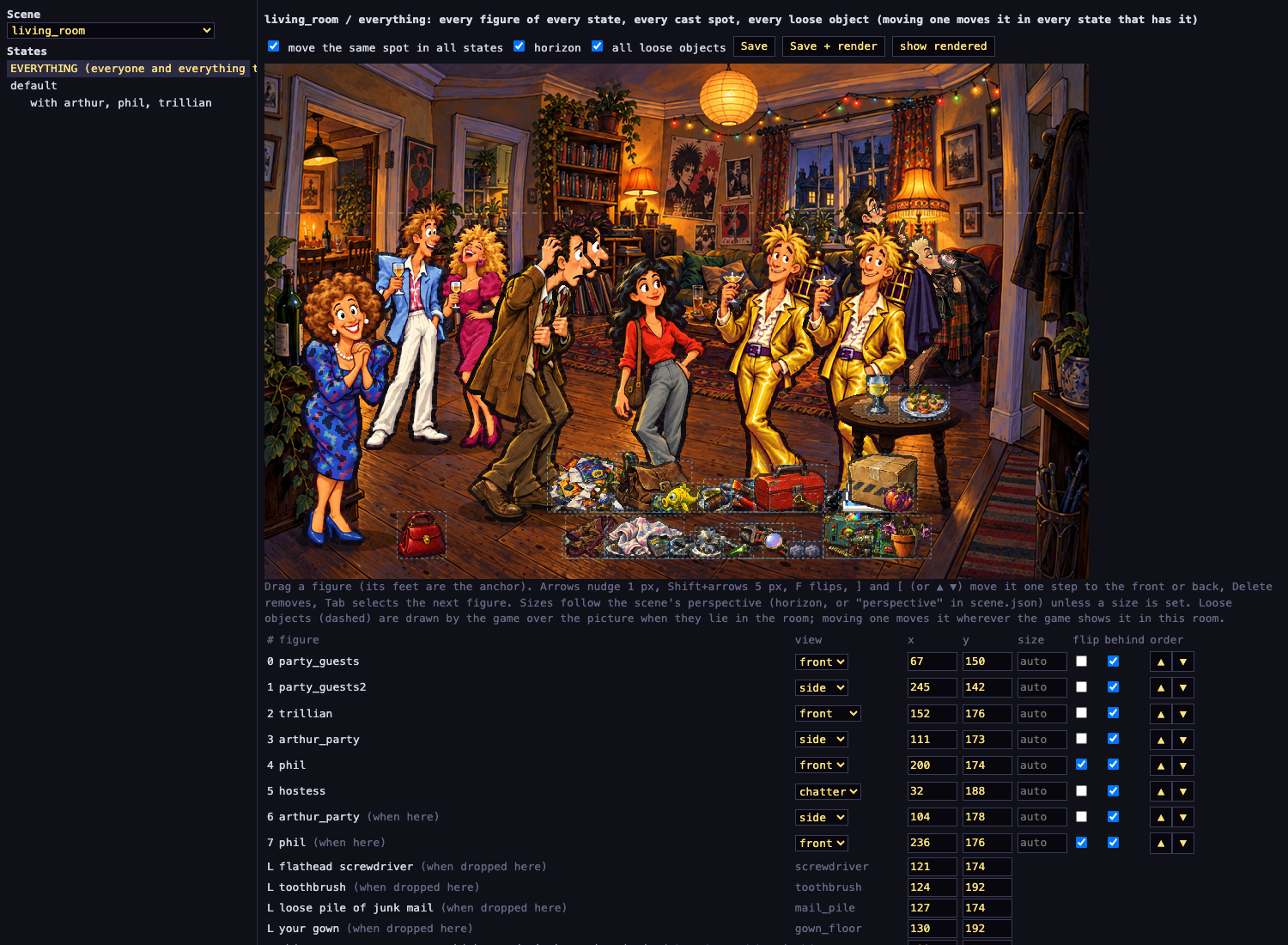
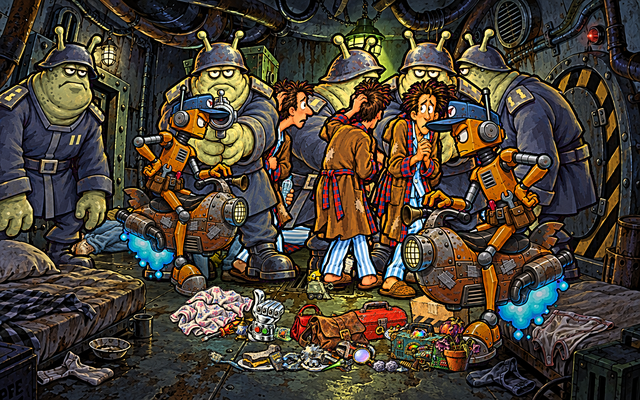
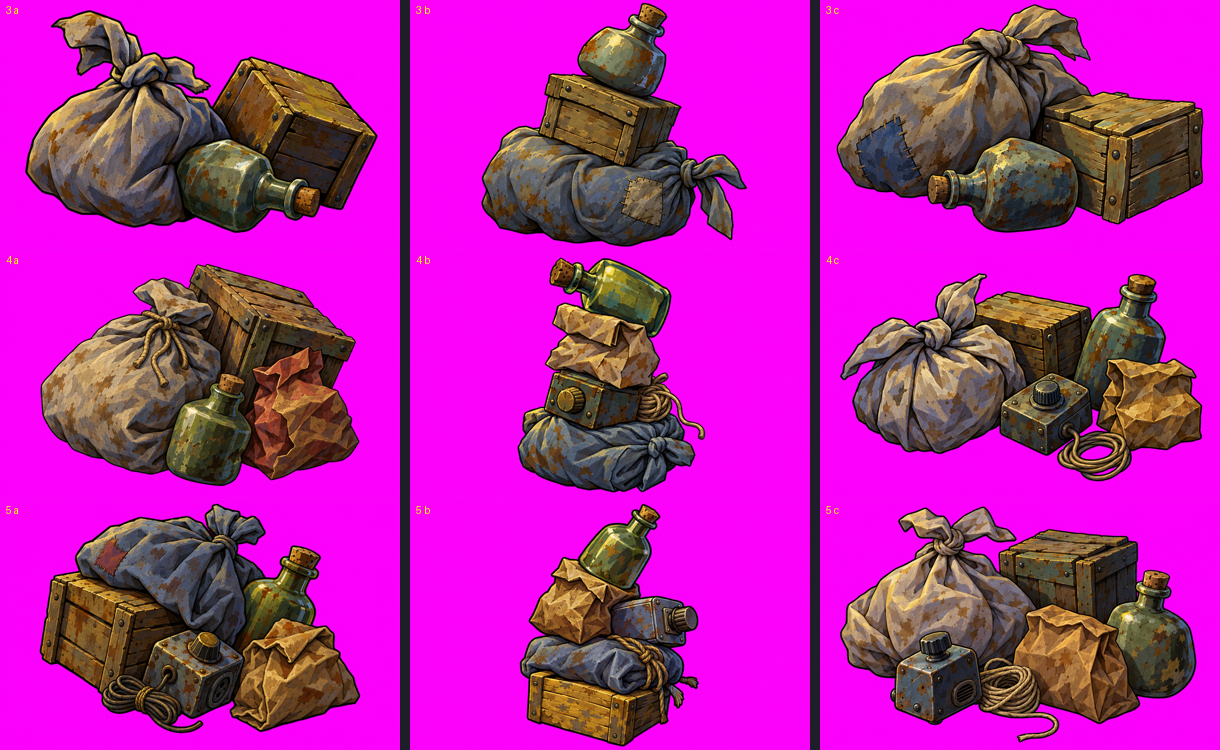
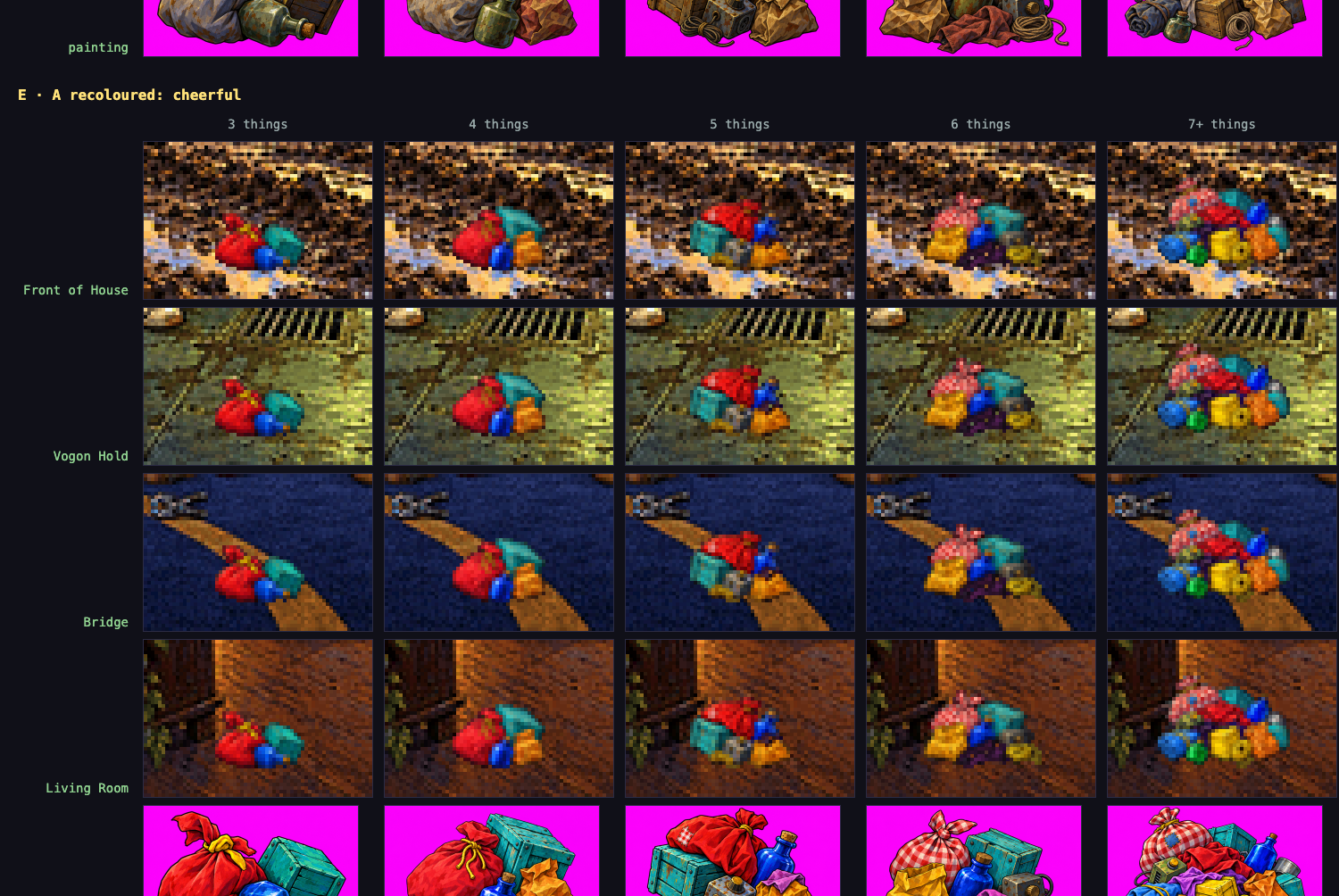
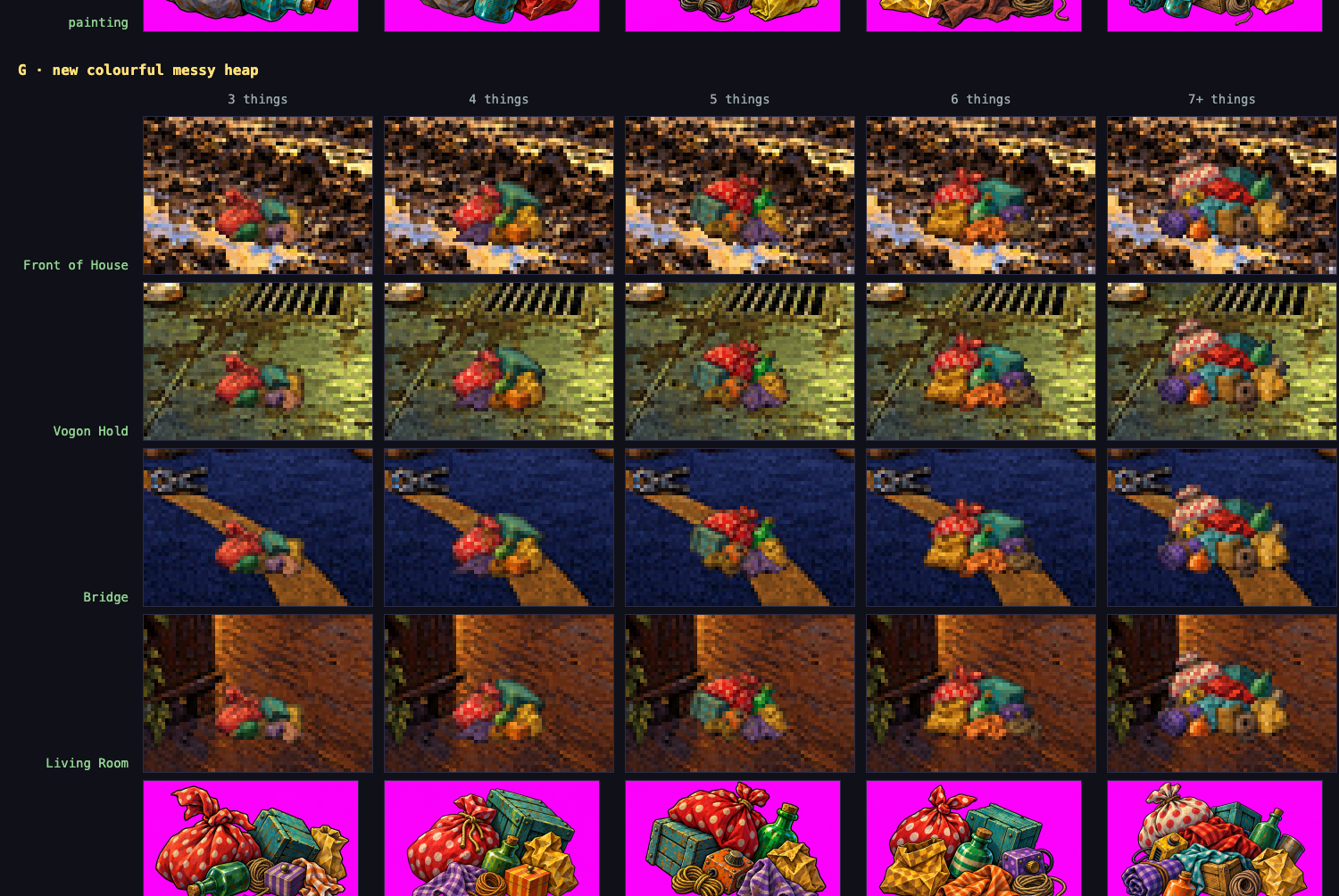
Experiment: Loose objects get two slots, and three or more become a pile. Piles A to G:
Oct 18
Wrong turn: The pile of three had a lot more than three things in it.
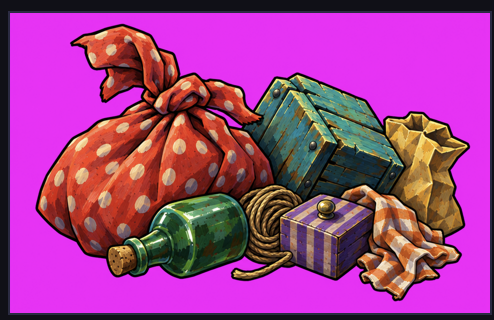
Learning: Piles regenerated so they actually count, and things keep their slot while others come and go.


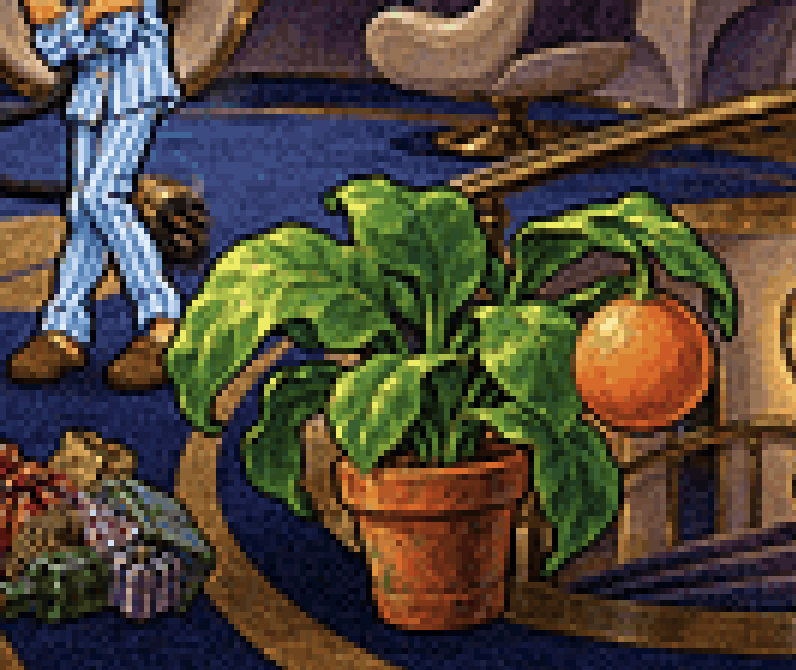
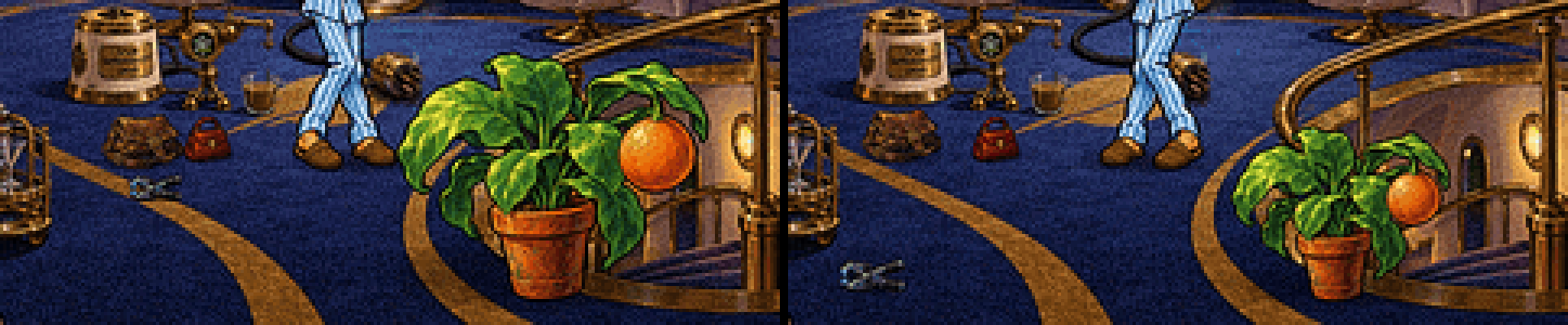
Learning: A plant 30% smaller.
Oct 19
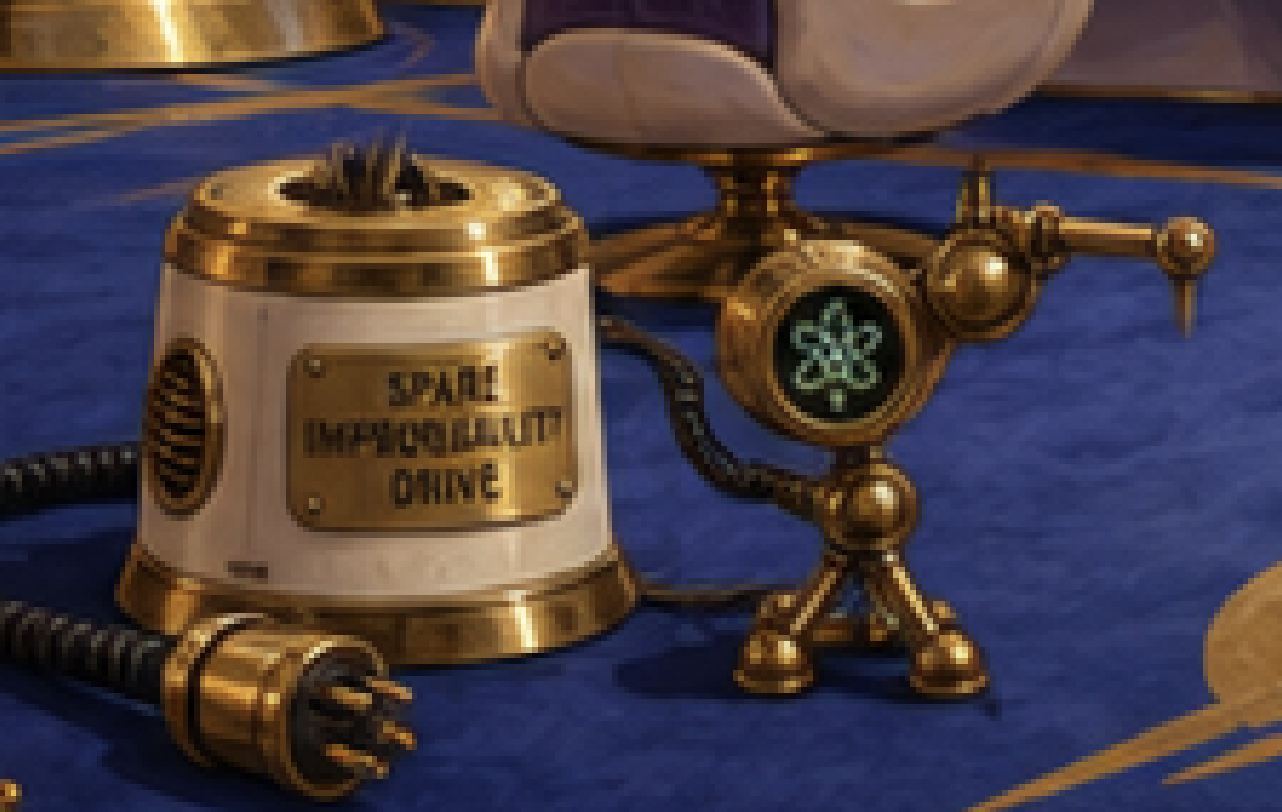
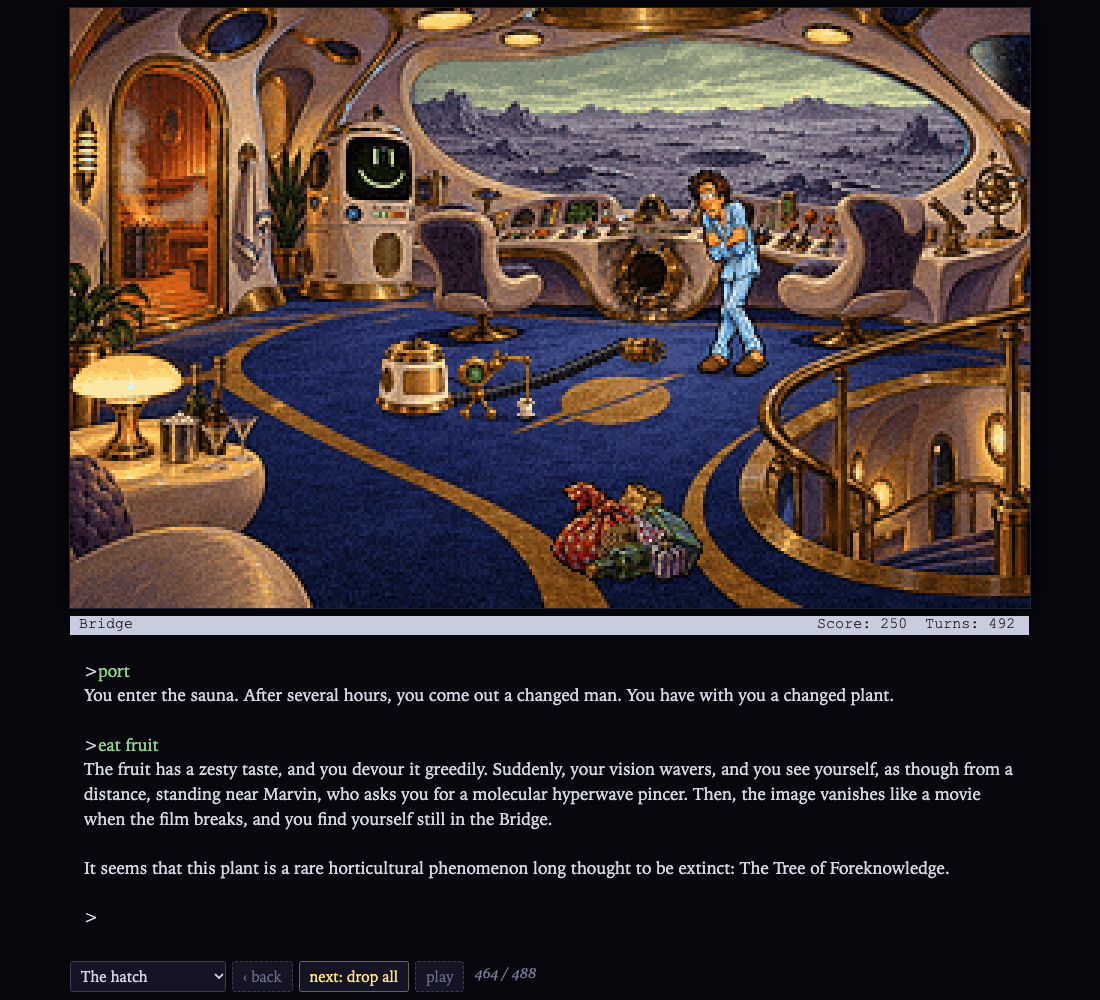
Wrong turn: The Bridge rig: a broken cable, a “SPARE IMPROBABILITY DRIVE” label, a seam.
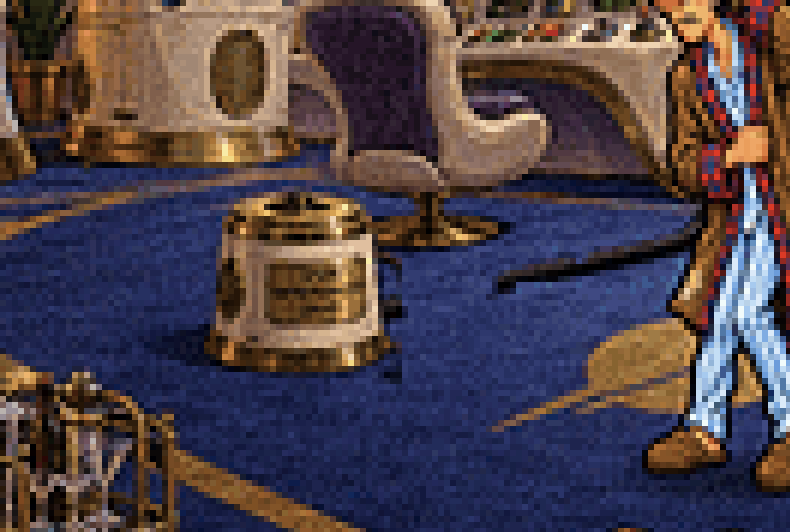
Wrong turn: The plotter cut off, three times in a row.
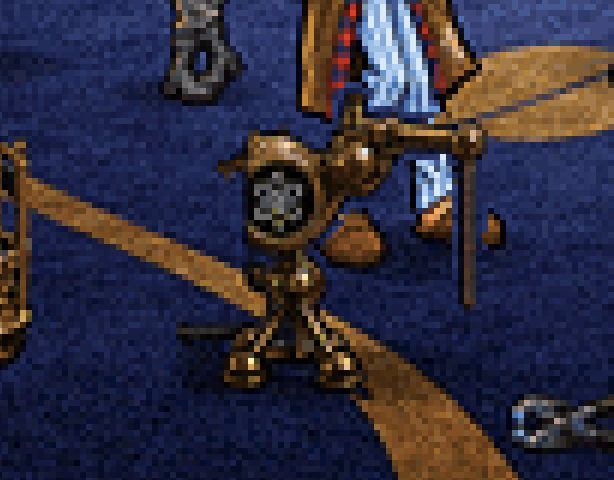
Learning: A principled redesign: separate sprites for the parts, procedural cables, one picture per configuration.
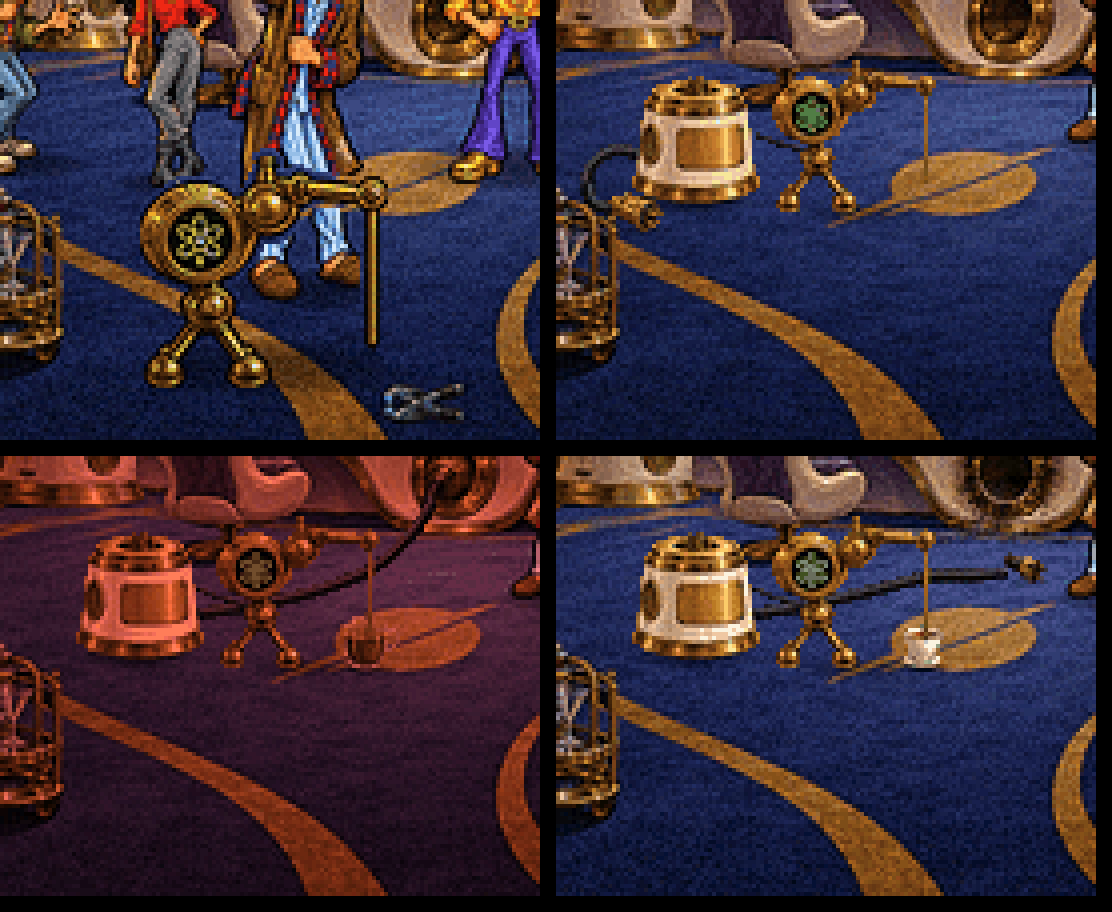
Wrong turn: Then the plotter was too big, and the plug didn't match its hole.
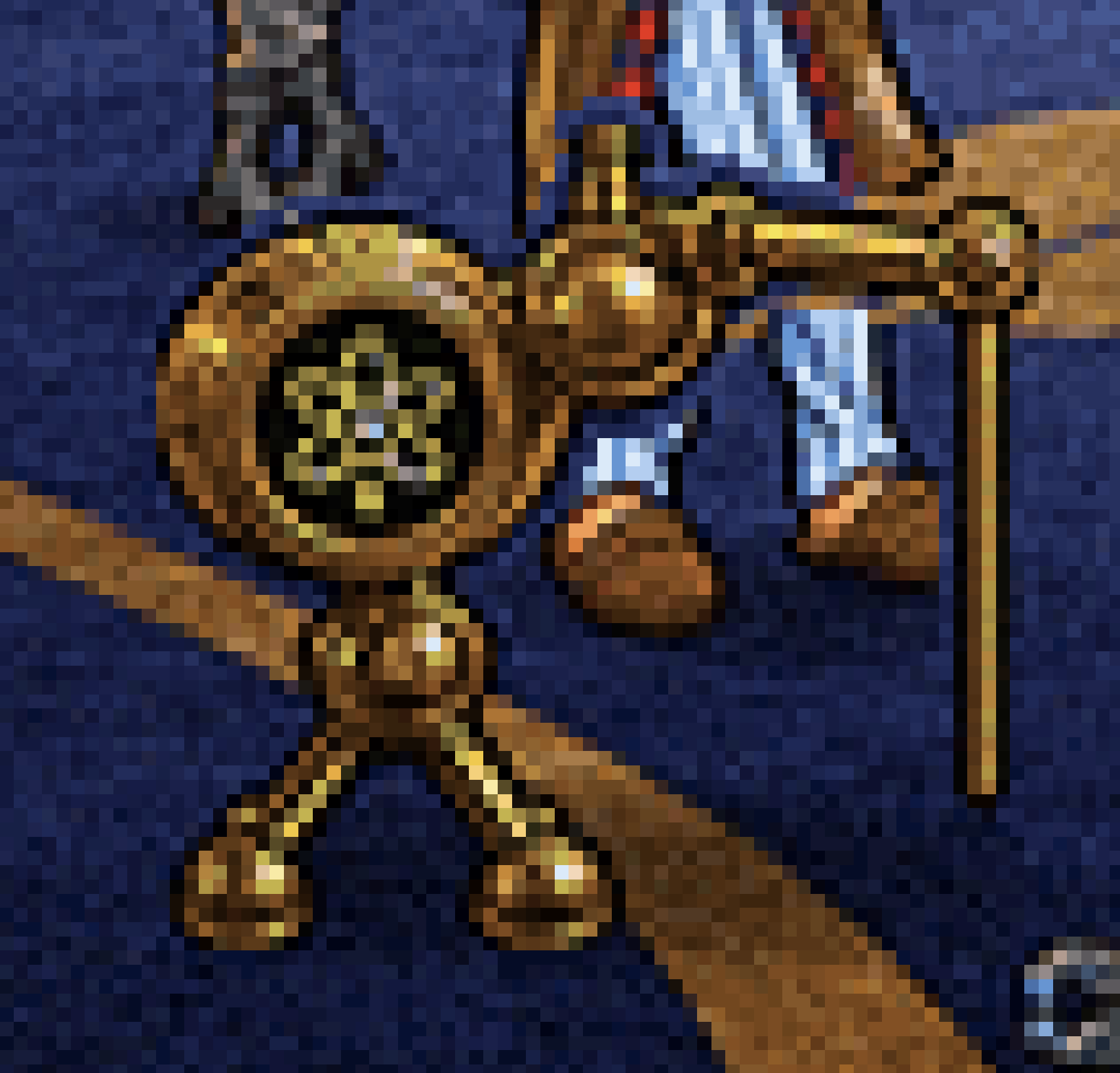
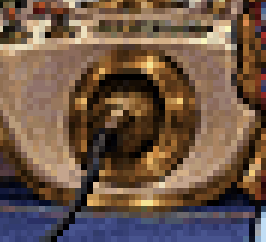
Learning: Sizes now come from the measured hole, and everything comes out of the pipeline with no hand-fixing.
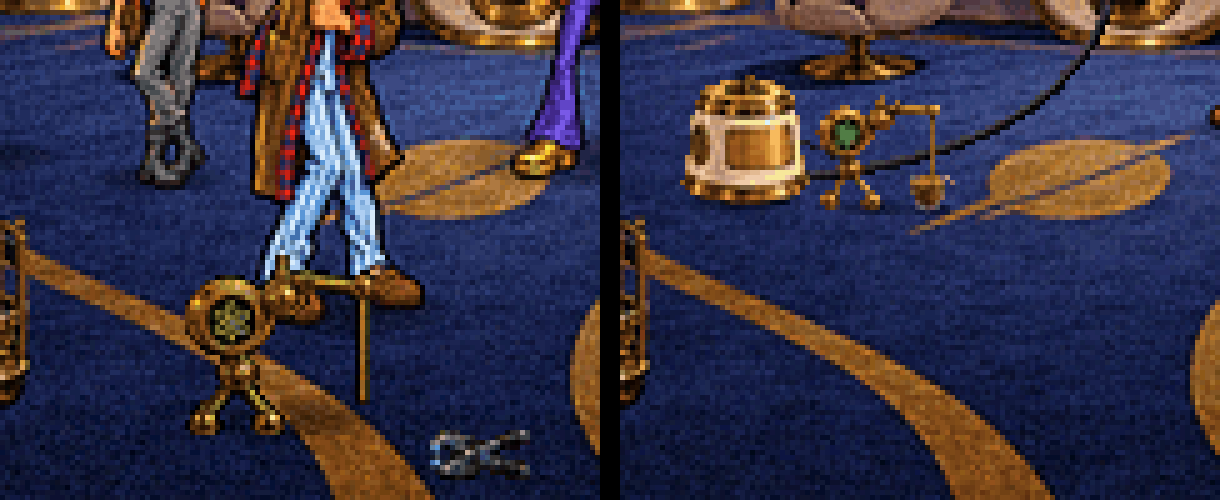

Wrong turn: The plug now overlapped the drinks cart…
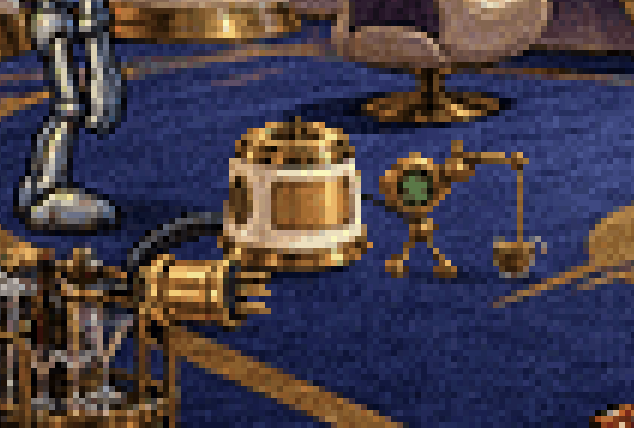
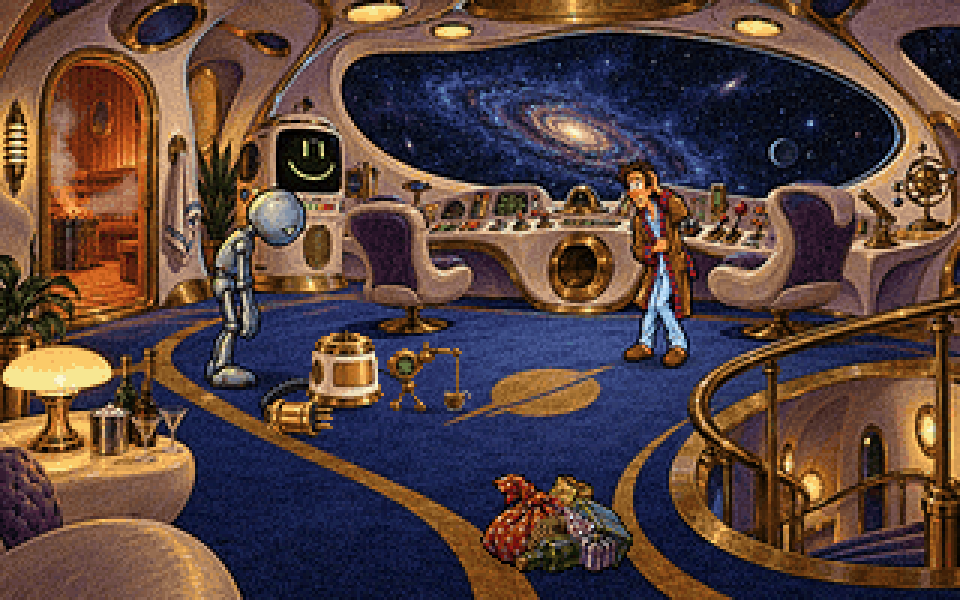
Learning: …so the cart went, and the drinks moved to the lamp table.
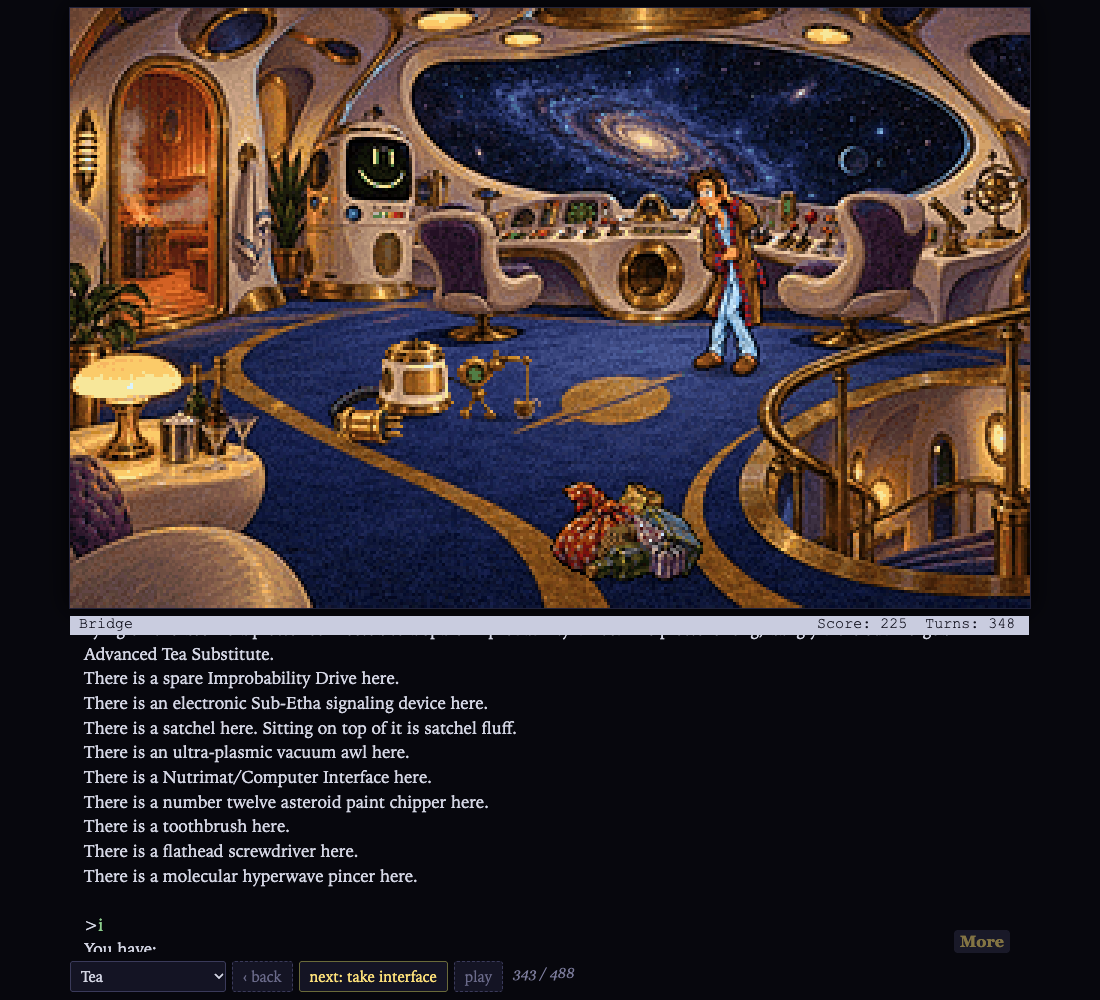
Tool: The walkthrough: step through the winning game, 488 commands.
Nov 11
Milestone: On the web: a static site that fetches the story file from public copies.
Now
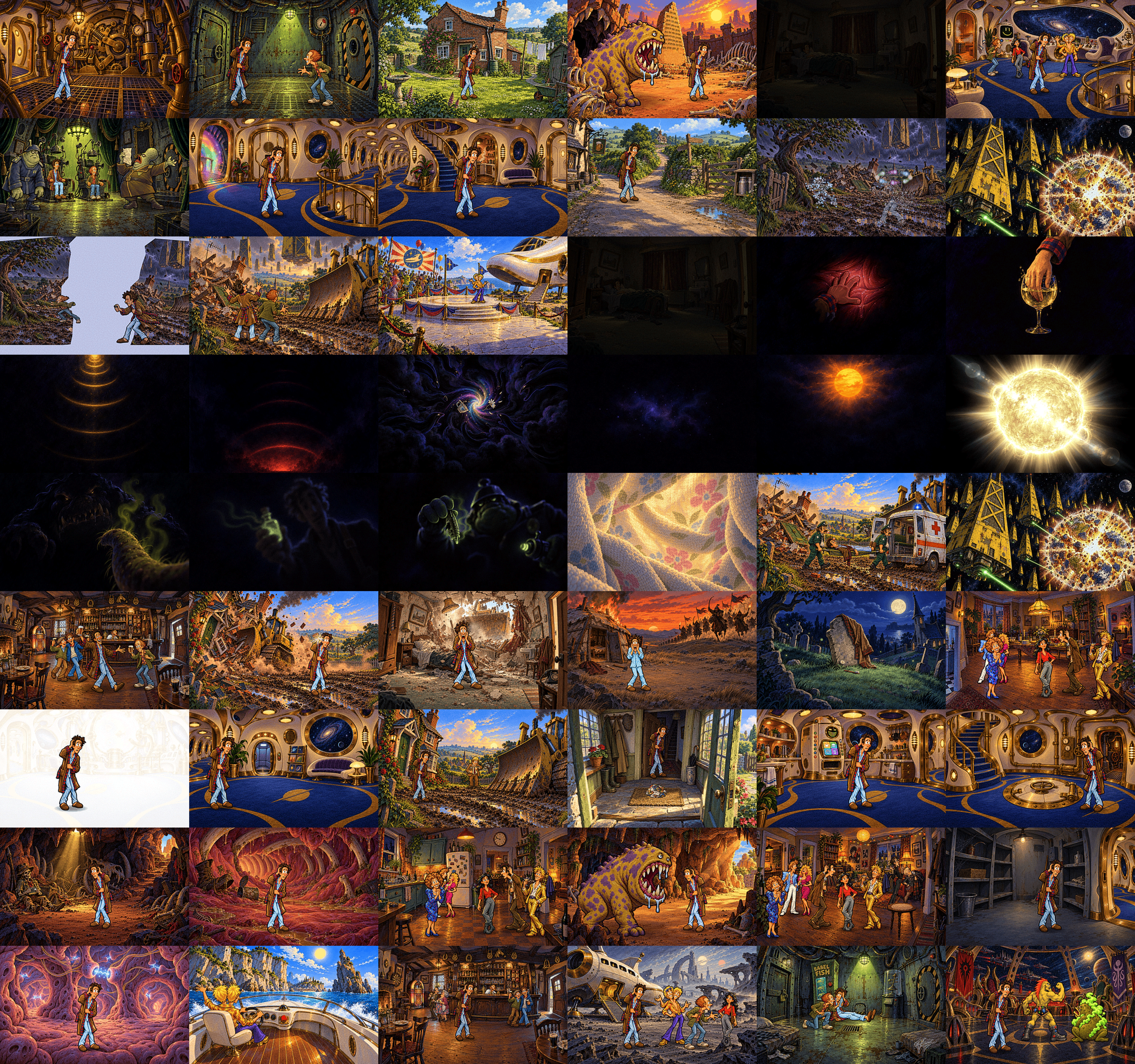
Milestone: All 54 scenes today.